In the deep emerald jungles of Colombia’s Pacific coast, where the rivers flow like veins through the mangroves and the air hums with life, there is a name spoken only in whispers, La Tunda.
She is the shapeshifter of the forest, the deceiver, the spirit who lures the careless away from home. The elders say she was born in the age of the plantations, when the night carried both the cries of the enslaved and the songs of those who escaped. In the hidden villages of the palenques, where Africans, Indigenous peoples, and runaway slaves found refuge, they told of her to keep their children safe.
For La Tunda was more than a ghost. She was the embodiment of the wild itself, the untamed, alluring danger of the forest, where light and shadow blur and the spirits of many worlds meet.
The Spirit Who Takes Many Faces
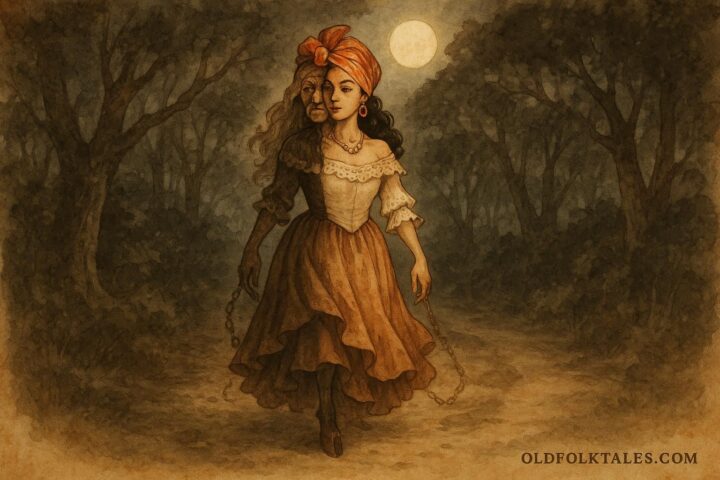
By day, La Tunda could wear any face she wished. To a fisherman resting by the riverbank, she might appear as his wife, calling him home with a smile. To a wandering child, she could take the shape of a gentle mother offering sweets. To a young man who had strayed from his village, she might appear as a beloved, her eyes soft and her voice sweet as honey.
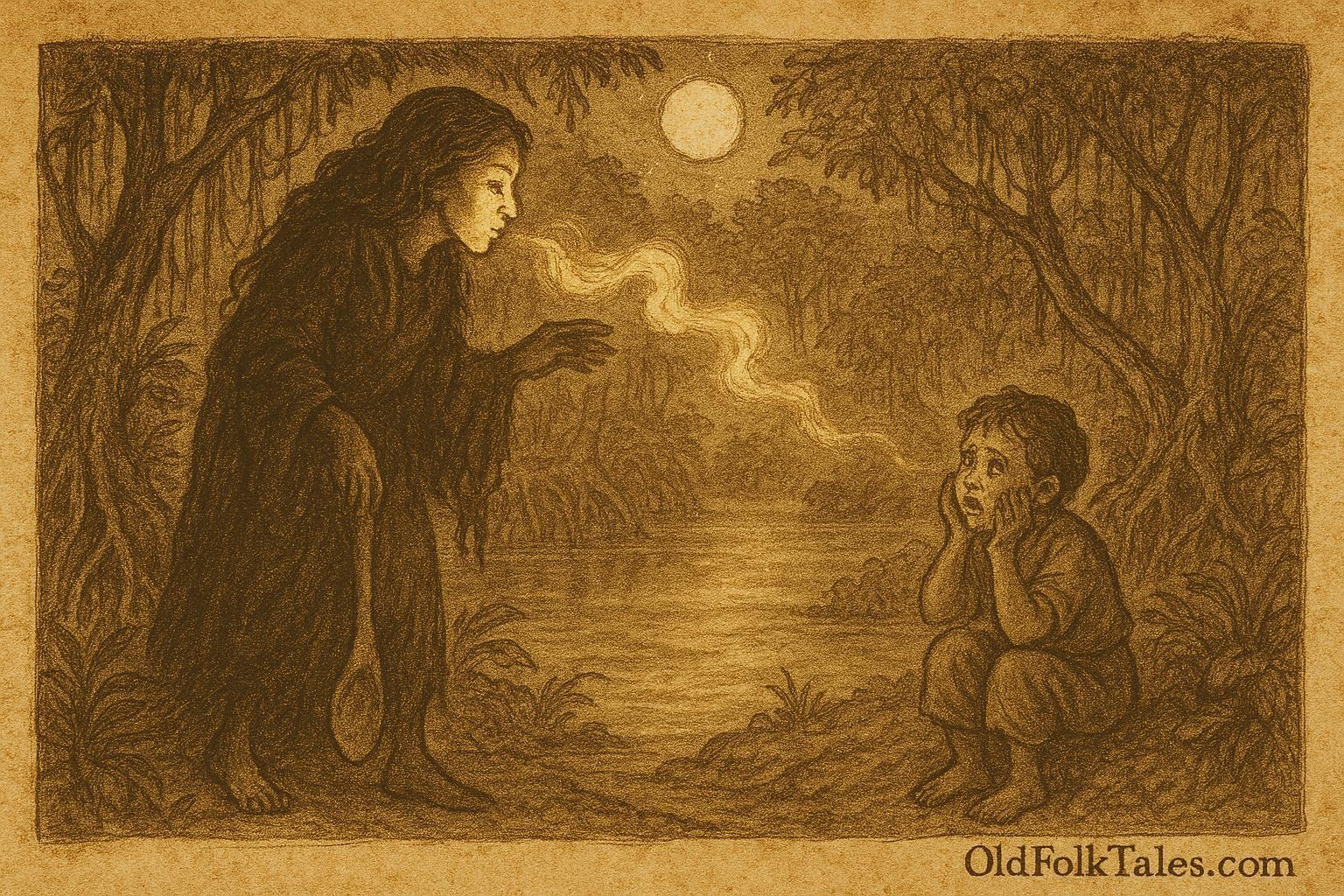
But those who looked closely might see her secret, one foot that was not a foot at all, but a wooden spoon or a twisted root, revealing her inhuman nature.
It was said she moved silently through the mangroves, her spoon-foot scraping against the wet earth, leaving marks that could not be washed away. When the night deepened and the drums from distant villages faded into the jungle’s hum, she began to whisper. Her voice floated like mist across the rivers:
“Niño… mi amor… ven conmigo. I have shrimp for you. I have sweets…”
Those who heard her call and followed rarely returned the same, if they returned at all.
The Spell of Forgetfulness
When La Tunda found her victim, she would smile and blow softly upon their face, a strange breath, neither warm nor cold, that clouded the mind. Her breath carried the spell of “entundamiento”, the enchantment of forgetfulness.
Those who fell under her power believed they were safe, that they were with someone they loved. Fishermen thought they were with their wives. Children believed they were in their mother’s arms. Under her illusion, they followed her deep into the jungle, where moonlight barely touched the ground and the air smelled of moss and salt.
There, La Tunda fed them on what the forest gave, shellfish, fruit, and sometimes the flesh of creatures better left unnamed. The enchanted ones grew pale and thin, their eyes vacant, their spirits half-dreaming. To outsiders, it was said they were “tunded”, trapped in La Tunda’s world between spirit and flesh.
Sometimes, after days or weeks, a family would find one of the missing wanderings near the river, weak and confused, murmuring nonsense or singing to themselves. They could never remember what had happened. Others vanished forever into the mangroves, where the roots twist like fingers and the spirits of the drowned whisper eternally.
The Power of Faith and Sound
The people of Chocó and Esmeraldas learned ways to guard themselves. Elders taught that if you heard your name called from the forest at dusk, you must never answer, for La Tunda could take the voice of anyone you love. Instead, you were to cross yourself and run toward the nearest church bell, for no evil spirit could pass through the echo of holy sound.
Some carried small crosses made from palm leaves. Others wore seeds blessed by their elders. And mothers, when sending their children to the river to wash clothes or fish, always said:
“Stay near the sound of the drums or the bells.
If you hear La Tunda’s song, run, and do not look back.”
A Lesson Carried by the Rivers
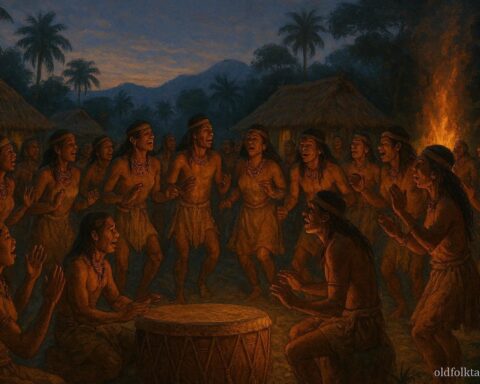
To this day, the story of La Tunda is told by firelight in Afro-Colombian villages. The elders speak her name when the rain falls heavy and the rivers swell, or when a child goes missing in the woods. They say that La Tunda still walks the borders where sea and jungle meet, her spoon-foot tapping softly among the mangroves.
She waits for those who forget, those who wander too far from their people, their faith, or the sound of their ancestors’ drums.
And when the wind carries her whisper through the trees, it sounds almost like a mother’s call: tender, familiar, but not quite right.
“Ven conmigo…” she murmurs.
Come with me.
Immerse yourself in Latin America’s stories of passion, transformation, and spirit.
Moral Lesson
The story of La Tunda warns against deception and forgetfulness, not just of one’s home, but of one’s roots. It teaches that beauty and comfort can hide danger, and that to lose the memory of who you are is to lose your spirit. The elders say: Faith, family, and ancestral wisdom are the only lights strong enough to guide one safely through the forest.
Knowledge Check
- Who is La Tunda in Colombian folklore?
La Tunda is a shapeshifting forest spirit from Afro-Colombian and Indigenous traditions who lures victims with disguise and enchantment. - What is La Tunda’s most distinctive feature?
She has one foot that is not human but shaped like a wooden spoon or root, revealing her supernatural identity. - What does La Tunda’s “breath” symbolize?
Her strange breath casts forgetfulness, representing temptation, spiritual confusion, and the loss of self-knowledge. - How can people protect themselves from La Tunda?
By crossing themselves, avoiding her voice, and running toward the sound of church bells, which repel her evil power. - What cultural influences shaped the legend of La Tunda?
The tale blends African water-spirit traditions, Indigenous beliefs in forest guardians, and Spanish Catholic moral teachings. - What moral lesson does La Tunda’s story teach?
It warns that forgetting one’s faith, family, and origins can lead to spiritual loss, just as following false appearances leads to danger.
Source:
Adapted from Cuentos y leyendas del Pacífico Colombiano (public domain sources, compiled by Rafael Pombo and regional archives of Chocó and Esmeraldas).
Cultural Origin: Colombia (Afro-Colombian and Indigenous folklore)