Along the tidal flats and pine-lined shores of Andros and Eleuthera, where the sea feeds both body and spirit, elders tell a story that binds human life to the rhythms of birds and water. It is known as The Gaulin’ Bride, a tale remembered for its quiet wonder and its warning about what cannot be owned. Fishermen repeat it at dusk, and families pass it on as proof that the natural world listens, watches, and sometimes walks among people.
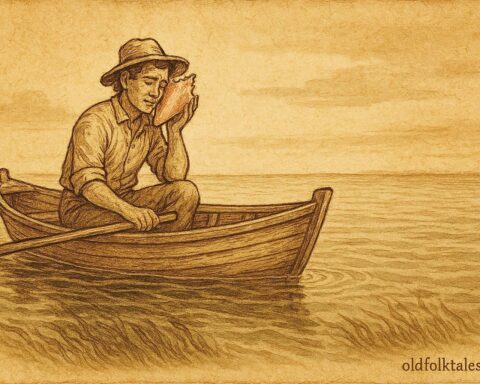
In earlier times, a man lived near the coast, earning his living from the sea. His days were shaped by tides and wind, and his nights by the calls of shorebirds moving through mangroves and shallow bays. Though his life was steady, it was lonely. He wished for a companion who would share his home and understand the ways of the water.
One evening, as the sun lowered itself into gold and the air cooled, the man met a woman walking along the shore. She was unlike anyone he had known. Her movements were graceful and quiet, her eyes watchful, as if always measuring the distance between land and sea. She spoke little, but when she did, her voice was calm and measured, like water slipping across sand.
The man was drawn to her immediately. He asked where she came from, but she only smiled and said she had always lived near the water. He invited her to return the next evening, and she did. Night after night, she came, and soon she moved into his home. Before long, they were married.
As a wife, the woman was gentle and attentive. She kept the house in order and waited patiently for her husband’s return from the sea. Yet there were habits that puzzled him. She avoided deep conversation and never spoke of her past. At dawn and dusk, she would stand silently outside, gazing toward the wetlands where tall birds gathered. When her husband asked about it, she changed the subject or smiled faintly, as though holding a secret she could not share.
The man noticed other signs. She disliked loud noise and sudden movement. She was most alive near water and uneasy far inland. Still, he loved her and accepted these mysteries, believing that love did not require full understanding.
One day, while returning home early, the man noticed a gaulin’, a heron, standing near his house. Its long legs were planted firmly in the shallows, and its feathers shone pale against the water. As he watched, the bird lifted its head and fixed him with a steady gaze that felt strangely familiar.
That evening, he questioned his wife again, more firmly than before. She grew quiet. The calm she always carried seemed to pull inward, and at last she told him the truth she had guarded since the day they met.
She was a gaulin’. She had taken human form to live among people, but her true nature belonged to the wetlands and the sky. She had loved him sincerely, but the call of her own kind had grown too strong to ignore. She could no longer remain.
The man was overcome with sorrow. He begged her to stay, promising silence and acceptance. But she shook her head. She explained that such transformations were never permanent. To deny her true form would be to lose herself entirely.
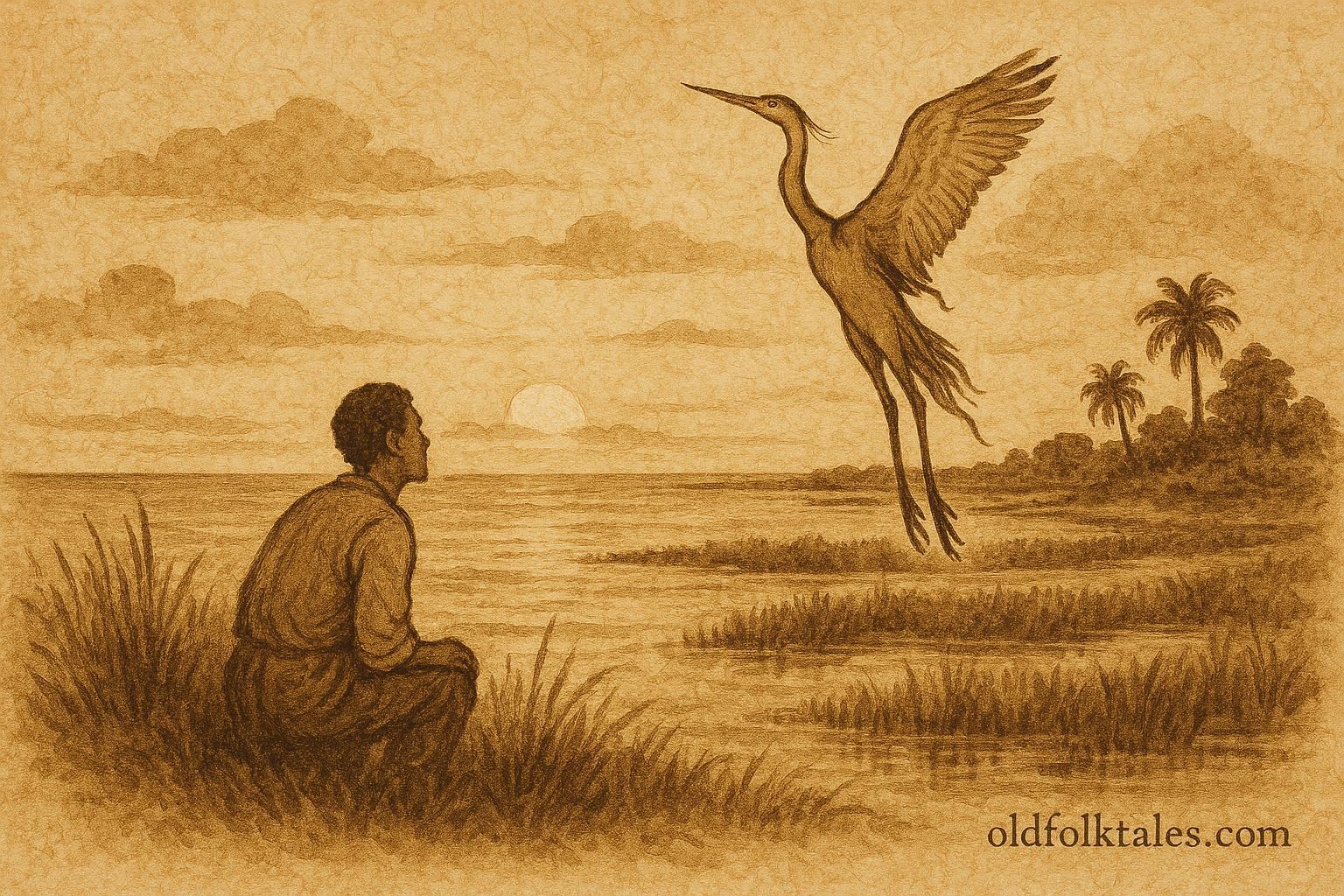
At dawn, she stepped outside for the last time. Before his eyes, her body changed. Arms became wings, and her slender form reshaped into that of a tall heron. With a final glance back, she rose into the air, her wings catching the light as she flew toward the marshes.
The man never married again. He continued his work by the sea, and whenever he saw gaulin’ birds standing still against the water, he remembered the wife who could not remain. The story endured because it reflected a truth Bahamians knew well. The natural world is close, powerful, and deserving of respect. Some things may be loved, but not possessed.
Moral Lesson
The folktale teaches respect for nature and acceptance of boundaries, reminding listeners that love does not grant ownership and that every being has a true place it must return to.
Knowledge Check
1. Who is the Gaulin’ Bride in the story
She is a heron who takes human form and marries a man.
2. Where does the folktale originate
From Andros and Eleuthera in the Bahamas.
3. What signs hint at the bride’s true nature
Her silence, love of water, and fascination with shorebirds.
4. Why does the Gaulin’ Bride leave her husband
She must return to her true bird form and natural home.
5. What does the heron symbolize in Bahamian culture
The close connection between people and the natural environment.
6. What lesson does the story pass to listeners
That love requires respect for identity and natural boundaries.
Source: Folk-Tales of Andros Island, Bahamas by Daniel J. Crowley
Cultural Origin: Andros and Eleuthera, Bahamas