In the lush hills of Saint Lucia, where palm trees sway and the air hums with the rhythm of drums and sea breeze, lived a boy named Ti Jean. Everyone in his village knew him for his wisdom and gentle spirit. Though he was the youngest of three brothers, he was the one who worked hardest and treated everyone, human or spirit, with kindness.
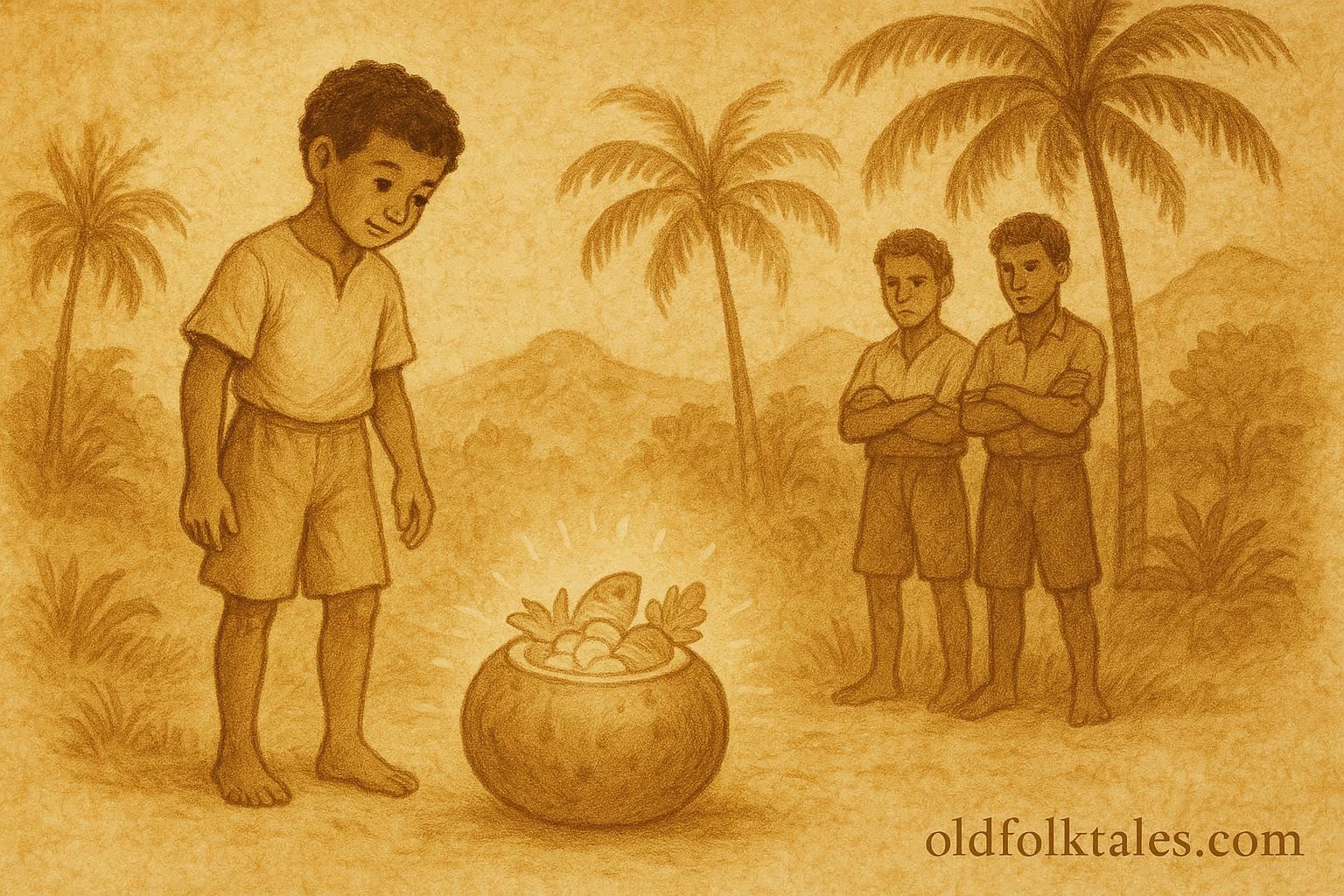
One hot afternoon, while Ti Jean was wandering near the river, he noticed a strange object glimmering in the sand. It was a calabash, smooth and round, carved with swirling patterns that seemed to move under the sunlight. Curious, Ti Jean picked it up, and to his amazement, the calabash began to roll on its own! It rolled toward his home, stopping only when he followed. When he lifted its lid, delicious food appeared, steaming plantains, salted fish, and fragrant breadfruit stew.
Every day thereafter, the rolling calabash brought food to Ti Jean. The villagers wondered how the boy never went hungry, even when the rains failed or crops withered. But Ti Jean never kept his fortune secret, he shared every meal with the poor and the elderly, feeding those who had little to eat. His wisdom guided his heart, and soon the whole village blessed his name.
His older brothers, however, were not so generous. They grew jealous of Ti Jean’s mysterious luck. “Why should he, the youngest, have everything?” they whispered. “Let’s find this magic of his and keep it for ourselves.” One evening, they followed Ti Jean to the river and waited until he left. There, hidden beneath a tamarind tree, they found the calabash. With greedy grins, they carried it home, eager to uncover its secret.
At first, nothing happened. The calabash sat still, refusing to move or open. The brothers shook it, called to it, even beat it against the ground. “Food! We command you to feed us!” they cried. But the calabash stayed silent. Furious, one brother pried it open, and out burst a swarm of bees and frogs, buzzing and croaking in fury! The insects chased the brothers through the forest, stinging and biting until they rolled down the hill into a muddy pit.
When Ti Jean heard the commotion, he ran to help them. The calabash rolled to his side and calmed itself, as though recognising its rightful friend. Gently, Ti Jean spoke to it, thanking it for its help and kindness. The bees vanished, the frogs hopped away, and the brothers, ashamed and sore, fell at Ti Jean’s feet.
“Little brother,” they said, “forgive us. Our greed has blinded us.”
Ti Jean smiled kindly. “The calabash brings food only to clean hands and open hearts. Come, let us share together.”
From that day, the rolling calabash once again served Ti Jean and his village. He made sure every hungry mouth was fed and every child had a story to carry home. Even the brothers, having learned humility, joined in his work.
To this day, Saint Lucian storytellers remind listeners that fortune rolls only toward those who are wise and kind, never to the greedy or deceitful.
Moral Lesson
Greed breaks blessings, but wisdom and generosity multiply them.
Knowledge Check
1. Who is Ti Jean in the Saint Lucian folktale?
Ti Jean is a wise and kind-hearted boy who discovers a magical rolling calabash that rewards goodness and punishes greed.
2. What does the rolling calabash symbolize in the story?
It represents fortune, generosity, and the rewards of wisdom and pure-hearted living.
3. What lesson does the folktale “Ti Jean and the Rolling Calabash” teach?
The story teaches that greed destroys blessings while kindness and wisdom bring lasting abundance.
4. Where does this folktale originate from?
The story originates from Saint Lucia in the Lesser Antilles, reflecting African and Creole storytelling traditions.
5. What happens when Ti Jean’s brothers try to use the calabash?
Their greed causes the calabash to release bees and frogs, teaching them a painful lesson about selfishness.
6. How does Ti Jean restore the calabash’s magic?
Through humility and gratitude, Ti Jean regains the calabash’s trust, and it once again serves him and his village.
Source: Adapted from Caribbean Folktales: Stories from the Islands and the Windrush Generation by Wendy Shearer (The History Press, 2021).
Cultural Origin: Saint Lucia, Lesser Antilles — West African Anansi influence adapted to Creole storytelling.