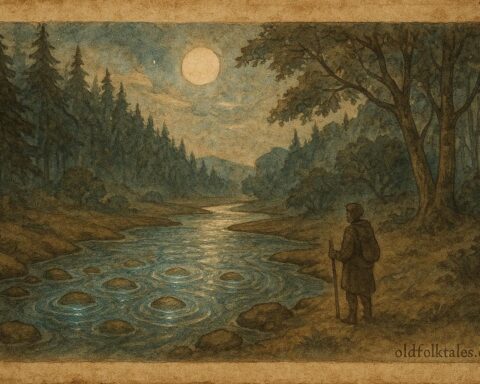
In the early days of Quebec, when dense forests still stretched farther than memory and rivers served as the main roads between distant settlements, fur traders traveled long routes in search of pelts. These men relied on the land for their livelihood, yet not all of them understood that the forest demanded respect as much as skill. Among the traders, there were stories of certain places that should never be entered lightly. These lands were spoken of quietly, with lowered voices, and were said to be watched by unseen forces.
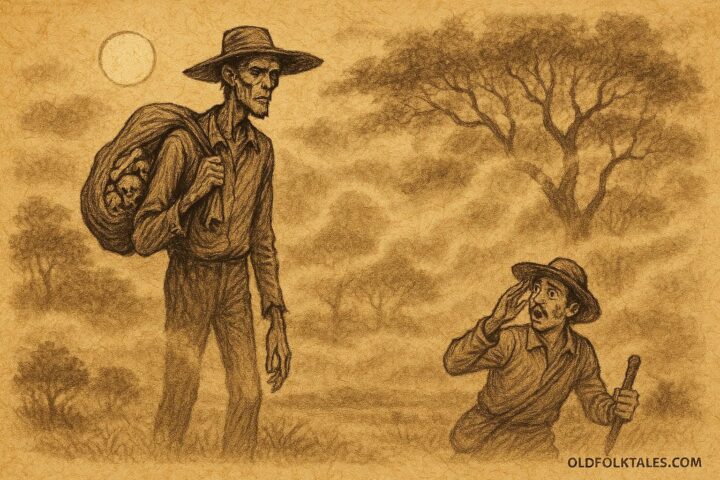
One such trader was named Laurent. He was experienced, ambitious, and known for his sharp eye and sharper tongue. Laurent had traveled many seasons without serious trouble, and his success made him confident to the point of arrogance. When other traders spoke of sacred groves, forbidden valleys, or lands where spirits guarded ancient paths, Laurent laughed. He believed that fear was for the inexperienced and that fortune favored only the bold.
Late one autumn, Laurent heard rumors of untouched trapping grounds deep beyond the usual routes. The pelts there, it was said, were plentiful and fine. A local guide warned him not to go. The land lay beyond a boundary marked not by fences or signs, but by tradition and memory. Laurent dismissed the warning, claiming that land belonged to no one who could not defend it.
Discover ancient tales passed down by the Indigenous peoples of the Americas.
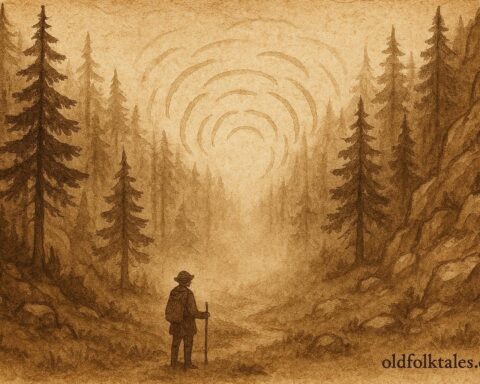
Ignoring advice, he pushed forward alone. The forest thickened as he traveled, and the air grew unusually still. Birds were scarce, and even the sound of his footsteps seemed muffled. Laurent noticed old markers carved into trees, symbols worn by time. He felt a brief flicker of unease but pressed on, driven by the promise of profit.
He set traps and camped near a quiet clearing. That night, the forest did not sleep. Laurent heard branches creaking though no wind blew, and footsteps that stopped whenever he listened. He told himself it was his imagination. In the morning, his traps were empty, though signs of animals were everywhere. His supplies felt lighter, yet nothing appeared missing.
Days passed, and strange events continued. Laurent found his trail erased behind him. His compass spun uselessly. Once, he returned to his camp to find it perfectly undisturbed, except for his fire, which burned low though he had extinguished it. Still, he refused to leave.
On the fourth night, Laurent dreamed of figures standing at the edge of the clearing. They did not speak, but their presence pressed heavily on him. When he awoke, a message had been scratched into the dirt near his bedroll. It was not in words, but its meaning was clear. Leave. You do not belong here.
Anger rose in Laurent’s chest. He gathered his pelts and decided to take one final hunt before departing. As he walked deeper into the forest, the trees seemed to close around him. The path vanished beneath his feet. When he turned back, nothing looked familiar.
Laurent was never seen again.
Weeks later, another trader came across Laurent’s abandoned canoe near the riverbank. Inside were neatly stacked pelts, untouched and unclaimed. Nearby, a bundle of Laurent’s belongings had been placed carefully on a stone, as if left deliberately. No sign of struggle could be found.
When the news reached nearby villages, elders were not surprised. They said Laurent had crossed a boundary meant to protect both land and people. His disappearance was not an act of violence, but of enforcement. The land had reclaimed its balance.
In the years that followed, travelers reported strange sightings near the forbidden grounds. Some heard a voice calling their name softly, urging them to turn back. Others found warning marks freshly carved into trees that had been smooth the day before. Laurent’s story became a lesson passed from one generation to the next.
Fur traders learned to listen. Routes were adjusted. Sacred lands were avoided. Those who respected the boundaries found their journeys safer and their work more successful. The forest, once angered, seemed to settle again.
It was said that Laurent’s fate was not meant as punishment alone, but as a message. The land does not need fences to protect itself. It remembers those who honor it and those who do not. And sometimes, the strongest warning is a silence that never breaks.
Moral Lesson
The land holds memory and meaning beyond human profit. When people respect boundaries shaped by tradition, experience, and spiritual belief, harmony is preserved between humans and nature. Ignoring warnings, dismissing local knowledge, or treating sacred places as resources to be exploited leads to loss rather than gain. True wisdom lies in listening, showing restraint, and understanding that some limits exist to protect both the land and those who depend on it.
Knowledge Check
- Who was Laurent in the story?
An ambitious fur trader who ignored warnings about sacred land. - Why was the land considered forbidden?
It was protected by tradition and spiritual guardianship. - What warnings did Laurent receive?
Strange signs, erased trails, and a clear message to leave. - What happened to Laurent?
He vanished after trespassing on sacred land. - What did villagers find after his disappearance?
His canoe and belongings, carefully arranged. - What lesson did traders learn from the story?
To respect boundaries and listen to local knowledge.
Source: Université Laval Folklore Archives; Quebec Historical Society Records.
Cultural Origin: French Canadian folklore, Quebec.