In the endless white silence of the Arctic, where the wind shapes the snow into waves and the ice glows beneath the pale sun, there are stories older than memory itself. The Inuit tell of spirits that walk with the storm, animals that speak with wisdom, and lessons written in the land itself. Among the most haunting of these tales is the story of the two-headed bear, a creature born of greed and fear, and of the hunter who found the strength to face not just the monster before him but the one within his heart.
Long ago, in a small settlement near the great glacier, the people lived in harmony with the world around them. They hunted seal and caribou, shared what they had, and honored the spirits of the sea and the ice. But as the years passed, the winters grew harsher and food became scarce. The people began to whisper of a shadow moving among the glaciers, a monstrous bear with two heads that prowled the night, devouring everything in its path.
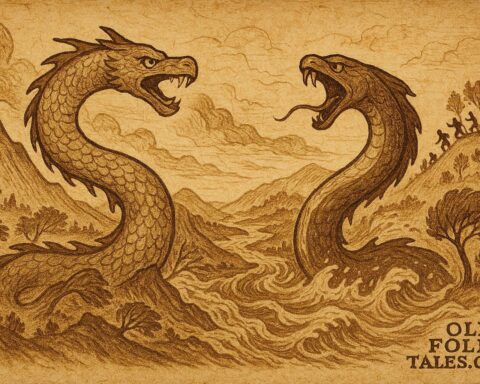
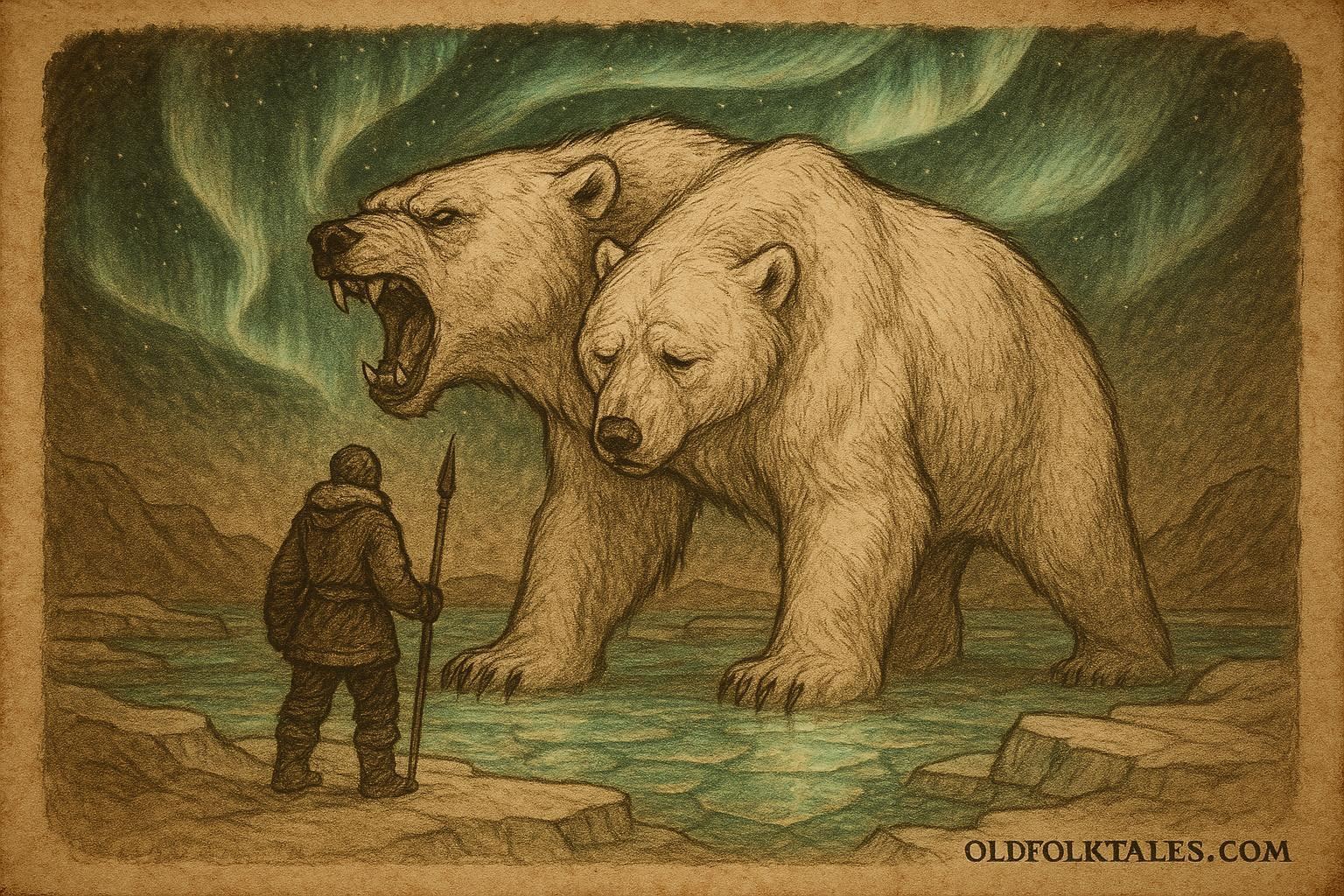
Each head had its own terrible nature. One was ruled by greed, its eyes burning with hunger that could never be filled. The other was ruled by fear, trembling and lashing out at everything it saw. Together, they brought chaos. The hunters who ventured too far onto the ice never returned. Sled dogs whined at the scent of the creature, and mothers sang prayers to keep their children safe from the beast that haunted the frozen wastes.
Explore French-Canadian legends and First Nations myths in our Canadian Folktales collection
Among the people was a young hunter named Nanuq. He was known for his courage and his skill with the spear, but also for his pride. When others spoke of the bear, he laughed and said that no creature could defeat him. His grandmother, the oldest woman in the village, warned him that the bear was not made of flesh alone. “It is the shape of what lives inside us,” she said. “You cannot kill it with strength, only with wisdom.”
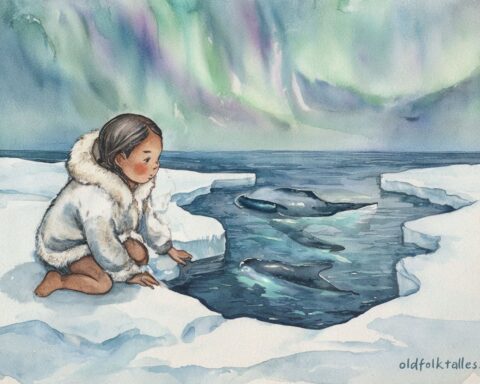
Nanuq listened, but his pride burned brighter than his patience. One night, when the moon hung low over the glacier and the sky shimmered with pale light, he took his spear and set out to find the beast. The snow crunched beneath his boots, and the wind howled through the empty world. For hours he walked, until at last he saw it, a vast shadow moving against the ice.
The creature rose before him, towering like a mountain. Its fur was white as frost, its two heads turning in opposite directions. One growled with rage, the other whimpered with fear. Its breath froze the air, and its footsteps cracked the ice beneath them. Nanuq gripped his spear, but as he looked into its eyes, he saw something that made his hands tremble. In the eyes of the greedy head, he saw his own hunger for glory. In the eyes of the fearful one, he saw his own doubt.
The bear lunged, and Nanuq leaped aside, his spear striking its thick hide but doing no harm. Again and again he struck, but the creature would not fall. Exhausted, he stumbled into the snow, the spear slipping from his hand. The bear stood over him, both heads snarling. In that moment, he understood the words of his grandmother. The bear was not an enemy to be slain but a mirror of his own heart.
He closed his eyes and breathed deeply. He remembered the faces of his people, the laughter of children, the songs sung by the elders beside the lamps. He felt the courage that came not from pride but from love. When he opened his eyes again, he spoke to the beast. “You are part of me,” he said. “But you do not rule me.”
The bear hesitated. Its eyes dimmed, and its roar turned to a deep rumble like distant thunder. Nanuq reached out his hand, touching the snow between them. Slowly, the great beast began to dissolve into mist, its bodies fading into the wind. When it vanished completely, the glacier was silent once more.
Nanuq returned to his village at dawn. The people gathered around him, and he told them what he had learned. The two-headed bear was gone, but its lesson remained. He explained that the creature was born of the greed and fear that had crept into their hearts during hard times. Only by sharing what they had and facing their fears together could they live in peace again.
From that day, the people changed. They hunted with respect, never taking more than they needed. They helped one another and sang the old songs to keep their courage strong. When storms raged across the ice, they lit lamps and told the story of Nanuq and the two-headed bear. The children listened wide-eyed, learning that true strength is not the power to conquer but the wisdom to understand.
Some say that when the aurora dances across the Arctic sky, its colors are the spirit of the bear returning to watch over the people, no longer a monster but a guardian. Its two heads have become one, united in harmony, reminding all who see it that courage and compassion walk hand in hand.
Explore the ancestral legends of Canada, Mesoamerica, and South America’s Indigenous tribes
Moral Lesson
The tale of The Two-Headed Bear of the Great Glacier teaches that true victory comes from self-mastery. Fear and greed are powerful forces, but when humans face them with wisdom and love, balance is restored both within and around them.
Knowledge Check
-
What did the two heads of the bear represent?
They represented fear and greed, the two forces that can destroy harmony in the human spirit. -
Why did Nanuq set out to face the bear?
He was proud and wanted to prove his strength by defeating the creature that haunted his people. -
What lesson did Nanuq’s grandmother try to teach him?
That the bear could not be defeated with weapons, only with understanding and inner strength. -
How did Nanuq finally overcome the two-headed bear?
He recognized that the monster reflected his own inner flaws and chose wisdom and compassion instead of violence. -
What change occurred in the village after Nanuq’s return?
The people learned to share, face their fears, and live once more in harmony with the land and each other. -
What do the lights of the aurora represent in the story’s ending?
They symbolize the spirit of the bear transformed into a guardian, a sign of peace and balance in the Arctic sky.
Source
Adapted from Unikkaaqtuat: An Introduction to Inuit Myths and Legends by Neil Christopher, 2011.
Cultural Origin
Inuit First Nations, Arctic Canada.