Along the pine-lined shores and coral flats of Andros Island in the Bahamas, the sea is both provider and judge. Its surface may shimmer in calm beauty, but beneath it lie the blue holes, vast underwater caves so dark and deep that even the most seasoned fishermen treat them with caution. From these depths comes one of Andros Island’s most enduring sea legends: the tale of the Lusca.
In the villages scattered along the coast, elders spoke of the Lusca in low, careful voices. It was not a creature to be summoned lightly in conversation, for the Lusca was believed to listen. Described as a monstrous being, half shark and half octopus, it possessed the speed of a predator and the grasp of many powerful arms. Its home was the blue holes, places where the sea opened into darkness and the water seemed to breathe.
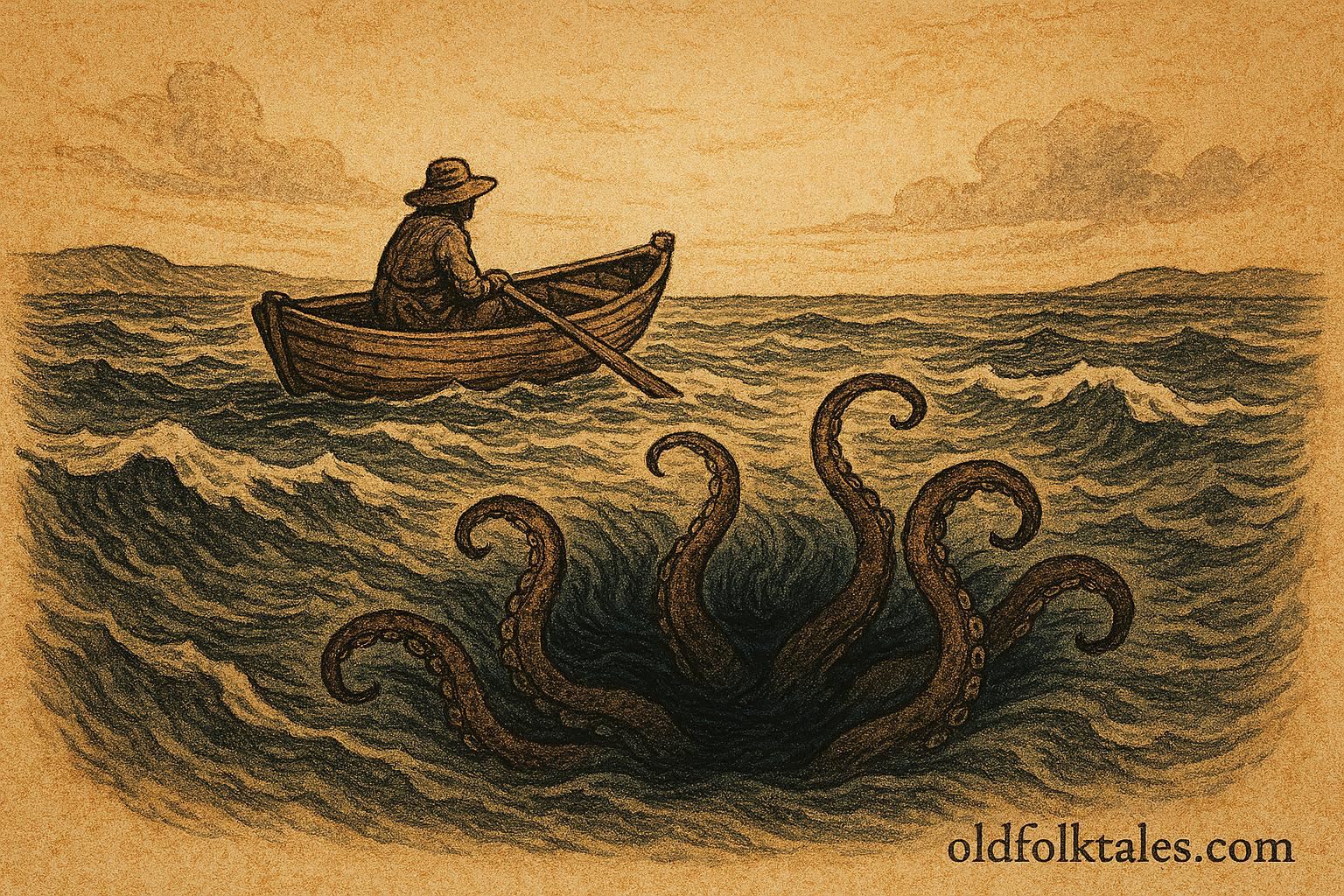
Long ago, a small group of fishermen set out from Andros at dawn, their wooden boat heavy with nets and hope. Fishing was not merely work but survival, and the men knew the reefs and currents well. Yet hunger and pride often tempt people to ignore warnings. That morning, despite knowing the old stories, they steered closer to a blue hole known for abundant fish.
As the sun climbed, the sea grew strangely still. The wind softened, and the water around the boat darkened, shifting from turquoise to deep blue. One fisherman muttered a prayer, recalling the elders’ advice: never fish where the water has no bottom. Another laughed nervously, insisting the Lusca was only a tale meant to frighten children.
They cast their nets anyway.
The first sign of danger was the silence. Birds vanished from the sky, and the sea no longer rippled against the hull. Then the water churned. From the depths below the boat, something vast moved, disturbing the sea as if a storm were rising from beneath.
A shape emerged just below the surface. Some swore they saw the curved fin of a shark slicing through the water. Others glimpsed pale, twisting limbs reaching upward. The Lusca did not fully reveal itself, but its presence was unmistakable. The boat lurched violently as if seized by unseen hands.
Panic spread among the fishermen. One man tried to haul in the nets, while another shouted for them to turn back. Before they could act, the sea erupted. The boat was dragged sideways, its planks groaning under the strain. Water poured over the sides, and the men struggled to stay afloat.
With a roar like rushing wind and waves combined, the Lusca pulled downward. Nets snapped, oars vanished into the depths, and the boat tilted sharply toward the blue hole. In desperation, the fishermen abandoned their catch, cutting loose anything that weighed them down. They shouted prayers to the sea and to God, pleading for mercy.
At last, as suddenly as it had begun, the pulling stopped. The boat was released, battered but afloat, drifting away from the blue hole’s dark mouth. The water calmed, though it remained unnaturally deep in color. The Lusca had returned to its hidden realm, leaving only terror and silence behind.
The fishermen wasted no time. They paddled with bare hands until their arms burned, not stopping until the shoreline was safely beneath their feet. Villagers gathered as they stumbled ashore, shaken and speechless. When the story was told, no one doubted it. The elders nodded solemnly, saying the men had been spared because they let go of their greed and respected the sea at the last moment.
From that day forward, the blue hole was avoided. The tale of the Lusca spread once more through Andros Island, not as entertainment, but as warning. Parents told it to children learning to fish. Elders repeated it to remind the young that the sea must never be challenged or mocked.
The Lusca, whether monster or spirit, became a symbol of the ocean’s power. It was not merely a beast that devoured fishermen, but a guardian of forbidden depths. To respect the sea was to live. To ignore its signs was to risk being claimed by the darkness below.
Moral Lesson
The story of the Lusca teaches respect for nature and humility before forces greater than human strength. It warns against greed and recklessness, reminding listeners that survival depends on listening to wisdom passed down through generations.
Knowledge Check
1. What is the Lusca in Bahamian folklore?
The Lusca is a legendary sea monster described as half shark and half octopus living in blue holes.
2. Where is the Lusca believed to dwell?
It inhabits the blue holes of Andros Island, deep underwater caves in the sea.
3. Why did fishermen fear the blue holes?
They were believed to be dangerous places where the Lusca could drag boats and people underwater.
4. What mistake did the fishermen make in the story?
They ignored traditional warnings and fished too close to a blue hole.
5. What does the Lusca symbolize in Bahamian culture?
It symbolizes the power of the sea and the consequences of disrespecting nature.
6. What lesson does the Lusca folktale teach?
It teaches humility, respect for the ocean, and the importance of ancestral knowledge.
Source
Adapted from Bahamian folktale traditions recorded in Folk-Tales of Andros Island, Bahamas by Daniel J. Crowley.
Cultural Origin: Andros Island, Bahamas.