In the deep, untamed heart of the Belizean rainforest, where towering mahogany trees sway above a sea of green and the calls of toucans echo through mist and vine, lives one of the country’s most mysterious spirits, Tata Duende. Known in Maya and Creole folklore as the guardian of the forest, Tata Duende is both protector and punisher, a being who ensures that humans treat the natural world with reverence.
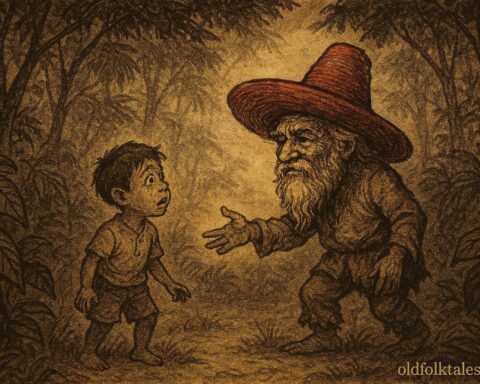
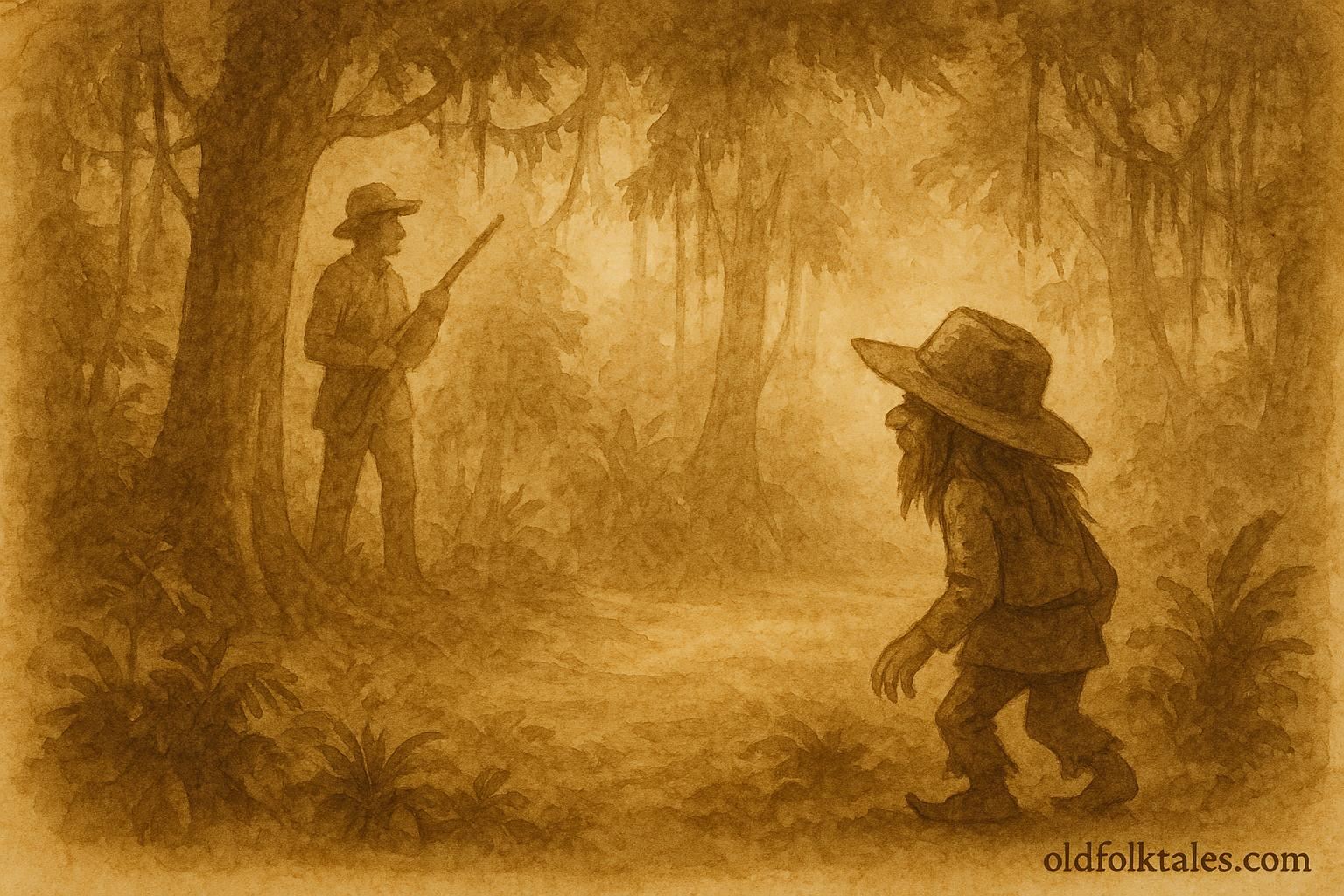
No one who has seen Tata Duende ever forgets the sight. He is small in stature, but his presence commands awe. He wears a wide-brimmed hat pulled low over his head, shadowing his eyes from view. His feet face backward, so that no hunter or traveller can follow his trail, no matter how skilled. But perhaps his most uncanny feature is that he has no thumbs. When he meets a child wandering alone in the bush, he reaches out, not to greet, but to steal the child’s thumbs, making them like himself.
Old people in the villages of western Belize still tell their grandchildren, “Mind your thumbs when you walk near the bush. Tata Duende don’t like careless children.”
Tata Duende’s spirit is ancient, older than the first colonists, older even than the Maya cities that crumble beneath the jungle vines. To some, he is a protector of animals, punishing those who hunt without need or harm the trees without offering thanks. To others, he is the embodiment of the forest’s will, a reminder that every bird, beast, and leaf has a spirit that deserves respect.
Many hunters and woodcutters tell stories of meeting Tata Duende. One tale tells of a man who went into the bush at dawn to fell a tree. As he raised his axe, a sharp whistle echoed nearby. Thinking it was another man, he whistled back, but the sound that answered him was closer, clearer, eerily perfect. The man froze. In Belizean lore, to whistle in the forest is to call Tata Duende, and when he answers, danger follows.
When Tata Duende appears, he is said to whistle softly through his teeth, mimicking the tune of his victim. His clothes are tattered but clean, and his small hands move with surprising speed despite their missing thumbs. He smiles with kindness one moment and glares the next, his moods shifting like the forest wind.
The hunter in the tale remembered what his grandmother had taught him. To escape Tata Duende, one must turn their clothes inside out, breaking the spirit’s charm. So, with trembling hands, he reversed his shirt, muttered a prayer, and ran silently through the bush until he reached home. He never cut another tree without asking the forest’s permission again.
Parents and elders across Belize tell such stories to their children as warnings, not to frighten them without cause, but to teach respect for nature. To whistle carelessly in the bush is to invite the unseen; to harm animals without reason is to anger the forest itself. “The bush always listening,” they say. “It have ears you can’t see.”
Even today, in the Cayo and Toledo districts, there are those who swear that Tata Duende still walks among the trees. Farmers hear strange whistles at dusk. Children claim to see a little man under the cohune palms, his hat wide as a shadow. Whether spirit, myth, or memory, Tata Duende endures, a symbol of harmony between humankind and the living world.
Moral Lesson
Tata Duende teaches that nature is alive, sacred, and deserving of respect. When humans exploit the earth without gratitude or restraint, they invite consequences, not from cruelty, but from the balance that the natural world demands.
Knowledge Check
1. Who is Tata Duende in Belizean folklore?
Tata Duende is a small forest spirit in Belize who protects nature and punishes those who disrespect it.
2. Why are Tata Duende’s feet turned backward?
His backward feet confuse anyone who tries to follow him, protecting his identity and the forest’s secrets.
3. What is Tata Duende known to steal from children?
He takes their thumbs, making them resemble him and warning them not to wander into the bush alone.
4. How can someone escape Tata Duende?
To escape, a person must turn their clothes inside out and run silently home without looking back.
5. What does Tata Duende represent in Maya-Creole culture?
He represents nature’s guardianship and the moral duty to treat the environment with reverence.
6. What lesson do Belizeans learn from this folktale?
They learn to live respectfully within the forest, understanding that every action toward nature has consequences.
Source: Adapted from If Di Pin Neva Ben: Folktales and Legends of Belize (Cubola Productions, 2000); also featured at BelizeHub.com.
Cultural Origin: Belize (Maya and Creole folklore)