As daylight fades across the rural pathways of Nicaragua, the land takes on a quieter and more watchful presence. Forest edges darken quickly, and narrow dirt roads stretch between isolated villages, bordered by trees that seem to lean inward as night approaches. It is along these paths, at the uncertain hour between evening and full darkness, that travelers speak of encountering Las Ceguas.
Las Ceguas are not a single spirit, but a class of spectral women woven deeply into everyday travel lore. Farmers, messengers, and night wanderers have long warned one another about them, sharing stories passed down through generations. These tales are not told lightly. They serve as cautions for those who must travel alone when the sun has nearly disappeared.
Click to read all South American Folktales — timeless stories from the Andes to the Amazon.
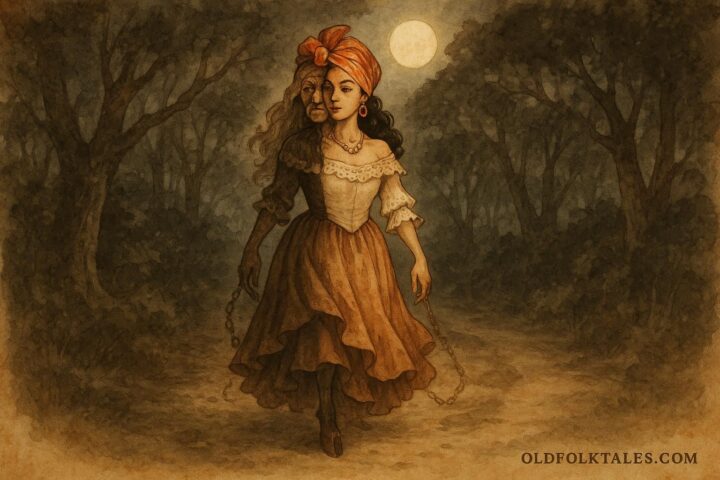
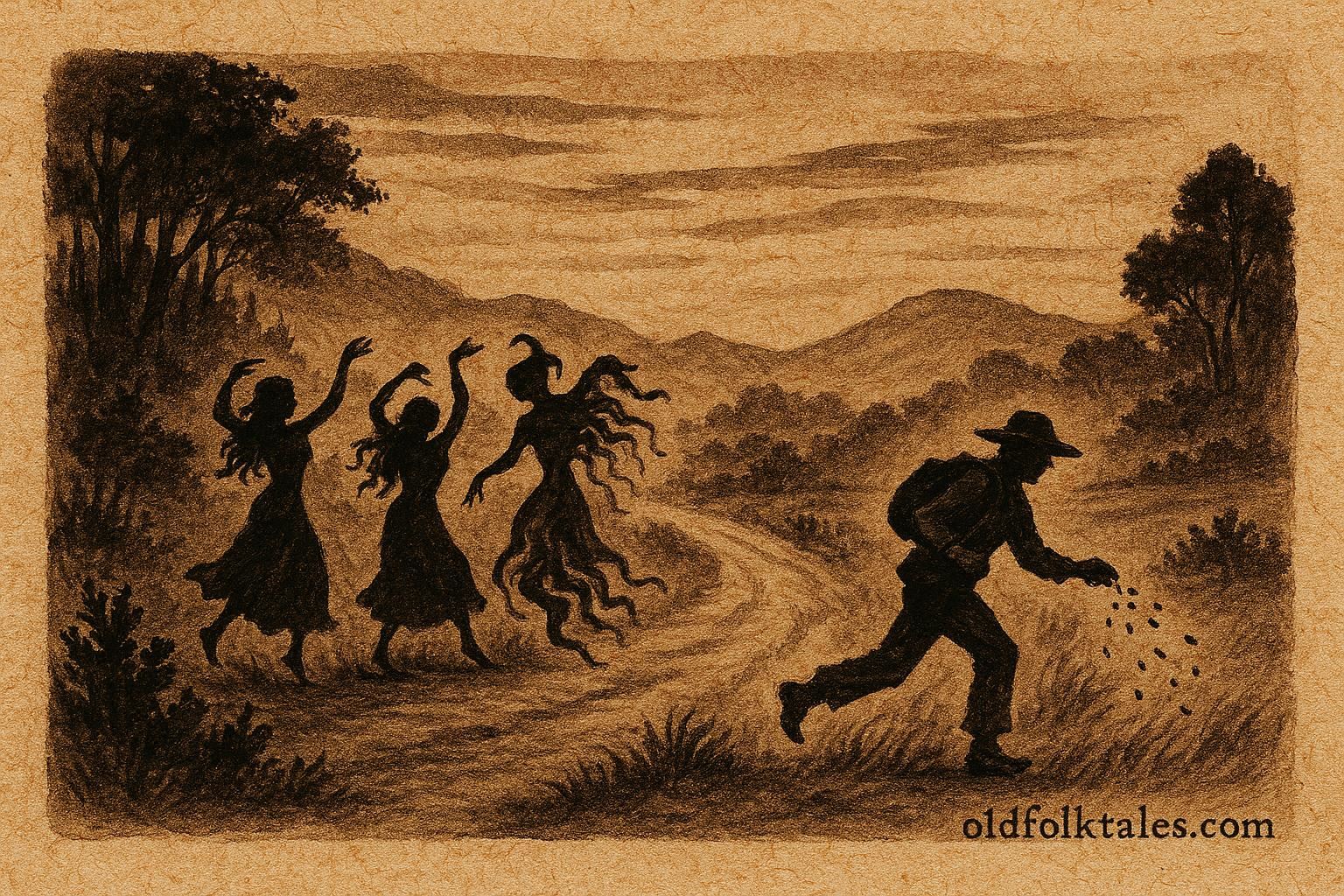
Witnesses describe first seeing Las Ceguas as beautiful maidens standing near forest clearings or dancing softly beside the road. Their movements appear graceful, their forms inviting, and their presence strangely calm. To the weary traveler, they seem harmless, even comforting, like familiar faces waiting in the dusk.
But this illusion does not last.
When a traveler draws close, the figures change. Their beauty collapses into something frightening. Faces become gaunt and distorted. Limbs stretch into exaggerated proportions, and eyes lock onto the onlooker with an unnatural intensity that freezes the body with fear. The transformation is sudden and unmistakable. What once appeared human becomes undeniably otherworldly.
Las Ceguas do not always attack, but their purpose is to terrify. The shock of their transformation leaves travelers shaken, disoriented, and vulnerable. Some stories say the spirits enjoy watching fear take hold, feeding on panic and confusion rather than physical harm. Those who encounter them often flee in terror, heart pounding, certain they have narrowly escaped something far worse.
Because these encounters are so feared, practical wisdom grew around them. Rural travelers traditionally carry salt or seeds when walking at dusk. These are not charms or weapons, but tools of distraction. When Las Ceguas appear and reveal their true forms, the traveler throws handfuls of salt or seeds onto the ground. The spirits, compelled to stop and pick them up one by one, pause just long enough for the human to escape.
This detail appears again and again in folklore accounts, emphasizing that survival depends on preparation and knowledge rather than strength. The act of scattering seeds is not dramatic, but deliberate, reflecting a belief that understanding the rules of the spirit world offers protection.
Las Ceguas are said to linger especially near crossroads and wooded paths that connect villages. These places are neither fully settled nor entirely wild, making them ideal spaces for spirits that exist between worlds. Their presence turns ordinary travel into a test of awareness and caution.
The stories do not frame Las Ceguas as random monsters. Instead, they reflect deeper fears associated with isolation, temptation, and the dangers of traveling carelessly. Their initial beauty warns against trusting appearances, especially in unfamiliar territory. Their transformation reinforces the idea that danger often reveals itself only when one is already too close.
In rural Nicaragua, these tales became part of practical instruction. Elders warned younger travelers not to wander alone at dusk and to respect the land they crossed. The forest was not empty, and the road was never truly safe without vigilance. Carrying salt or seeds was as natural as carrying food or water.
Though frightening, Las Ceguas serve a clear purpose in folklore. They enforce caution, discipline, and respect for unseen forces. They remind people that the world contains more than what is immediately visible, and that wisdom can mean the difference between safety and terror.
Even today, the story endures in whispered warnings and remembered advice. As dusk settles over Nicaragua’s rural paths, the land remains quiet, and travelers still quicken their pace, mindful of what might be watching from the trees.
Moral Lesson
Las Ceguas teach that appearances can deceive and that preparation and caution are essential when navigating uncertain paths. Awareness and respect for unseen dangers protect those who travel wisely.
Knowledge Check
-
What are Las Ceguas in Nicaraguan folklore
They are a class of spectral women encountered on rural paths at dusk -
How do Las Ceguas first appear to travelers
They appear as beautiful and alluring maidens -
What happens when a traveler approaches them
They transform into frightening figures with distorted features -
What items are traditionally used to repel or distract Las Ceguas
Salt or seeds scattered on the ground -
Where are Las Ceguas most commonly encountered
Forests and backroads connecting isolated villages -
What lesson does the story of Las Ceguas convey
The importance of caution, preparation, and not trusting appearances
Source: Cuentos, leyendas y mitos de Nicaragua
Cultural Origin: Nicaraguan folktale, rural pathways and wooded regions