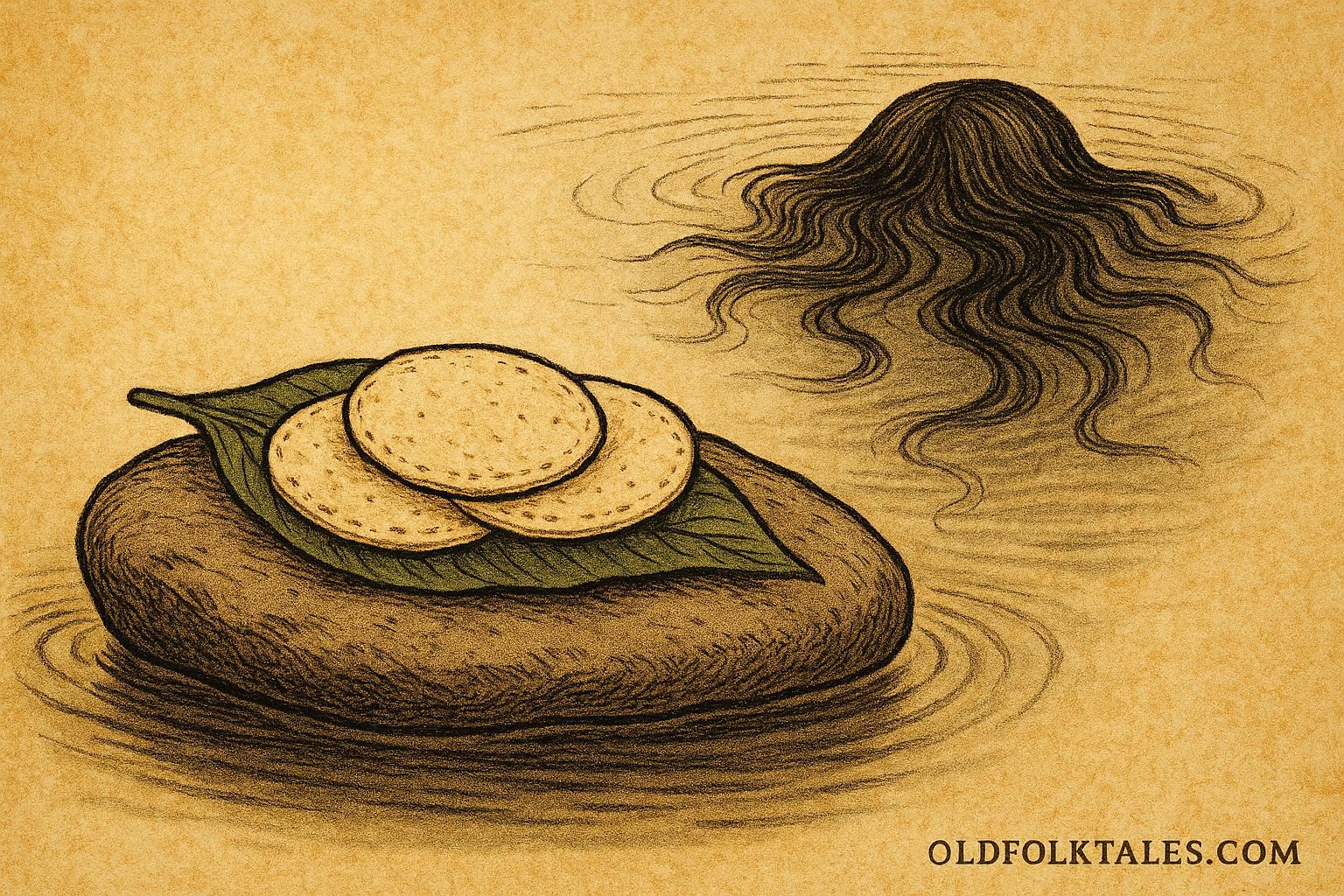
Along the winding, sun-dappled rivers that carve through Nicaragua’s eastern landscapes, where the water speaks in whispers against the bank and the air carries the scent of wet earth and blooming flora, there exists a melody. It is the song of La Sirena de las Tortillas, a being of beauty and mystery who dwells in the deep, quiet pools and shaded bends of the waterways that are the lifeblood of coastal communities.
She is a mermaid, but not of the distant, salty ocean. This siren belongs to the freshwater world, her realm the tannin-stained currents and clear, spring-fed lagoons. Villagers speak of her in hushed, reverent tones. She is described as possessing a breathtaking beauty, with long hair that flows like the river weeds and eyes that hold the depth of the water itself. When she is near, her voice carries on the breeze, not a scream or a wail, but a sound of enchanting song and light, cascading laughter that seems to rise from the very heart of the stream.
Her unique name, “The Mermaid of the Tortillas,” stems from a curious and specific tradition observed by the local fishermen and riverside families. It is said that her presence is most strongly felt, and her favor most easily gained, when an offering of fresh, warm tortillas is left at the water’s edge. The tortilla, the humble, essential staple of cornmeal baked on a hot comal, represents the very sustenance of the community. To offer it to the river spirit is to share the foundation of life itself, a gesture of profound respect that bridges the human world and the spiritual one. Fishermen might place a small bundle wrapped in a clean leaf on a flat stone by the bank before setting out in their dugout canoes, a silent plea for safe passage and a bountiful catch.
Yet, like the river that can be both life-giving and dangerous, La Sirena has two faces in the stories told about her. In one version, her song is one of profound mourning. She sings of loves lost to the currents, of warriors who never returned, of sorrows as old as the hills. This melancholic music, intertwined with the sighing of the wind through the cane and reeds, holds a powerful lure. It can draw a fisherman’s gaze from his nets, turn his steps from the safe, known path along the bank, and lead him deeper into the riverine wilderness until he becomes hopelessly lost, captivated by a grief that is not his own.
In another telling, her nature is more beneficent, though no less mysterious. To those who show consistent respect, who leave their offerings, who take only what they need from the river, who speak to its waters with gratitude, La Sirena de las Tortillas can be a spirit of abundance. She may offer visions in dreams: dreams of fish swimming in plentiful schools, of the river running clear and full, of the corn growing tall and hearty in the nearby fields. Her gift is not gold or jewels, but the promise of continued sustenance, a blessing upon the community’s livelihood.
Thus, she exists in the collective mind as a guardian spirit of the river’s bounty and a test of human intention. She represents the delicate pact between people and the natural world they depend upon. The offering of the tortilla is an acknowledgment of that dependence, a token of exchange. Her response, whether a haunting, distracting song or a dream of prosperity, serves as a measure of the community’s harmony with the environment. She is the soul of the river made manifest, beautiful and capricious, rewarding respect and reminding all who hear her song that the forces which feed the body can also captivate the mind.
The Moral Lesson:
This folktale emphasizes the importance of respect and reciprocity in humanity’s relationship with nature. It teaches that sustenance from the natural world is not a given right, but a gift that should be acknowledged through offerings and mindful practice, and that neglecting this respectful balance can lead one astray, both literally and spiritually.
Knowledge Check
Q1: Where does the Nicaraguan spirit La Sirena de las Tortillas reside?
A1: She haunts the riverbanks and waterways of Nicaragua’s eastern coastal regions, a freshwater mermaid.
Q2: Why is this mermaid specifically associated with tortillas?
A2: Fishermen and villagers believe she appears or shows favor when fresh tortillas, the staple food, are left as offerings at the river’s edge.
Q3: What are the two different aspects of La Sirena’s song and influence?
A3: In one version, her mournful song lures people away to get lost. In another, she offers benevolent dreams of abundance and bounty to those who respect the river.
Q4: Who is most likely to interact with La Sirena de las Tortillas in the legends?
A4: Fishermen and members of the riverside communities who live and work near her domain.
Q5: What does the offering of a tortilla symbolize in this cultural context?
A5: It symbolizes sharing the community’s essential sustenance with the spirit world, showing respect and seeking a reciprocal relationship with the river’s guardian.
Q6: What core theme does this folktale express about nature?
A6: It expresses that nature is a powerful, animate force that requires respect and offering, and that it can provide abundance or lead to peril based on human actions and attitude.
Source: Adapted from Cuentos, leyendas y mitos de Nicaragua.
Cultural Origin: Nicaragua (Riverine and coastal indigenous lore).