In the quiet Mestizo villages along the slow-moving Rio Hondo in Belize, where the water whispers against the bank and fog curls like ghostly fingers in the night air, parents tell a story to keep their children from the river’s edge after dark. It is the story of La Llorona, the Weeping Woman, whose grief is as deep and cold as the river itself.
Long ago, in one such village, there lived a young woman named Maria. She was known for her striking beauty, but also for the pride that swelled within her heart like the river in the rainy season. She caught the eye of a wealthy ranchero, a man who owned vast herds of cattle and wore fine clothes. He was captivated by her beauty and courted her with passionate words and rich gifts. Maria, flattered and dreaming of a life of luxury, gave him her heart. In time, she bore him two beautiful children, a boy and a girl.
But the ranchero was a man of his time and station. He provided for Maria and their children in secret, but he refused to marry her, for she was not of his class. Maria lived with this shame, her vanity slowly curdling into a quiet desperation, clinging to the hope that he would one day make her his wife.
That hope was shattered when the news swept through the village: the ranchero was to marry a woman from a proper, wealthy family. He abandoned Maria completely, leaving her with nothing but two children who now seemed like living reminders of her ruin and disgrace.
A storm of rage and despair, blacker than any hurricane cloud, consumed her. Blinded by a pain so profound it felt like madness, she took her children by the hand one fateful evening. She led them to the bank of the Rio Hondo, the water flowing dark and silent under the stars. In a moment of unspeakable horror, she pushed them into the deep current and watched them disappear. The instant the water closed over their tiny forms, the fog of rage lifted. She saw what she had done.
A scream tore from her soul, a sound of pure, shattered agony. “¡Ay, mis hijos!” she wailed. “Oh, my children!” Overcome with remorse and horror, she threw herself into the river after them, seeking a death she felt she deserved.
But death was not a release. It was the beginning of her punishment. For her sin, her spirit was condemned to wander the banks of the Rio Hondo for eternity, trapped between worlds. She became La Llorona.
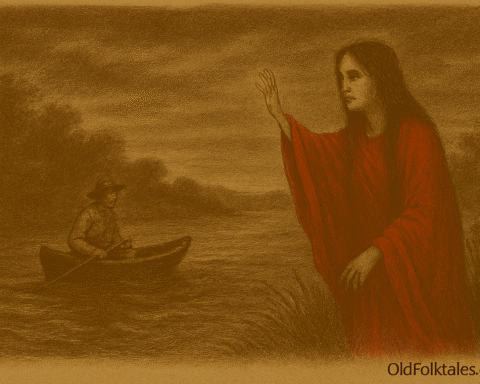
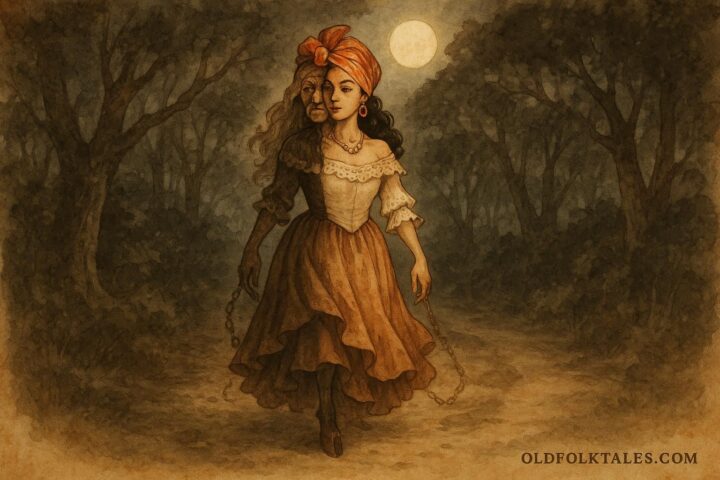
On foggy nights, when the moon is hidden, her terrible, piercing wail echoes across the water, “¡Ay, mis hijos! ¡Ay, mis hijos!” It is a sound of such profound sorrow that it chills the bones of anyone who hears it. She appears then, a spectral figure in a long white dress, forever soaked and clinging to her form. Her beautiful face is now a mask of endless grief, streaked with phantom tears and river water.
She is often seen walking the lonely paths by the river, a lost soul seeking what she can never find. She will approach travelers, especially men walking alone. In a voice hollow with sorrow, she will ask, “Have you seen my children?” Her manner is pitiful, a broken woman.
How one responds decides everything. If the traveler shows her kindness, answers with gentleness, offers a prayer, or simply acknowledges her pain with respect, she will often let out a soft sigh, her form will grow faint, and she will vanish back into the mist, her wail fading on the wind.
But if the traveler responds with mockery, shows cruel fear, or tries to run from her in contempt, her sorrow transforms. Her beautiful, sorrowful face will wither in an instant, becoming a fleshless, gleaming skull. Her hollow eyes will burn with a greenish fire. In this form, she is no longer just a mourner; she is a vengeful spirit. She will reach out with cold, bony hands, trying to grasp the one who scorned her, seeking to drag them down into the dark, watery grave she shares with her children, to make them know her despair.
This is the story told along the Rio Hondo. It is a warning that echoes through generations: do not let pride and rage poison your heart, for the consequences can curse you forever. And children, stay away from the river at night, for the Weeping Woman walks there, and her grief is a dangerous, hungry thing.
The Moral Lesson:
The legend of La Llorona serves as a powerful cautionary tale about the destructive consequences of unchecked passion, pride, and rage. It warns that actions born of momentary despair can lead to eternal remorse. Furthermore, it teaches the importance of compassion, suggesting that even in the face of terror, kindness is a shield, while cruelty invites vengeance.
Knowledge Check
Q1: What tragic action does Maria, who becomes La Llorona, commit?
A1: In a fit of rage and despair after being abandoned by her lover, she drowns her two children in the Rio Hondo and then drowns herself.
Q2: What is La Llorona’s eternal punishment?
A2: Her spirit is condemned to wander the riverbanks for eternity, weeping and searching for her lost children, unable to find peace.
Q3: What is La Llorona’s signature cry, and when is it heard?
A3: She is heard wailing “¡Ay, mis hijos!” (Oh, my children!) on foggy nights near the river, a sound of piercing sorrow.
Q4: How does La Llorona typically appear to travelers?
A4: She appears as a woman in a soaked white dress, her face a mask of profound grief, often approaching lonely travelers to ask about her children.
Q5: What two different reactions can a traveler’s response provoke from her?
A5: Kindness or respectful prayer may make her vanish peacefully. Mockery, fear, or cruelty will cause her face to turn skeletal and vengeful, and she may try to drag the offender into the water.
Q6: What is the primary purpose of telling this story in Belizean communities?
A6: It serves as a moral warning against destructive emotions and, practically, as a way to keep children from dangerous rivers at night by instilling a fear of the haunting spirit.
Cultural Origin: Belizean Folktale (Mestizo tradition, localized to the Rio Hondo).
Source: Mestizo oral tradition, with specific Belizean locales documented in collections like Cuentos de mi Abuela from Corozal.