In the lush forests of Jamaica, tales of Anansi, the clever spider, have long echoed among the people, teaching lessons about wisdom, humor, and the triumph of cleverness over brute power. This folktale tells how Anansi once managed to outsmart the fiercest creature in the forest: the mighty Tiger.
One bright morning, Anansi sat on a warm rock near the river, humming softly and plotting his next mischief. The day was golden, the air filled with the chatter of parrots and the hum of cicadas. The glistening river ran swift and deep, and there, drinking from its edge, was Tiger, the strongest and most feared animal in the land.
Anansi, who loved to test his luck, called out cheerfully, “Good morning, Brother Tiger! The sun hot today, eh? You heading across the river?”
Tiger raised his proud head and grunted. “Yes, Anansi. Mi going hunt on the far side. Why you ask?”
“Well,” Anansi said with a grin, “mi small and mi legs can’t handle the strong current. Would you be so kind to carry mi cross on your back?”
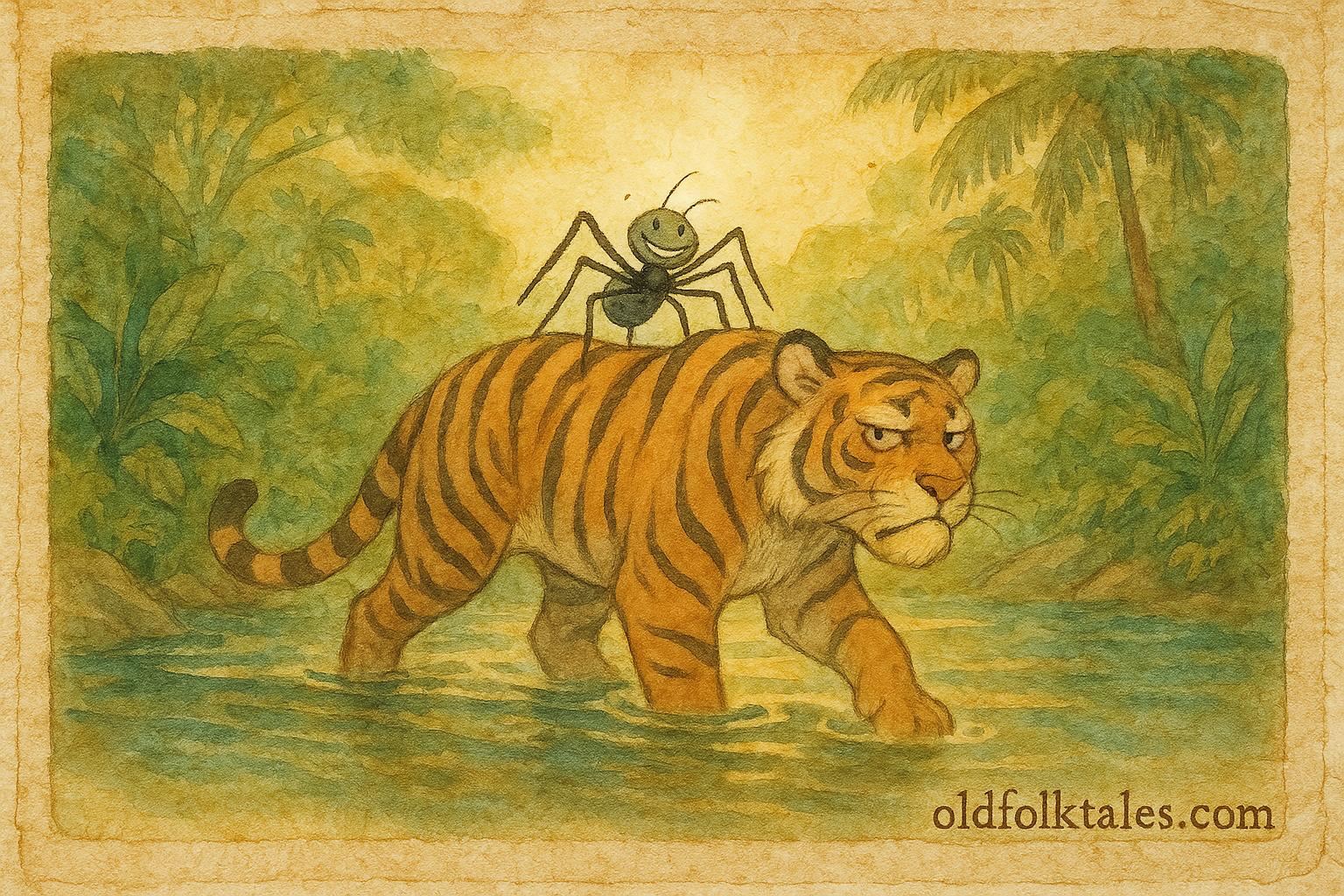
Tiger looked at the little spider and laughed, his great teeth flashing like ivory. “You? You so tiny, mi barely feel your weight. Jump on, then.”
With a sly smile, Anansi climbed onto Tiger’s back. The cool water swirled around Tiger’s legs as they started across the river. Midway through, when the current grew rough, Anansi began to sing in a teasing tone:
“Ride me Tiger, ride me slow,
If you drop me, you’ll never know!”
Tiger’s ears twitched. “Stop dat foolish song!” he growled, his deep voice rumbling over the water.
But Anansi only sang louder, his thin legs tapping against Tiger’s fur. The rhythm of his voice and the gentle slap of water made Tiger dizzy with irritation. He shook his mane and hissed, “Anansi! If you don’t hush, mi go toss you in de river!”
Still, Anansi didn’t stop. “Ride me Tiger, ride me slow”
At last, they reached the far bank. With a snarl, Tiger flung Anansi from his back, splashing water everywhere. “You troublemaker! You lucky mi in good mood today!”
Anansi brushed himself off, still smiling. “Ah, thank you, Brother Tiger. You so kind and gentle, truly, de kindest animal in de bush.”
Tiger, proud and flattered, stood tall. “Yes, Anansi, mi kindest indeed.”
But Anansi wasn’t done. As soon as Tiger trotted away, he scurried through the forest, shouting for all the animals to hear:
“Come quick! Tiger just tell mi him is mi donkey! Him carry mi ‘cross de river like a mule!”
The parrots squawked, the monkeys howled, and even the slow old tortoise chuckled. Word spread fast. When Tiger appeared again, every creature began to chant and laugh:
“Ride him, Anansi! Ride your donkey Tiger!”
Tiger’s face darkened like a storm cloud. The forest trembled as he roared, shaking the trees. But laughter only grew louder. Humiliated, Tiger fled deep into the mountains, his tail lashing behind him.
From that day on, Tiger avoided the other animals, and Anansi, clever and proud, walked freely through the forest, spinning tales of his wit and singing his victory song:
“Ride me Tiger, ride me slow,
If you drop me, you’ll never know!”
And so, Anansi proved once again that wit and wisdom can outmatch even the greatest strength.
Moral Lesson
The story of Anansi and Tiger reminds us that intelligence and clever thinking can overcome pride and power. Those who underestimate the small or weak may find themselves defeated by their own arrogance.
Knowledge Check
1. Who are the main characters in the Jamaican folktale “How Anansi Got to Ride Tiger”?
The main characters are Anansi, the clever spider, and Tiger, the proud and powerful beast of the forest.
2. What is the moral lesson of “How Anansi Got to Ride Tiger”?
The story teaches that wisdom and cleverness can triumph over physical strength and pride.
3. Why did Tiger agree to carry Anansi across the river?
Tiger agreed because he thought Anansi was too small to cause trouble and wanted to show his kindness.
4. How did Anansi embarrass Tiger before the other animals?
Anansi spread the rumor that Tiger had become his “donkey,” making all the animals laugh at Tiger.
5. What cultural tradition does the story of Anansi come from?
It comes from the Akan trickster tradition of West Africa, carried to Jamaica through African oral storytelling.
6. Why is Anansi considered an important figure in Jamaican folklore?
Anansi represents wisdom, survival, and the cleverness of the oppressed, symbols central to Caribbean oral tradition and African heritage.
Source: Adapted from “How Anansi Got to Ride Tiger” in Jamaica Anansi Stories by Martha Warren Beckwith (1924), New York: American Folk-Lore Society.
Cultural Origin: Jamaica (Akan–African trickster folklore)