Deep within the vast rainforest of La Mosquitia, where towering ceiba trees block the sun and winding rivers disappear into shadow, the Miskito people tell a story meant to be remembered and respected. It is not a tale told lightly, for it speaks of danger, survival, and the wisdom required to move safely through a land that can both sustain and destroy.
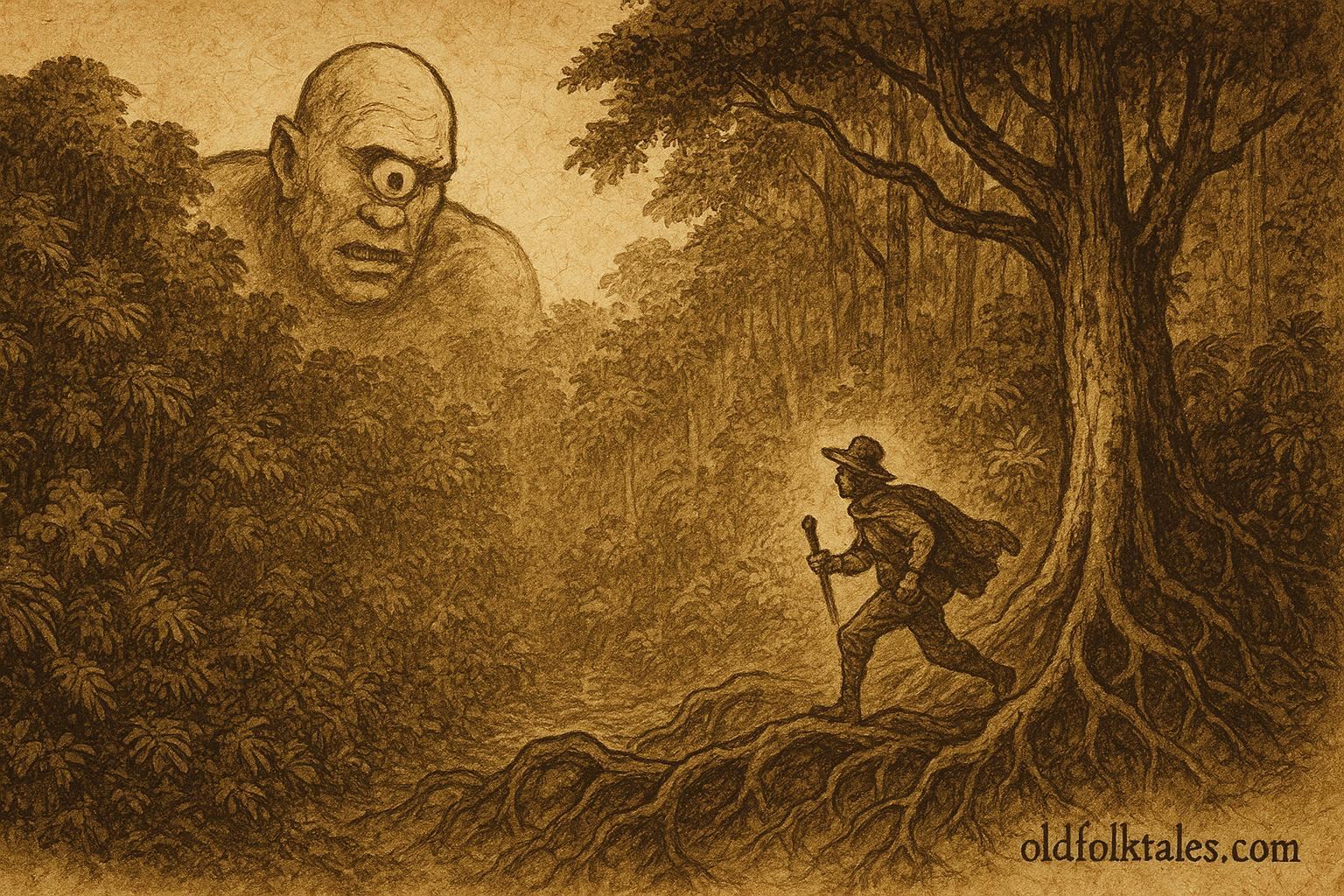
According to Miskito oral tradition, a one eyed giant lived far from the villages, hidden within the densest part of the jungle. This creature, known simply as El Cíclope, was said to be enormous in size, with strength beyond any ordinary being. Its single eye, set in the center of its forehead, allowed it to watch the forest paths carefully, especially those taken by travelers unfamiliar with the land.
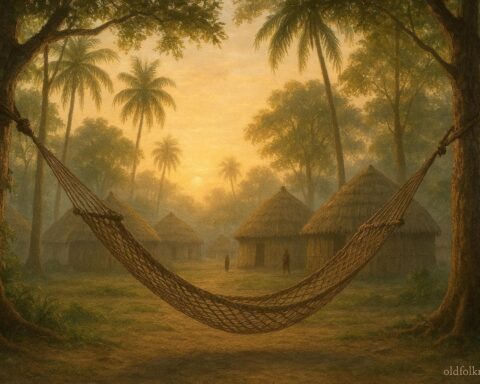
The rainforest itself plays an important role in this legend. The Selva Misquita is not merely a backdrop but a living presence, thick with tangled roots, sudden ravines, and deceptive clearings. For the Miskito people, the forest demands knowledge and caution. Those who ignore its signs or stray from known paths place themselves in great danger.
The story tells of a traveler who wandered too far into the jungle. Whether through curiosity, carelessness, or necessity, the traveler left the safe trails used by the community. As daylight faded and unfamiliar sounds filled the air, the traveler realized too late that the forest had closed around him.
It was then that El Cíclope appeared.
The giant moved silently despite its size, emerging from behind massive tree trunks and dense foliage. Before the traveler could escape, the creature seized him and carried him deep into the jungle. There, far from rivers and paths, El Cíclope held its captives, relying on its strength to ensure none could flee.
Many stories end here, serving as warnings. But this particular tale continues, for the captive did not surrender to fear.
Instead, the traveler observed.
While imprisoned, he studied the giant carefully. He noted how El Cíclope relied almost entirely on its physical power and its single eye. The creature did not anticipate deception, nor did it expect intelligence from those it captured. This arrogance became its weakness.
The traveler waited patiently, conserving strength and watching for opportunity. He spoke when necessary and remained silent when observation mattered more. Over time, he learned the habits of the giant and recognized moments when its attention wavered.
Using wit rather than force, the captive devised a plan. At the right moment, he distracted El Cíclope, confusing the creature and using its limited vision against it. The giant, unaccustomed to being challenged, reacted slowly. In that brief window, the traveler escaped into the forest.
The jungle that once trapped him now became his ally. Remembering the signs taught by his people, he followed the land itself. He moved with care, listening to the forest rather than fighting it. By dawn, he reached familiar territory and returned safely to his community.
The escape did not mean El Cíclope was defeated forever. The giant remained in the depths of the rainforest, a reminder that danger still existed for those who ignored traditional knowledge. The story was never meant to glorify conquest but to emphasize survival.
Among the Miskito people, this legend reflects a deep understanding of the land. It teaches that brute strength, whether human or monstrous, is not the greatest power. Awareness, patience, and respect for nature are far more valuable.
Parents shared this tale with children so they would learn to stay on known paths. Elders used it to remind travelers that the forest demands humility. Even today, the story of El Cíclope de la Selva Misquita carries the voice of ancestral experience.
Moral Lesson
This folktale teaches that survival depends on intelligence, patience, and respect for the natural world, not on strength alone.
Knowledge Check
-
Who is El Cíclope in the story
A one eyed giant living deep in the rainforest -
What mistake does the traveler make
Straying from known forest paths -
How does the captive escape
By using observation and cleverness -
What does the jungle represent
A powerful and dangerous natural force -
What cultural lesson does the story teach
Respect for nature and traditional knowledge -
Where does this folktale originate
La Mosquitia region of eastern Honduras
Source: Indigenous ethnographic folklore records
Cultural Origin: Miskito people, La Mosquitia region, eastern Honduras