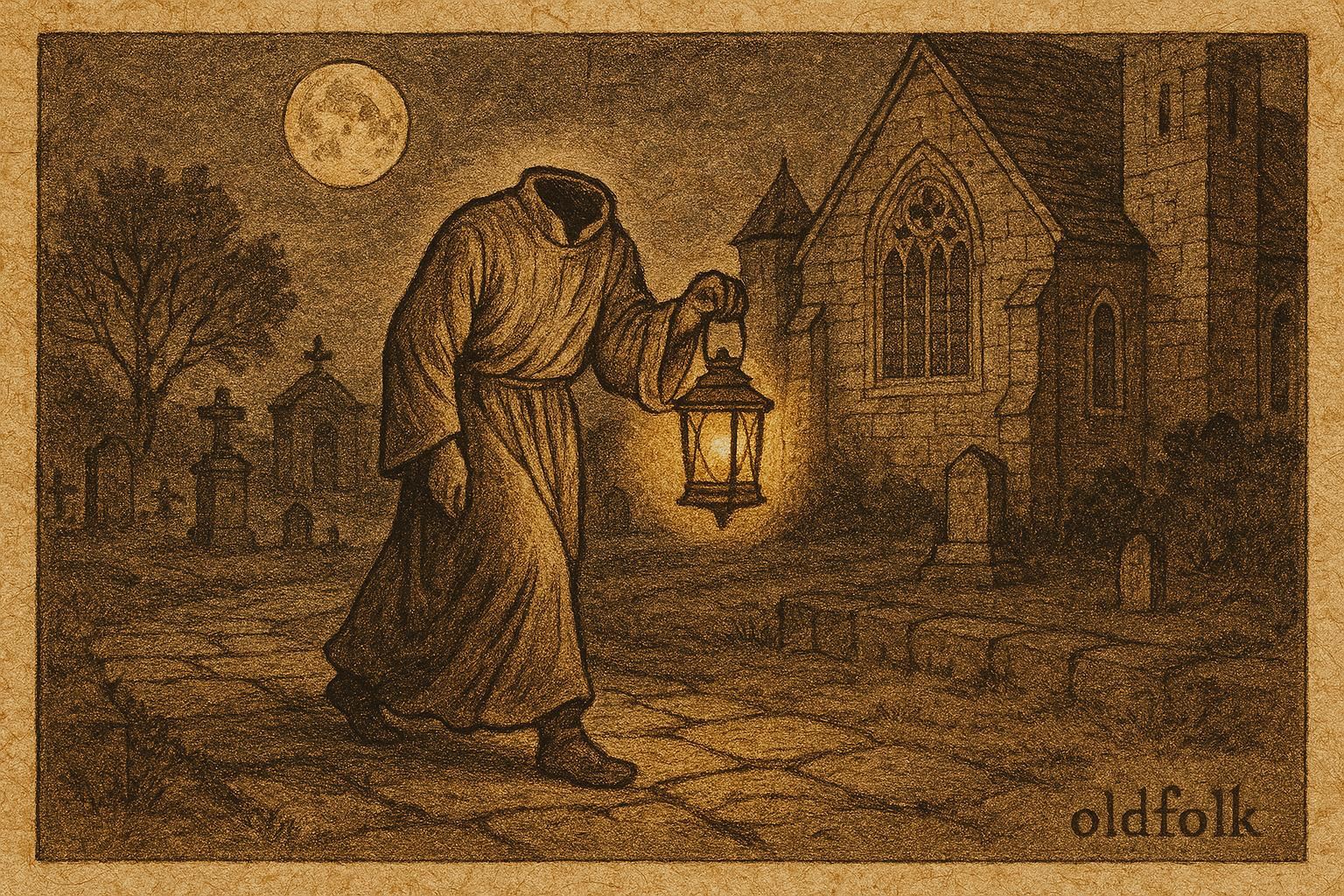
Padre is the name whispered with unease in the old city of León when the streets grow silent and the church bells have long ceased their tolling. Long after midnight, when doors are bolted and lanterns extinguished, there are those who claim to see him moving through the shadows. He is known as El Padre sin Cabeza, the Headless Padre, a ghostly priest condemned to wander the earth for violating his sacred vows.
According to the oral tradition of colonial León, the Padre was once a clergyman entrusted with spiritual authority and moral responsibility. He wore the robes of the Church and walked among the faithful, expected to live in humility, discipline, and devotion. Yet, in life, he broke the vows that defined his calling. The exact nature of his transgression is never spoken aloud, but the community agrees that it was grave enough to stain his soul.
His death came under mysterious circumstances. Some say he vanished suddenly, others claim he died without confession or absolution. What is certain is that after his burial, peace did not follow. Instead, the nights of León became haunted by a presence that did not belong to the living.
The Padre is said to appear without warning. Witnesses describe a tall, robed figure walking slowly through churchyards, cloisters, and deserted streets. In one hand, he carries a lantern that glows steadily, yet no flame can be seen within it. The lantern floats unnaturally, casting light upon stone paths where no footsteps ever sound. Most terrifying of all is that where his head should be, there is only empty darkness.
Those who encounter the Padre speak of an overwhelming dread that grips the body before the mind can react. The air grows cold, the lantern’s light seems to stretch and distort, and the silence becomes unbearable. People freeze in place, unable to flee or speak, as the headless priest passes by without acknowledging them.
It is said that anyone who crosses his path suffers consequences. Some fall ill days later, struck by sudden weakness or fever. Others are plagued by fear and sleeplessness, haunted by the memory of the lantern drifting through the dark. No one claims to be harmed physically, yet the terror lingers long after the encounter ends.
The Padre never speaks. He never raises his hand or changes his pace. He simply walks, bound to an eternal vigil among the places he once served. Churchyards are his most frequent path, as though he is forever seeking forgiveness he can no longer obtain.
The people of León believe the haunting is a warning. The Padre’s fate stands as a reminder of the weight of sacred responsibility. To betray a holy vow is not merely a personal failure, but a spiritual rupture that echoes beyond death.
Parents caution their children not to wander after midnight. Elders speak of the Padre with solemn respect rather than mockery. His story is not told for entertainment, but as a moral lesson embedded in fear and reverence.
Even today, long after the colonial era has passed, the legend remains alive. León’s old streets, worn smooth by centuries of footsteps, are still said to remember the Padre’s silent walk. When a lantern flickers unexpectedly in the night, some still turn away, unwilling to see whether the headless priest has returned once more.
Moral Lesson
The tale of El Padre sin Cabeza teaches that sacred duties must be honored with integrity. It warns that abusing spiritual authority carries consequences beyond life, and that moral responsibility cannot be escaped through secrecy or silence.
Knowledge Check
1. Who is El Padre sin Cabeza?
He is a ghostly priest who violated his sacred vows and now wanders León at night.
2. Where does the legend take place?
The story is set in the colonial city of León, Nicaragua.
3. What object does the Padre carry?
He carries a lantern that floats unnaturally and lights his path.
4. Why is the Padre headless?
His missing head symbolizes spiritual loss and moral transgression.
5. What happens to those who encounter him?
They experience overwhelming fear and often fall ill afterward.
6. What cultural purpose does the legend serve?
It reinforces religious morality and respect for sacred duties.
Cultural Origin and Source
Source: Nicaraguan folktale, Nicaragua
Adapted from Leyendas y cuentos populares nicaragüenses by Carlos Ampié Loría.
Cultural Origin: Colonial oral tradition, León, Nicaragua.