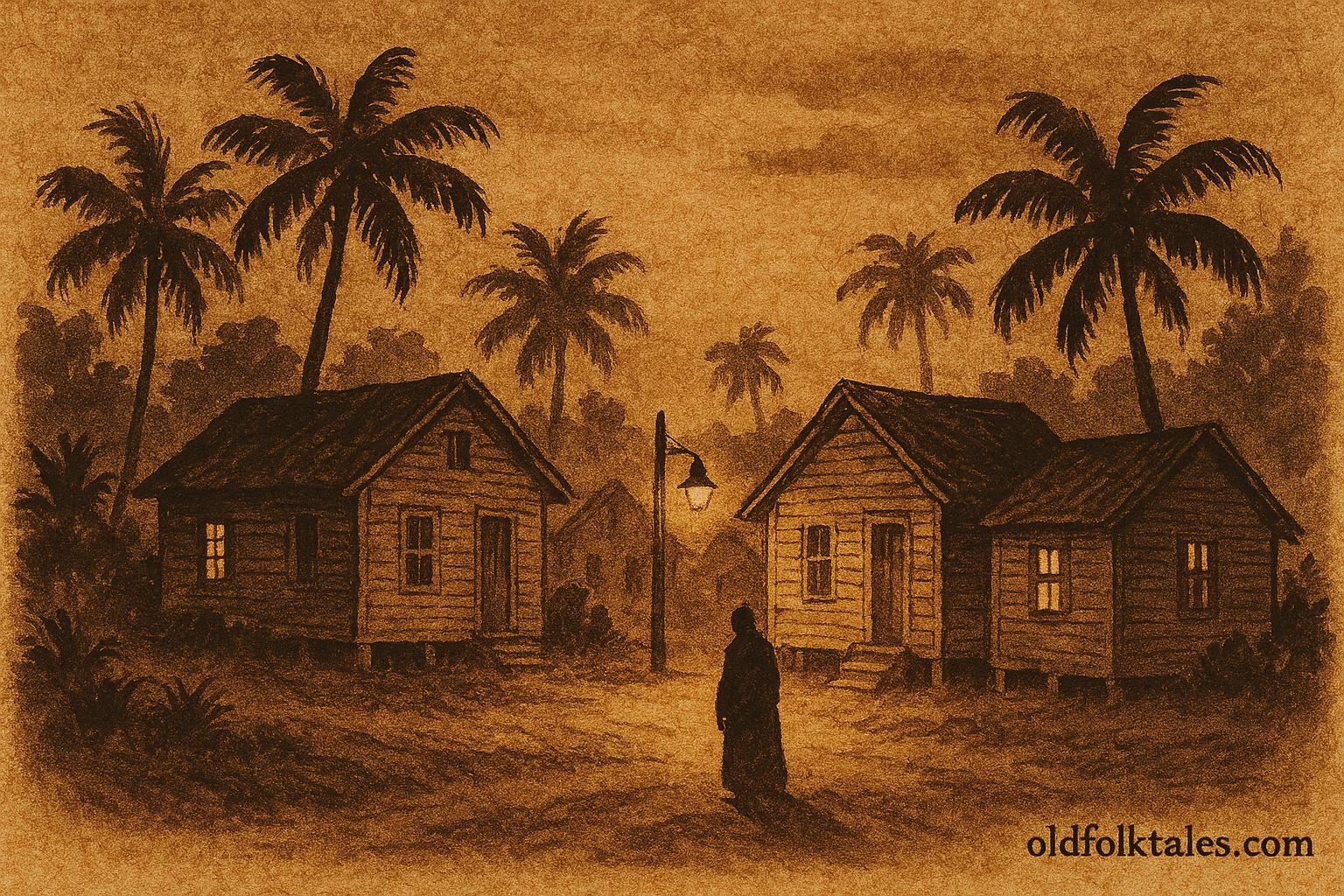
When night settles over the Bahamian islands and the warm air grows still, the world seems to listen. Crickets soften their songs, palm fronds whisper, and shadows stretch long across sandy yards. It is at this hour that Bahamian elders have long spoken of B’Gully, a figure not found in a single tale but woven through countless warnings, lullabies, and hushed reminders meant to guide children toward obedience and safety.
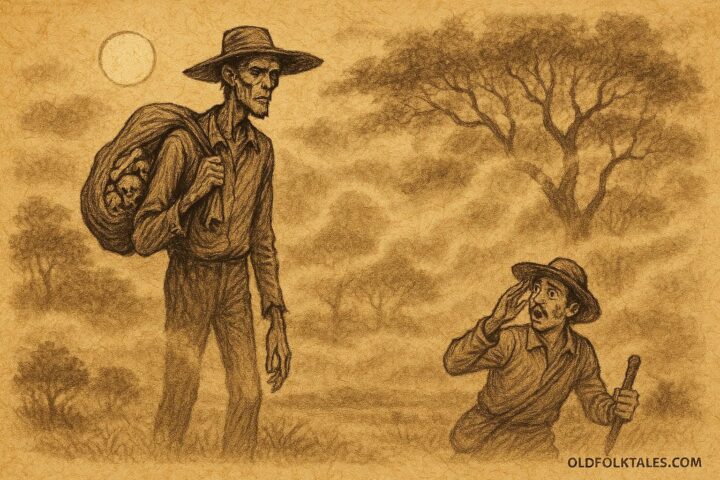
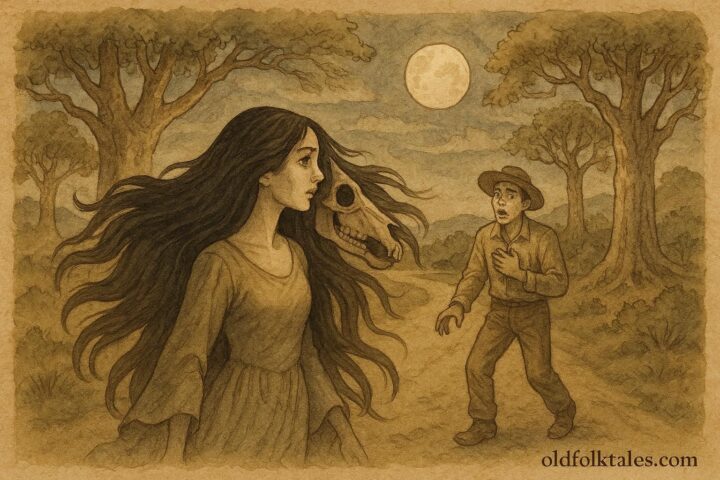
B’Gully was never described the same way twice. To some children, he was tall and thin, moving silently between trees. To others, he was little more than a shape darker than darkness itself, with eyes that watched from corners where lantern light could not reach. Parents rarely explained exactly what B’Gully looked like. That uncertainty was part of his power.
In homes across the Bahamas, B’Gully entered conversation whenever a child strayed too far from the yard, ignored chores, or refused to settle when the sun went down. Mothers would pause their cooking and say calmly, “Behave yourself, or B’Gully will hear you.” Fathers would glance toward the dark road beyond the house and add, “He walks at night looking for noisy children.” These words were not shouted. They were spoken with certainty, as though stating a simple fact of life.
Children learned early that nighttime belonged to adults, spirits, and unseen dangers. The islands were full of hazards once daylight faded. Open wells, dense bush, unfamiliar animals, and strangers passing through settlements all posed real risks. B’Gully became the name given to these dangers, shaped into a figure that children could understand and fear.
As evening deepened, lamps were lit and doors were closed. Children were called indoors, washed, fed, and settled onto mats or beds. If one lingered near the doorway or whispered after bedtime, an elder might quietly remind them that B’Gully moved silently and listened closely. He was said to come when children disobeyed their parents or wandered where they did not belong.
Unlike monsters in other stories, B’Gully did not roar or chase. He waited. He appeared only when rules were broken and warnings ignored. This made him more frightening than a creature that attacked openly. B’Gully represented consequences rather than violence, a presence tied to choice and behavior.
Children shared their own versions among themselves. Some claimed B’Gully lived in abandoned houses or hid behind water tanks. Others believed he traveled along paths near the sea, drawn by the sound of children laughing too late into the night. These stories changed from island to island and even from yard to yard, but the lesson remained the same.
As children grew older, their fear shifted into understanding. They realized that B’Gully had never been seen because he was not meant to be. He was a lesson given shape, a way for parents to protect children in a world where danger did not always announce itself. Yet even adults spoke of B’Gully with respect, lowering their voices when mentioning his name after dark.
In some families, B’Gully was described as a watcher rather than a taker. He observed children to see if they listened, obeyed, and stayed close to home. In this telling, he did not punish directly but allowed misfortune to find those who ignored guidance. This version reinforced the idea that behavior shaped outcomes.
Over time, B’Gully became part of cultural memory. He appeared in songs, jokes, and playful threats, but his purpose never changed. He taught boundaries. He taught caution. He taught children that the world held mysteries beyond what they could see and that wisdom often meant listening before learning the hard way.
Even today, the name B’Gully carries weight. Though modern life has changed the islands, parents still invoke him when night falls and children test limits. He remains a reminder that folklore does not always need heroes or adventures. Sometimes it exists simply to keep people safe.
Moral Lesson
The figure of B’Gully teaches children the importance of obedience, caution, and respect for parental guidance. It reminds listeners that unseen dangers exist and that wisdom often lies in listening to those who know the world best.
Knowledge Check
1. Who is B’Gully in Bahamian folklore?
B’Gully is the Bahamian version of the bogeyman used to warn children.
2. Does B’Gully appear in one fixed story?
No, B’Gully exists as a cultural figure in many warnings and sayings.
3. When is B’Gully said to appear?
He is associated with nighttime and disobedient behavior.
4. What does B’Gully symbolize?
He represents unseen dangers and the consequences of ignoring guidance.
5. Why did parents use B’Gully in child-rearing?
To keep children safe and encourage obedience.
6. How has B’Gully endured in Bahamian culture?
Through oral tradition, family warnings, and shared childhood memories.
Source
Adapted from oral traditions recorded in the Bahamian Songs and Stories Collection, Library of Congress.
Cultural Origin: The Bahamas.