In the heart of Honduras, near winding rivers that shimmer beneath the moonlight, villagers whisper about La Sucia, a ghostly spirit whose presence chills the night air. The name La Sucia, meaning “the Dirty One,” has echoed through generations, carried by the wind that rustles through ceiba trees and overgrown reeds. This haunting folktale is told around firesides to warn the curious and the vain of the dangers that lie by the riverbanks after dark.
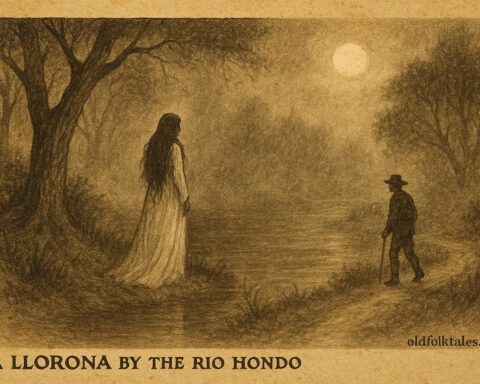
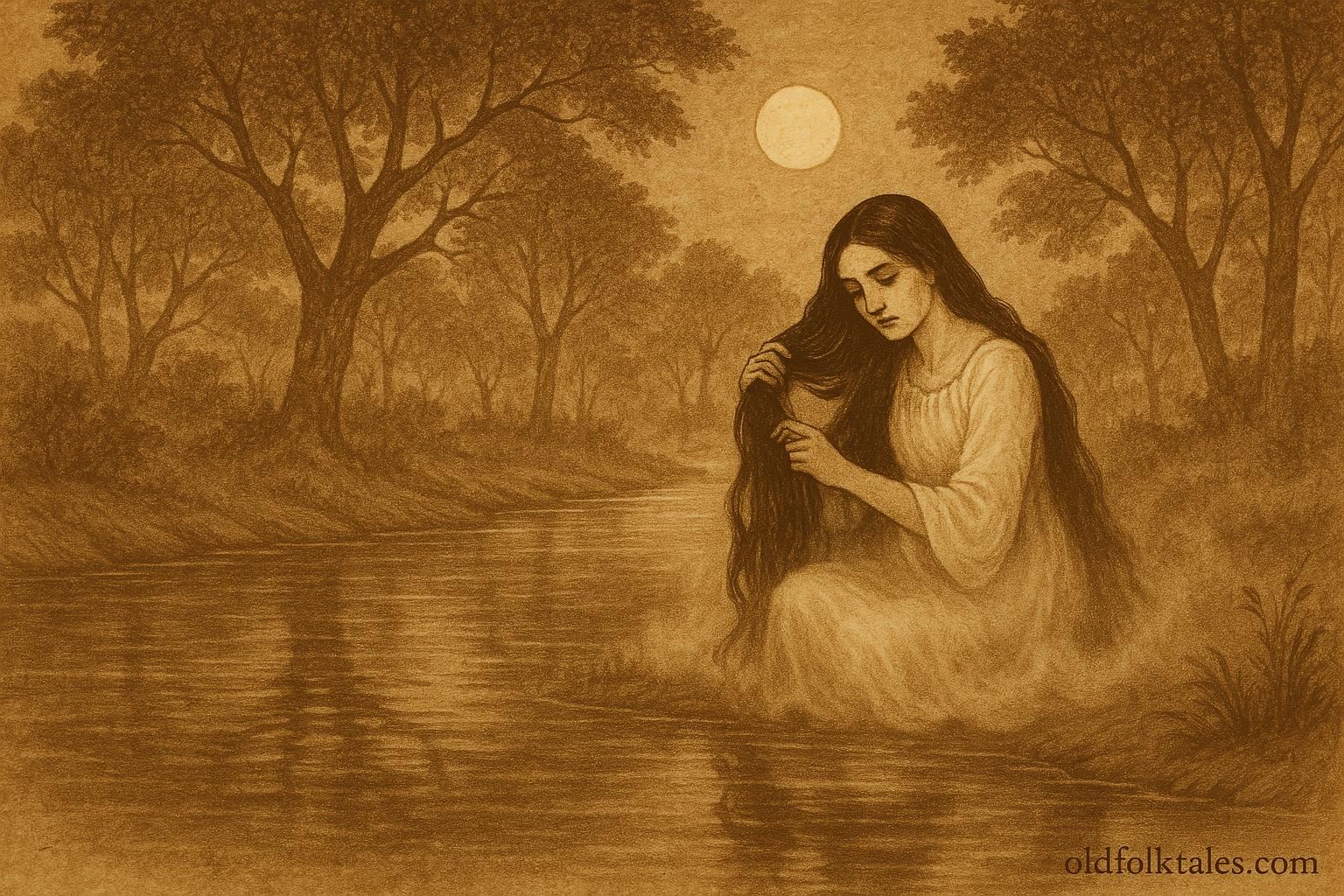
La Sucia is said to appear along lonely paths that run beside the river, her long, tangled hair cascading down her back like a black waterfall. She wears a white dress that glows faintly under the moon, the fabric flowing as though it were made of mist itself. Her beauty is undeniable, until one dares to look closer.
Travelers who see her describe her as sitting quietly by the water’s edge, combing her hair with slow, rhythmic strokes, her gaze fixed upon her reflection in the rippling stream. Her face remains hidden beneath her dark hair. She hums softly, a melody so sorrowful and sweet that it tugs at the heart, drawing in anyone who happens to pass by.
Curious men, enchanted by her voice or her delicate form, approach her, believing she is a lost maiden in need of help. Her voice grows tender as she greets them. “Good evening,” she whispers, without lifting her head. “Would you stay with me by the river awhile?”
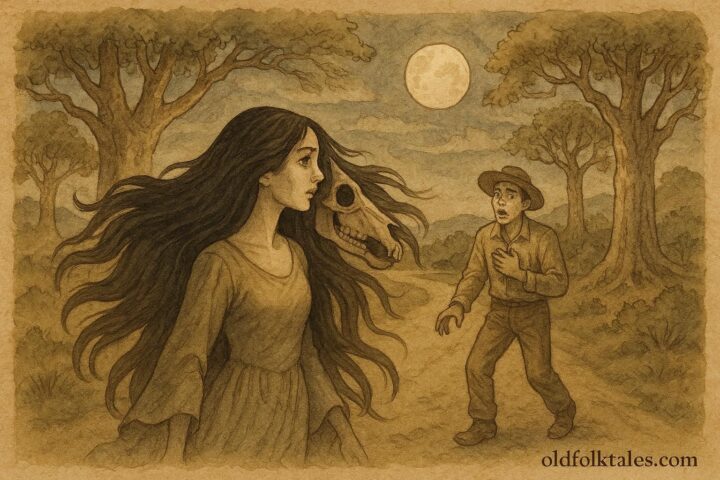
But when they come close enough to touch her shoulder, La Sucia raises her head, and the illusion of beauty shatters. Her true face is revealed: not of a woman, but of horror. Some say it is a skull, empty sockets glowing with pale fire. Others insist it is the head of a horse, with wild eyes and flaring nostrils, neighing in fury.
Those unfortunate enough to look upon her visage either die from terror or lose their sanity forever, wandering the forests as broken souls.
The elders of Honduras say La Sucia was once a living woman, proud and beautiful, but consumed by vanity. She loved her reflection more than life itself, spending hours by the river, admiring her face in the water. One night, she committed a grave sin, shaming herself and her community. For her pride and impurity, she was cursed by Heaven to wander the earth, never able to rest or cleanse herself of her misdeeds.
Now, La Sucia roams the riverside eternally, doomed to seek others to share her suffering. When she finds men who are vain, boastful, or unfaithful, she draws them close, not out of love, but as a mirror of their own corrupted hearts. She is both the warning and the punishment.
To this day, parents warn their children, “If you ever see a woman by the river at night, combing her hair, do not look at her face. Pray, and walk away.”
The story of La Sucia is more than a ghostly legend, it reflects a moral truth deeply rooted in Honduran culture: that beauty without virtue leads only to ruin, and vanity blinds us from the purity of the soul.
Moral Lesson
The tale of La Sucia teaches that vanity and pride can corrupt even the purest spirit. True beauty lies in humility and goodness, not in appearances or admiration.
Knowledge Check
1. Who is La Sucia in Honduran folklore?
La Sucia is a cursed spirit who haunts riverbanks in Honduras, appearing as a woman with long hair and a hidden face.
2. What is the focus keyword of the tale?
The focus keyword is vanity, representing the moral core of the story.
3. Why does La Sucia haunt the riverside?
She is punished for her vanity and sinful pride, doomed to wander the earth seeking others to share her torment.
4. What happens when someone looks at La Sucia’s face?
Those who see her true form, a skull or horse’s head, lose their sanity or die of fright.
5. What cultural lesson does the story teach?
It warns against vanity and pride, encouraging moral purity and humility.
6. What does La Sucia symbolize in Honduran folklore?
She represents the consequences of moral corruption and the eternal punishment of those who value beauty over virtue.
Source: Adapted from Tradiciones y Leyendas de Honduras by Jesús Aguilar Paz (1931); oral versions collected in Comayagua and Valle; Honduras.com – La Sucia.
Cultural Origin: Honduras (Central American folklore)