In the warm hills of Jamaica, stories of Anansi, the cunning spider, are told to teach lessons about wisdom, pride, and the folly of ignoring good advice. This folktale tells how Anansi’s arrogance led him into painful trouble with the cowitch, a plant well known on the island for its fiery sting.
One bright morning, Anansi decided it was time to build a fine new house. He wanted everyone in the forest to admire his cleverness and say, “See how smart Anansi is! He builds better than all of us.” So, with pride in his heart and a spring in his step, he set out to gather materials.
As he walked through the bush, the sunlight flickered through the thick leaves, painting golden spots on the forest floor. Soon, he came upon a patch of vines that shimmered like silk in the morning light. The vines were long, strong, and flexible, perfect for making ropes. But they were cowitch, the stinging weed feared by all who worked the land. The fine hairs on its vines burned the skin with a fire that made even the strongest man cry.
Anansi’s wife, who was nearby gathering herbs, called out, “Anansi, no touch dat cowitch! It will burn your skin bad!”
But Anansi only laughed, brushing off her warning. “Mi smarter than plant, woman! Rope cyaan burn me. Mi go show dem animals how clever Anansi really is.”
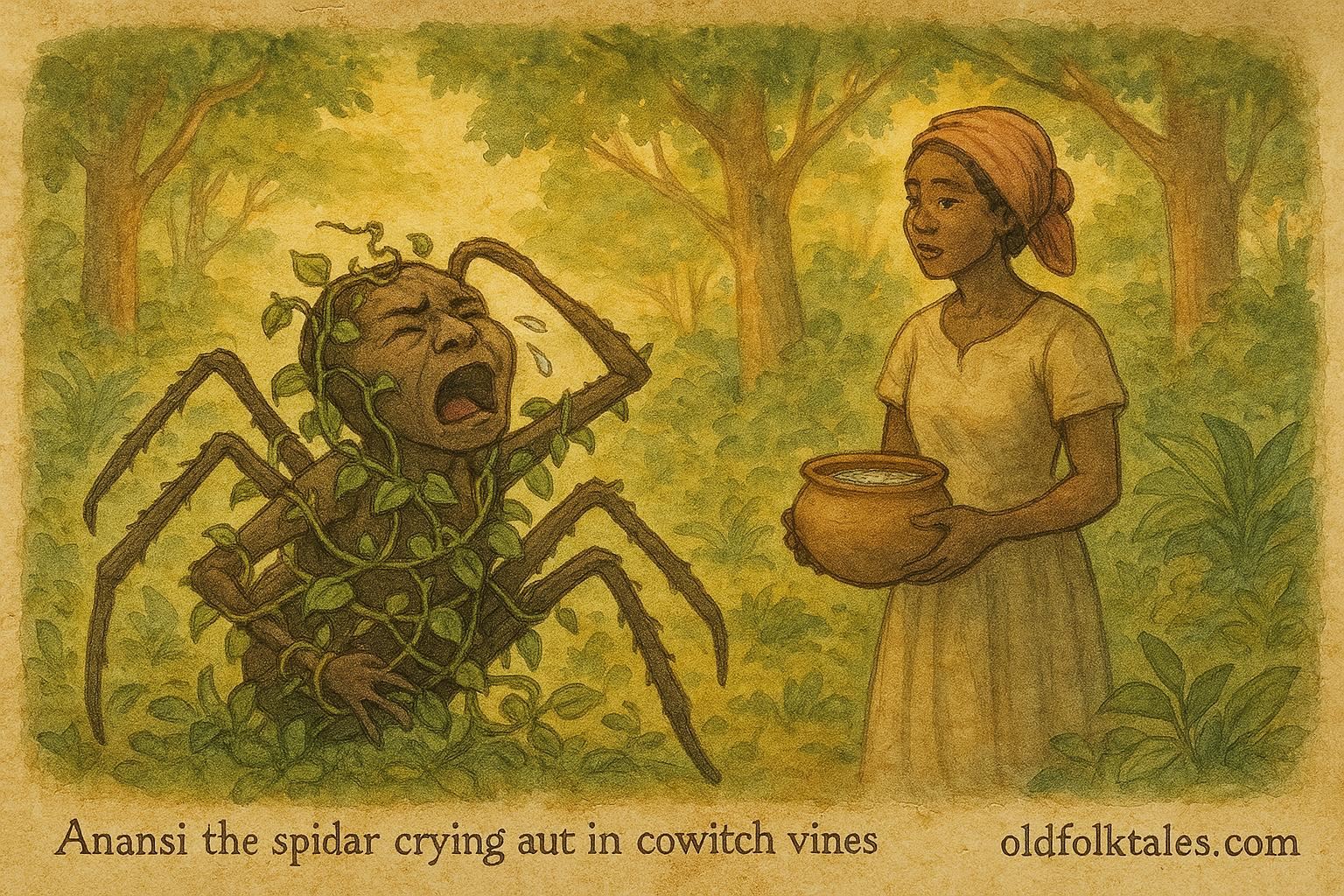
He plucked a vine and began to twist it into rope. At first, it seemed easy, the fibers were smooth and obedient under his clever fingers. But as soon as he tied the first knot, a thousand tiny stings pricked his skin. His arms burned, his chest blazed, and before he knew it, he was scratching and writhing like a mad thing.
“Lawd have mercy! Fire inna me belly!” he cried, leaping and rolling on the ground. His legs kicked up dust as he shouted and scratched, trying to stop the sting that spread across his body like wildfire.
His wife ran over with a calabash full of cool water. “Anansi, you fool! Mi tell you, no touch dat cowitch! Here, wash it off quick!”
But even in his pain, Anansi’s pride held firm. He waved her away and groaned, “No water, woman, bring sense!”
The animals of the forest peeked from behind the trees. Monkey laughed so hard he nearly fell from his branch. Parrot squawked, “Cowitch rope burn Anansi! Cowitch rope burn Anansi!” Even wise Tortoise shook his head slowly and said, “When pride walk before sense, trouble follow close behind.”
Finally, when the stinging eased and his wife’s patience ran thin, Anansi sat up, still scratching his arms. His pride had melted like wax under the sun. “Maybe,” he muttered, “just maybe, mi not smarter than everyting after all.”
From that day on, the tale of Anansi and the cowitch spread far and wide across Jamaica. Elders told it by the fireside to warn the young: when pride blinds the wise, even a plant can teach them humility.
And so the saying was born, when someone acts foolishly out of pride, Jamaicans still say he “tie himself wid cowitch.”
Moral Lesson
The story teaches that pride can make even the cleverest person foolish. Wisdom comes from listening and humility, not from showing off. Those who ignore good advice may end up hurting only themselves.
Knowledge Check
1. Who are the main characters in “The Cowitch and the Spider”?
The main characters are Anansi, the clever but proud spider, and his wise, cautious wife.
2. What lesson does the Jamaican folktale teach?
It warns that pride and arrogance can lead to painful consequences when one ignores wise advice.
3. What is cowitch in the story?
Cowitch is a stinging vine that causes severe itching and burning, symbolizing the pain of foolish pride.
4. How does Anansi react when the cowitch burns him?
He leaps, rolls, and cries out in pain, refusing help because of his pride.
5. What does the saying “tie himself wid cowitch” mean in Jamaican culture?
It means someone has brought trouble upon themselves through their own foolish pride or stubbornness.
6. What cultural origin does the story come from?
It originates from Jamaica and is part of the African-derived Anansi folktale tradition, used to teach moral lessons.
Source: Adapted from “The Cowitch and the Spider” in Jamaican Song and Story by Walter Jekyll (1907), London: David Nutt.
Cultural Origin: Jamaica (African–Caribbean folklore)