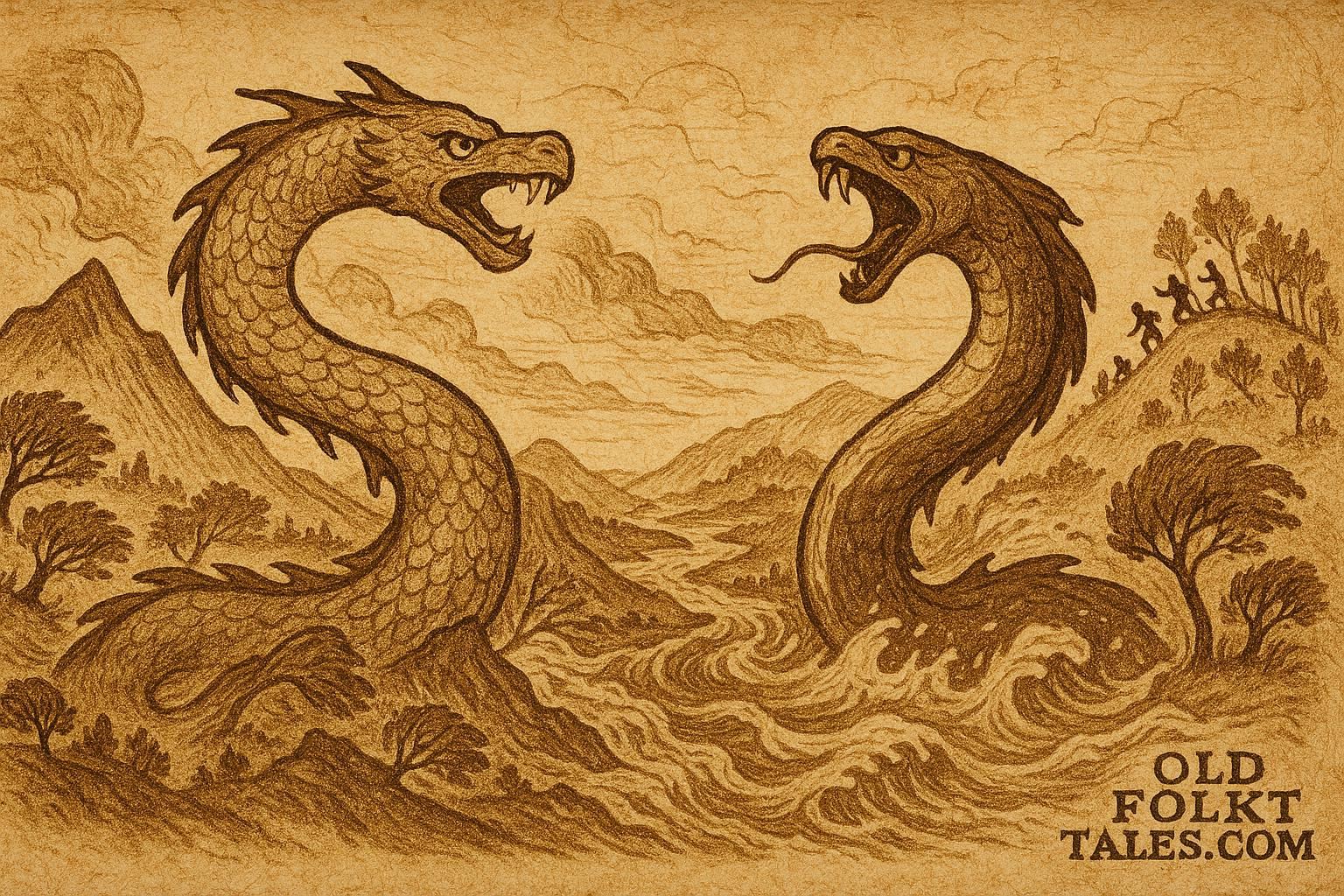
Long ago, when the world was young and the lands of southern Chile were still being formed, the Mapuche people tell that two colossal serpents shaped the earth and seas through a battle of cosmic proportions. These were Trentren Vilu, the serpent of the land, and Caicai Vilu, the serpent of the waters.
Trentren Vilu slithered across the earth, enormous and powerful, her scales blending with the soil, rocks, and mountains. Wherever she passed, valleys deepened, hills rose, and fertile plains stretched outward. She was the guardian of the land and all creatures that walked upon it, protecting humans, animals, and forests alike.
Caicai Vilu was the opposite yet equal in might, ruling the seas and rivers. Her enormous body surged through oceans and lakes, her presence creating waves and floods. She demanded respect for the waters, ensuring that rivers and rain nourished the land and punished those who disrespected her domain.
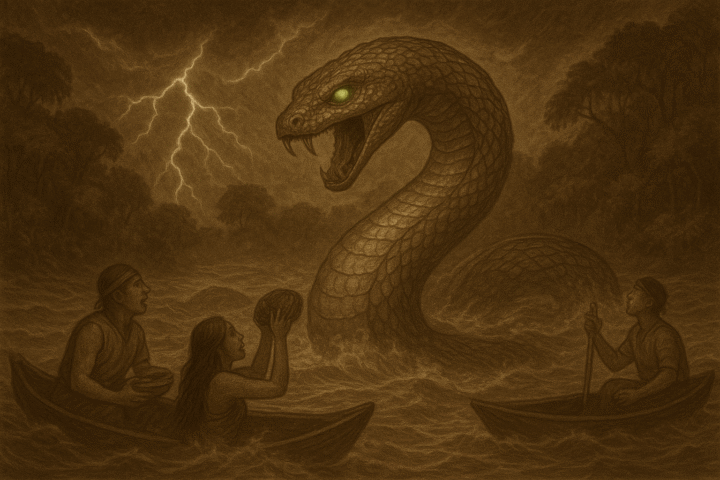
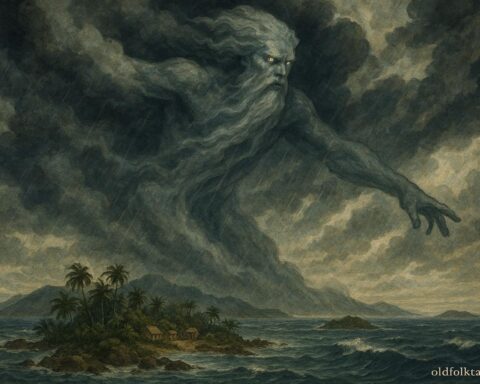
Conflict arose when humans, unknowing of cosmic balance, angered Caicai Vilu through reckless fishing and disregard for waterways. Outraged, she flooded the valleys and chased the people toward higher ground. Trentren Vilu, seeing the threat to humans and animals, rose in defense, pushing the earth upward with her immense strength, raising mountains, hills, and islands to shelter the living.
The battle between the serpents was violent yet sacred. Caicai Vilu poured endless torrents of water, covering plains and forests, while Trentren Vilu twisted through the land, lifting soil and stone to create refuge. Trees that were once mere saplings became peaks on hills, rivers changed course, and mountains arose where valleys had been. Each motion of the serpents shaped the geography, leaving behind the islands and mountains of southern Chile, including the Chilóe Archipelago, as reminders of their struggle.
People who witnessed the floods and earth-shaping trembled, but the Mapuche understood the lesson: the land and sea are sacred, intertwined in cosmic harmony. Animals sought higher ground or swam with the waters, humans climbed hills or took shelter in forests, and the serpents eventually paused, exhausted but vigilant, their energies still present in every mountain and river.
Even today, the people of Chilóe say that the spirits of Trentren Vilu and Caicai Vilu remain in the land and water. The rise of mountains, the flow of rivers, and the archipelago’s islands are sacred marks of their battle. Mapuche parents tell children that respecting the earth and waters honors both serpents and maintains balance between land and sea.
Click to read all South American Folktales — timeless stories from the Andes to the Amazon.
Moral Lesson
The legend of Trentren Vilu and Caicai Vilu teaches that harmony between humans, land, and water is essential. Disrespecting natural resources provokes imbalance, while reverence ensures survival and coexistence.
Knowledge Check
1. Who is Trentren Vilu?
The serpent of the earth, guardian of land and all living creatures on it.
2. Who is Caicai Vilu?
The serpent of water, protector of oceans, rivers, and lakes.
3. What natural phenomenon does the battle explain?
The formation of southern Chile’s mountains, valleys, and the Chilóe Archipelago.
4. How did humans survive the floods?
By seeking higher ground and respecting the sacred balance of land and water.
5. What cultural lesson does the story convey?
Respect for nature and the interconnectedness of land, water, and life.
6. Which indigenous people tell this legend?
The Mapuche of southern Chile.
Cultural Origin and Source
Source: Mapuche folktale, Chile
Adapted from Legend of Trentren Vilu and Caicai Vilu — Wikipedia,
Cultural Origin: Mapuche, southern Chile (Chilóe Archipelago and mainland)