In a prosperous region of Haiti, there once lived a powerful man whose wealth and authority placed him above the concerns of ordinary people. Some versions of the story say he was a king; others describe him as a man of great riches and influence. His household was large, his commands rarely questioned, and his desires often fulfilled without resistance.
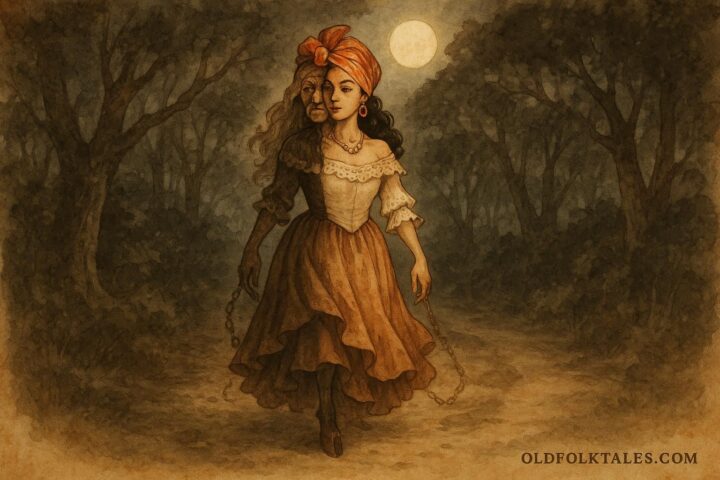
Among those who lived under his protection was his niece, a young woman admired for her beauty, gentleness, and modest conduct. She had been raised within his household and trusted him as family. Yet as she grew older, the man’s attention toward her changed. What should have remained the care of an uncle turned into an unlawful desire. Ignoring both custom and sacred law, he announced his intention to marry her.
The declaration struck the household with fear and shame. Such a union was forbidden by both social order and spiritual law. The girl herself was horrified. She pleaded with her uncle to abandon the idea, reminding him of their bond and the deep wrongdoing such a marriage would bring. But power had blinded him. He dismissed her fear and prepared to take her by force if necessary.
With no earthly protection left to her, the girl turned to prayer. Alone and desperate, she called upon divine mercy, asking to be saved from a fate that violated both her body and her soul. In response, a supernatural helper appeared. In Catholic-influenced tellings, this figure is the Virgin Mary; in others, a compassionate lwa answers her plea. The presence was gentle but firm, offering protection through wisdom rather than violence.
The helper gave the girl three objects and careful instructions. Each item, she was told, would become a barrier if used with faith. Taking them, the girl fled in the night, running as fast as she could from the house that had become a prison.
When her uncle discovered her escape, his obsession drove him into pursuit. His anger grew with every step, and he swore nothing would stop him.
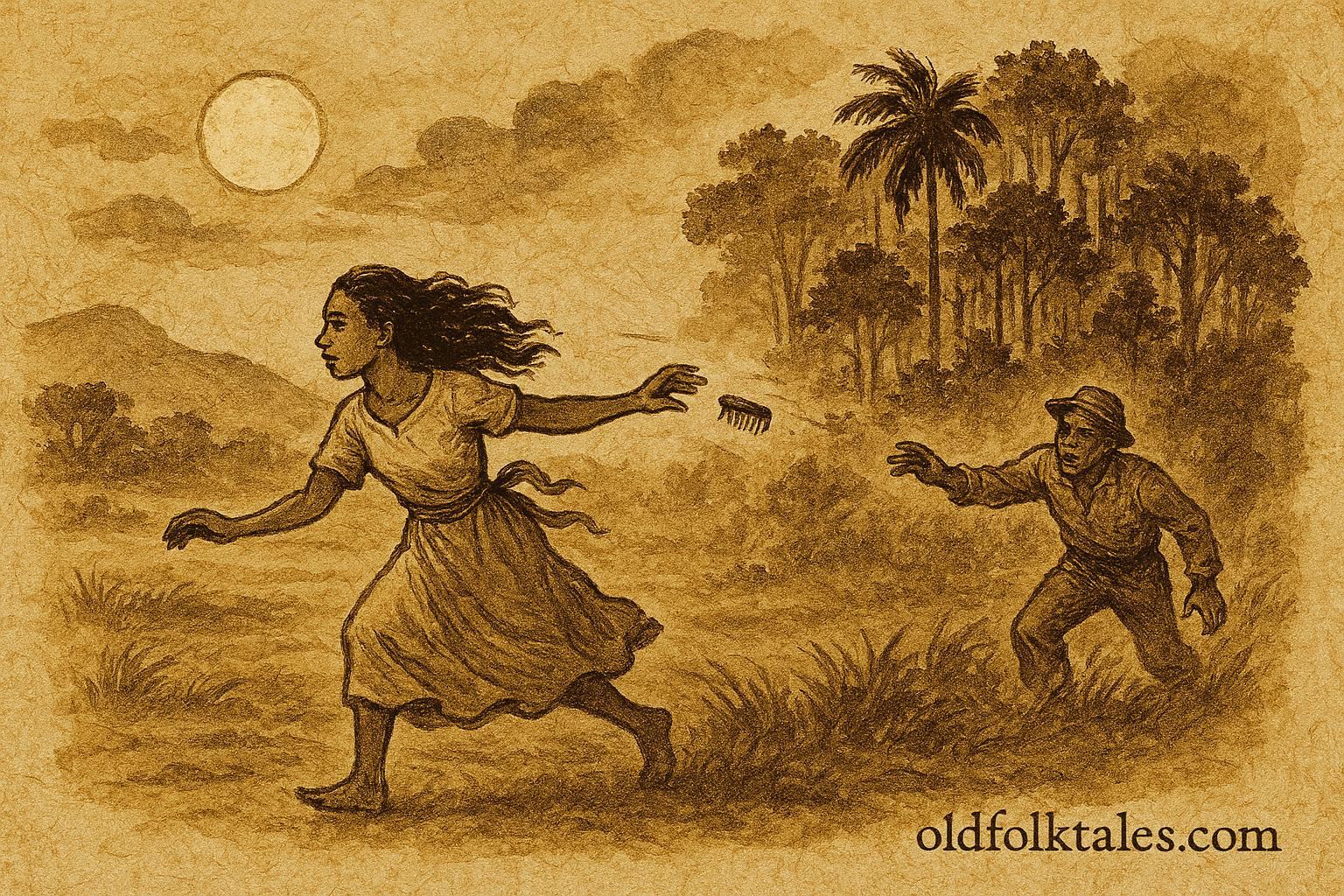
As he drew close, the girl threw the first object behind her: a simple comb. At once, it transformed into a vast forest, thick with tangled roots and towering trees. The uncle forced his way through, cutting and pushing until he emerged on the other side.
When he gained ground again, she cast the second object, a small stone. It rose into a great mountain, steep and unforgiving. Still, he climbed, scraping his hands and wearing himself down, but refusing to turn back.
At last, exhausted and trembling, the girl hurled the final object, a vial of oil. It spread and deepened until it became a wide sea, churning and impassable. Yet even then, the uncle pressed forward, driven by obsession rather than reason.
Seeing that flight alone would not end the danger, the girl made a final prayer and transformed herself, in some versions into a still pond, in others into a lifeless statue. When the uncle reached her at last, he did not recognize the sacred boundary he had crossed. In his fury or desperation, he entered the water or struck the stone form. At that moment, judgment fell. He drowned in the depths or was turned to stone himself, forever silenced.
With the threat ended, the girl resumed her human form. Freed at last, she returned to the world and later married a suitable young man, one chosen with consent and honor. Order was restored, and the story endured as a warning told across generations.
Moral Lesson
This folktale serves as a firm warning against the violation of sacred family boundaries. It teaches that spiritual and social laws exist to protect the vulnerable, and that unchecked power and desire ultimately destroy those who refuse restraint.
Knowledge Check
1. Who is the central antagonist in the story?
A powerful uncle who seeks to marry his niece despite strict prohibitions.
2. Why does the niece flee her home?
She escapes to avoid a forbidden and harmful marriage.
3. Who helps the girl during her escape?
A supernatural protector, often the Virgin Mary or a lwa.
4. What do the magical objects represent?
Spiritual and social barriers meant to protect the innocent.
5. How is the uncle ultimately punished?
He drowns or is turned to stone through his own obsession.
6. What cultural taboo does the story address?
The strict prohibition against incest in Haitian society.
Source and Cultural Origin
Source: Haitian folktale, Haiti
Adapted from Folktales from Haiti by Suzanne Comhaire-Sylvain, Type 400B.
Cultural Origin: Haiti