In a rural Haitian village surrounded by fields of cassava and plantain, three brothers lived together after the death of their parents. The eldest was strong-willed and proud, the middle brother quick-tempered and restless, and the youngest quiet, observant, and gentle in manner. Though they shared the same blood, their hearts and habits were very different, and this difference would soon decide their fates.
One season of hardship, when food was scarce and opportunities few, a mysterious traveler arrived at their doorstep. His clothes were dusty from the road, and his eyes carried the calm weight of hidden knowledge. Seeing the brothers’ need, he entrusted them with a single clay pot sealed with a woven lid. Inside, he said, were marinettes, small dumplings infused with spiritual power. When spoken to with the correct words and respect, the dumplings would leap, dance, and sing, bringing joy and fortune. Before leaving, the traveler warned them that the magic depended entirely on precision, patience, and reverence. The wrong words or careless hands would destroy the gift forever.
The eldest brother was the first to claim the pot. Driven by ambition, he immediately lifted the lid and shouted commands at the dumplings, demanding they perform. When nothing happened, his frustration grew. He shook the pot, struck it against the ground, and repeated the words carelessly. At last, a few dumplings stirred weakly, then fell still. In his anger, he slammed the pot down, cracking its rim. The magic faded, and the dumplings became nothing more than lifeless dough.
Ashamed but defiant, the eldest returned the pot, insisting it still held power.
The middle brother took his turn next. He was curious but impatient. Remembering only part of the instructions, he muttered the phrase quickly, skipping words and mocking the ritual. The dumplings sprang up briefly, spinning and humming, but his laughter broke the rhythm. He clapped his hands and demanded more, louder and faster. The dumplings trembled, then collapsed. In his haste, he tipped the pot, spilling its contents into the dust. The magic vanished completely.
When the youngest brother finally received the pot, it was chipped and stained, and his brothers scoffed at him. Still, he cleaned it carefully, set it in a quiet corner, and waited until nightfall. He lit a small lamp, washed his hands, and spoke the phrase slowly, exactly as it had been taught. His voice was steady, and his heart respectful.
At once, the dumplings leapt from the pot, spinning and dancing across the floor. They sang in clear, joyful tones, their movements precise and lively. The youngest brother did not interrupt. He watched, learned their rhythm, and thanked them when they finished. From that night on, the dumplings obeyed him faithfully.
Rather than exploiting the magic for himself alone, the youngest brother used it wisely. He traveled from village to village, allowing the dumplings to perform in marketplaces. People gathered to watch, laughing and clapping as the dumplings danced and sang. In return, they offered coins or food, which the brother shared with those in need. At times, he used the dumplings to feed the hungry, ensuring no one went without.
Word of the dancing dumplings reached the royal court. The princess, known for her seriousness and silence, had never laughed, no matter what entertainment was brought before her. The king promised her hand to anyone who could bring joy to her heart.
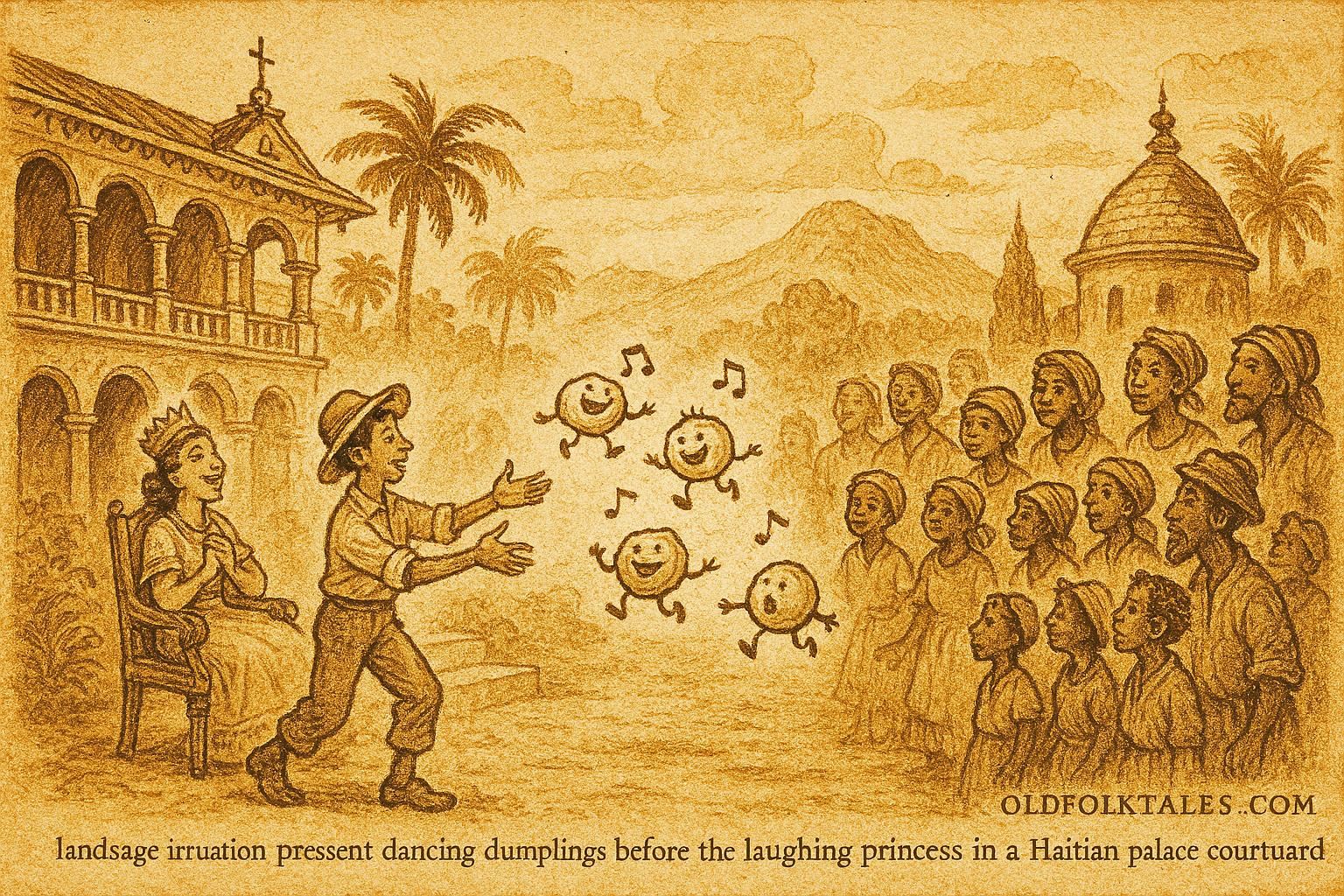
Summoned to the palace, the youngest brother performed with humility and care. When the dumplings danced and sang before the princess, their joy was pure and unforced. At last, she laughed a clear, ringing sound that filled the hall. The court erupted in wonder.
True to his word, the king granted the youngest brother the princess’s hand. He entered marriage with gratitude, not pride, and the dumplings were honored as sacred gifts rather than tools of greed. The older brothers, seeing what respect and patience had earned, understood their loss.
Moral Lesson
This folktale teaches that spiritual gifts demand humility, exactness, and respect. Power does not favor strength or seniority, but care, patience, and reverence for tradition.
Knowledge Check
1. What magical object is central to the story?
The clay pot containing dancing dumplings called marinettes.
2. Why do the older brothers fail to use the magic successfully?
They act with greed, impatience, and disrespect for ritual precision.
3. What does the youngest brother do differently?
He follows the ritual carefully, shows humility, and respects the spiritual gift.
4. How do the dumplings help the community?
They perform for food and money, which the youngest brother shares with others.
5. Why does the youngest brother win the princess’s hand?
Because the dumplings’ joyful performance makes her laugh for the first time.
6. What cultural value does the story emphasize?
The importance of ritual accuracy and respect for spiritual forces in Haitian tradition.
Source & Cultural Origin
Source: Haitian folktale, Haiti
Adapted from Haitian Folktales, Tale #6, transcript by Laura Tanna.
Cultural Origin: Haiti (Haitian folklore, Vodou-influenced tradition)