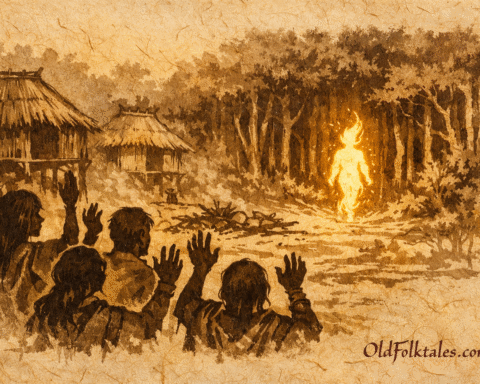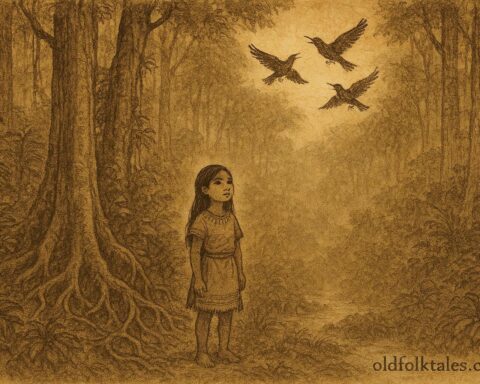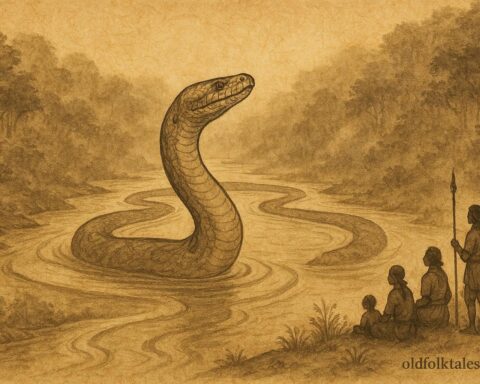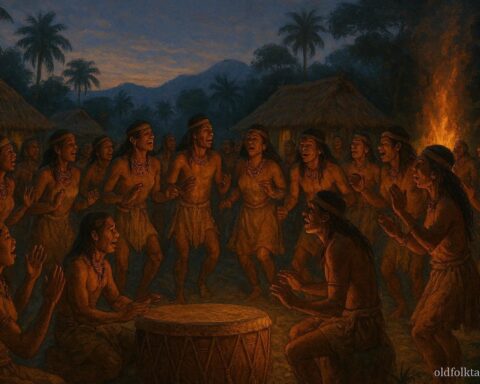
In the deep Brazilian Amazon, where towering trees locked their branches high above the forest floor and sunlight filtered down like gold dust, there lived a chain of villages bound by rivers and shared traditions. The forest provided all that was needed, food, shelter, and guidance, but the elders taught that it also watched closely, listening to human actions as carefully as it listened to words.
Among the people, it was said that spirits walked unseen, taking many forms. Some appeared as animals, others as shadows in the leaves. The most dangerous, however, were those that looked entirely human.
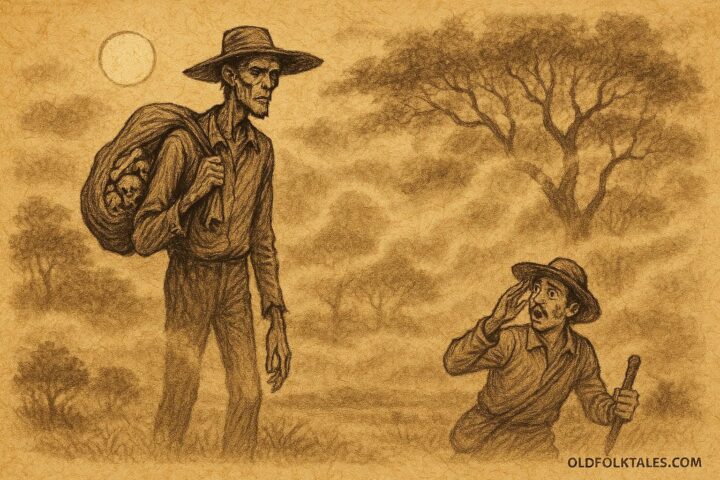
One dry season morning, a lone traveler emerged from the forest path leading into the largest village. He wore worn sandals, carried a simple pack, and leaned on a carved walking stick. His hair was streaked with gray, and his eyes reflected the quiet depth of the river. He asked for nothing except water and a place to rest.
The villagers welcomed him, as custom demanded. Hospitality was sacred in the Amazon, and refusing a traveler risked angering both spirits and ancestors. As the traveler drank and rested, he spoke calmly, asking about the village and its people. His voice carried no judgment, yet many felt uneasy beneath his gaze.
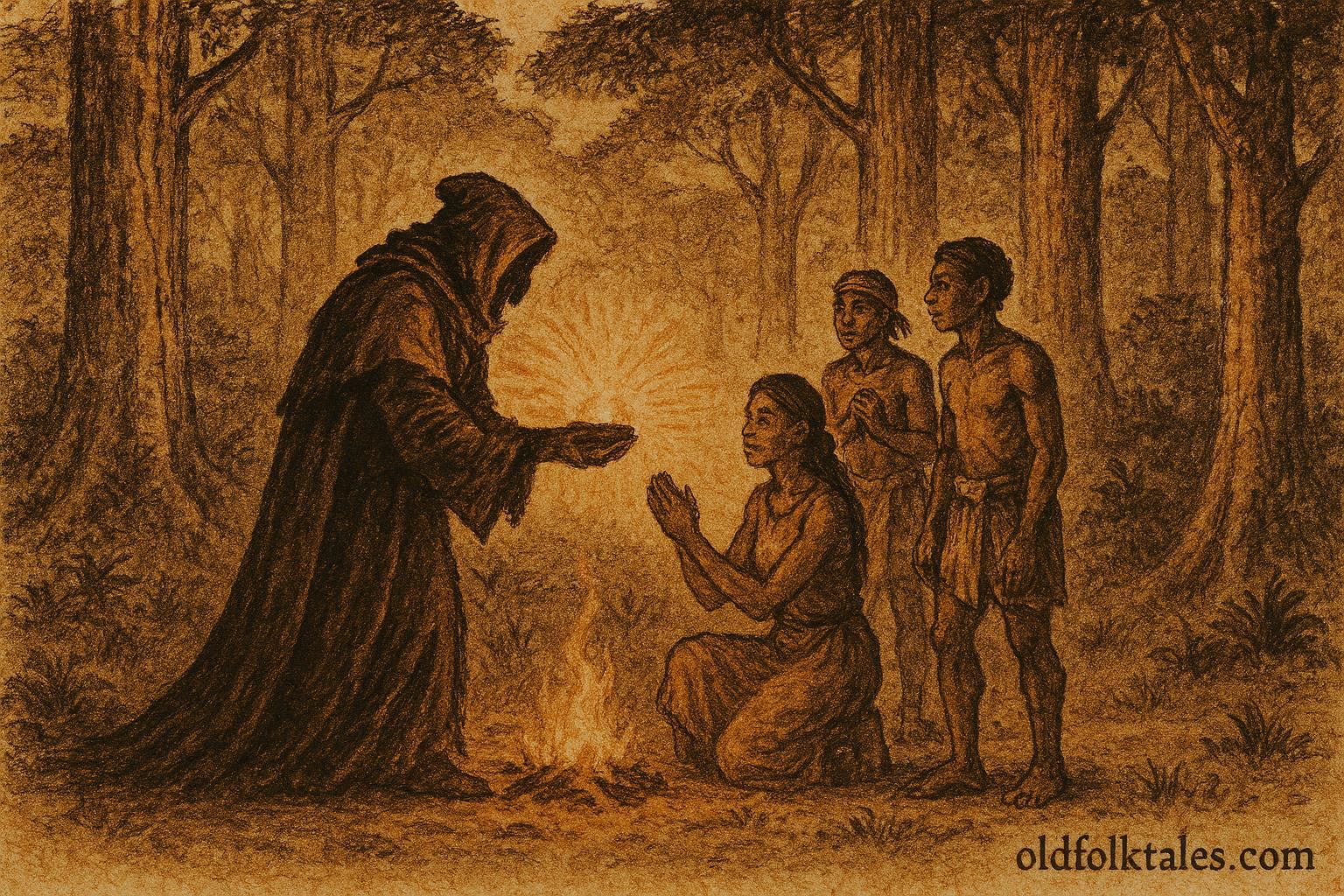
That evening, the traveler gathered the villagers together. From his pack, he revealed small gleaming objects, gold nuggets, bright stones, and polished shells that shimmered unnaturally in the firelight. He claimed they were gifts from deep within the forest, freely given to those who deserved them.
But there was a condition.
He asked each villager to step forward alone and answer one simple question: Have you ever taken more than your share from another? He promised that those who spoke truthfully would be rewarded beyond their needs. Those who lied, he warned gently, would lose what they valued most.
The villagers murmured among themselves. Some laughed nervously, believing the traveler harmless. Others felt fear tighten their chests. One by one, they stepped forward.
A fisherman claimed he had always shared his catch, though he once hid his largest fish from his neighbors. A trader insisted he never cheated, forgetting the weights he had secretly adjusted. Each who spoke falsely received gold from the traveler’s hand, and each smiled with satisfaction.
But before dawn, their fortune vanished. Gold crumbled into dust. Crops withered overnight. Canoes cracked, and nets tore. The villagers who had lied lost not only the gifts, but what they already owned.
Then came those who spoke honestly.
A hunter admitted he once took more game than he needed. A woman confessed she had hoarded food during a famine. They spoke with bowed heads, expecting punishment. Instead, the traveler nodded solemnly. To them, he gave modest gifts, seeds, tools, and knowledge of safe forest paths.
These villagers prospered quietly. Their crops grew strong. Their families remained healthy. Their possessions lasted.
By sunrise, the traveler was gone. In his place, villagers found his walking stick rooted deep into the earth, transformed into a young tree. The elders understood then: the traveler had been a forest spirit, sent to remind the people that wealth gained through greed poisons its holder.
From that day forward, the village taught its children that integrity was stronger than gold, and that the forest rewarded truth more faithfully than riches.
Click to read all South American Folktales — timeless stories from the Andes to the Amazon.
Moral Lesson
This folktale teaches that integrity safeguards both community and fortune, while greed invites loss. Honesty aligns humans with the balance of the natural world.
Knowledge Check
1. Who was the traveler in the story truly revealed to be?
A forest spirit testing the honesty and integrity of the villagers.
2. What test did the spirit give the villagers?
They were asked to speak truthfully about their past actions in exchange for rewards.
3. What happened to those who lied?
They lost both the gifts they received and the possessions they already had.
4. How were honest villagers rewarded?
They received modest but lasting gifts that brought long-term prosperity.
5. What does the spirit symbolize in Amazonian folklore?
Moral accountability and the forest’s role as a guardian of ethical balance.
6. What lesson does the story teach about wealth?
Wealth gained without integrity is fragile and ultimately destructive.
Source: Indigenous oral folklore; documented in Brazilian Amazon myth collections
Cultural Origin: Amazon Basin, Brazil (Indigenous traditions)