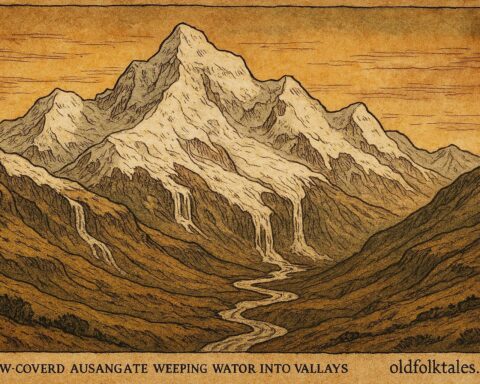
High in the Andes, where clouds drift across snow-tipped peaks and condors circle in the blue air, there stood a mountain known as Apu Illari, the Guardian of the Dawn. The Quechua people believed that every mountain had a spirit within it, a living heart that watched over the valleys and streams below. Of all the mountains, Apu Illari was said to be the oldest and the most sacred, for its slopes shimmered with golden stones and its winds carried the whispers of the ancestors.
At the foot of this mountain lived a young warrior named Rumi. He was strong, proud, and admired by many in his village. Yet his heart was restless. When traders from distant lands spoke of shining treasures buried deep within the earth, Rumi’s eyes would gleam with desire. “If I could find that gold,” he told himself, “my name would be remembered forever.”
The elders often warned him, “Do not disturb the heart of the mountain. The spirits dwell there, and they guard what is sacred, not what is ours.” But Rumi did not listen. He believed courage meant conquering what others feared.
Journey into the rhythm, wit, and wonder of Caribbean storytelling — from Haiti to Jamaica
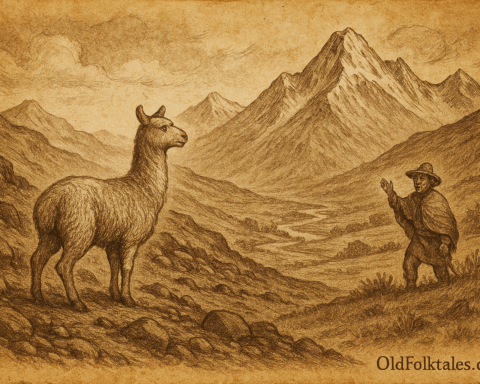
One dawn, as the mist rolled low and the llamas still slept, Rumi took his spear and set off alone toward Apu Illari. The path was steep and silent, broken only by the sound of his footsteps and the rush of distant rivers. When he reached the halfway point, clouds thickened around him, and a deep hum filled the air. He stopped, feeling the ground tremble faintly beneath his feet.
From the mist appeared an old man with long silver hair and eyes that glowed like sunlight on stone. His cloak shimmered with patterns of stars. “Turn back,” the old man said gently. “No mortal hand should touch the heart of Apu Illari.”
But Rumi raised his chin. “I do not seek to harm, only to see what lies within. If the gods have hidden gold in the mountain, it must be meant for the brave.”
The old man sighed. “Bravery without wisdom is a shadow. You walk toward a path from which there is no return.” With that, he vanished into the mist.
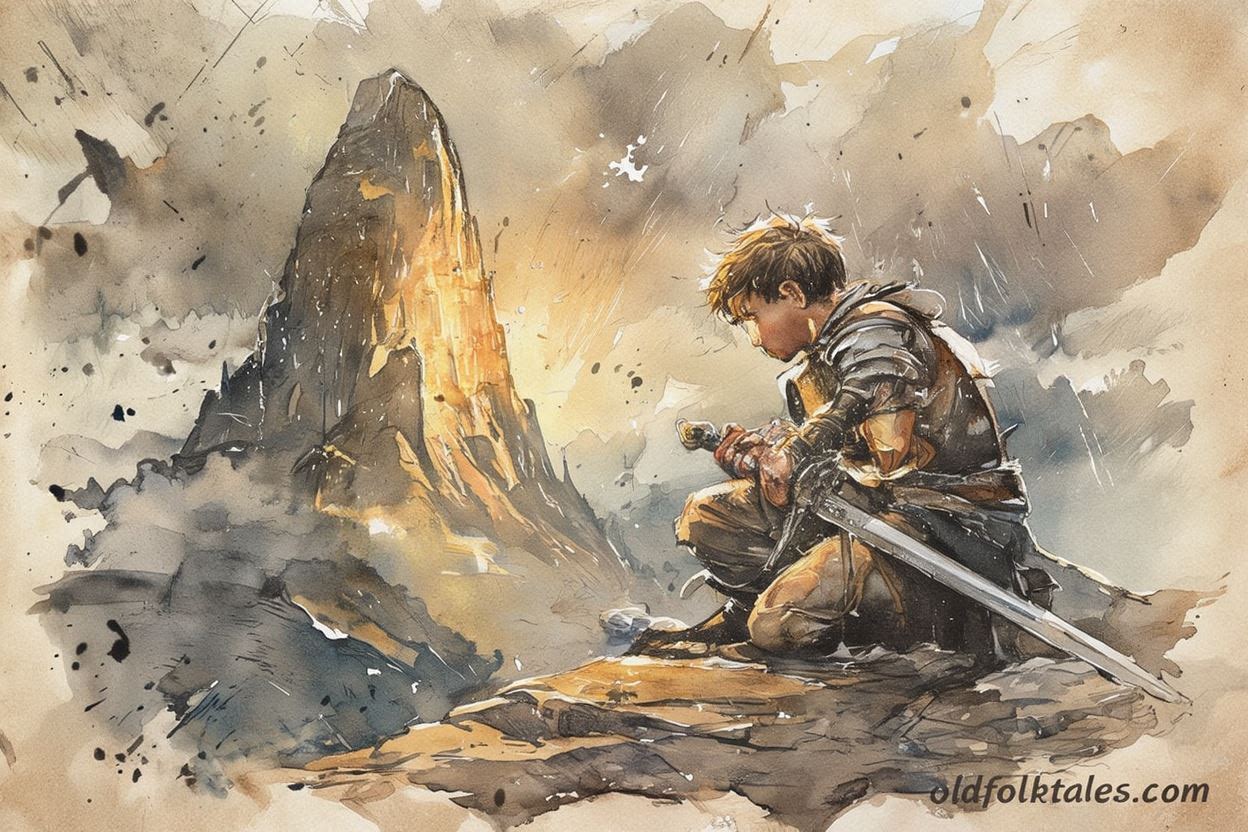
Rumi pressed on. By midday, he reached the summit, where a great stone stood like an altar. It was smooth and gleamed faintly even under the cloudy sky. “This must be the seal that hides the mountain’s treasure,” he said. He struck it once with his spear. A dull echo sounded, and the ground shivered.
He struck again. This time, the echo grew louder, rolling like thunder through the peaks. The wind howled, and the sky darkened. Rumi stepped back as cracks spread across the stone. From within came a deep, rumbling voice that shook the air.
“Who dares wound my heart?”
Rumi fell to his knees, his spear slipping from his hands. The mountain itself seemed alive, its sides shifting as rocks tumbled down. A shape began to rise from the altar, a great Spirit of Stone and Light, its face carved from rock, its eyes burning like molten gold.
“I am Apu Illari,” the voice thundered. “Long have I guarded this world. Your greed has pierced the sacred ground.”
Rumi trembled. “I meant no harm. I only wished to prove my worth.”
“The worth of a man,” said the spirit, “is not measured by what he takes, but by what he protects.”
The ground split open beneath Rumi’s feet. He cried out as the earth swallowed him whole. The storm raged for three days, and when it passed, the mountain stood silent again. But at dawn, the villagers looked up and saw a great eagle soaring above Apu Illari, its wings flashing with gold in the sunlight. They knew then what had become of Rumi—the mountain had turned him into a guardian spirit, bound forever to protect what he once sought to steal.
From that day on, no one dared climb the sacred slopes without offering prayers and coca leaves to the mountain’s spirit. The people learned to take only what the earth freely gave and to give thanks for every drop of water, every harvest, and every sunrise that warmed their land.
And when the wind rushed down the mountain at twilight, it carried the sound of wings and the soft echo of Rumi’s voice, whispering, “Respect the heart of the world, for it beats within your own.”
Explore the ancestral legends of Canada, Mesoamerica, and South America’s Indigenous tribes.
Moral Lesson
Greed blinds the heart, but reverence opens the spirit. True strength lies not in claiming the earth’s treasures, but in protecting them with humility and gratitude.
Knowledge Check
1. What is the name of the sacred mountain in the story?
The mountain is called Apu Illari, known as the Guardian of the Dawn.
2. Who is the main character?
Rumi, a proud young warrior who seeks the mountain’s hidden gold.
3. What warning did the old man give to Rumi?
He told Rumi not to disturb the heart of the mountain, as it was sacred.
4. What happened when Rumi struck the stone?
The mountain trembled, and the Spirit of Apu Illari awoke in anger.
5. What was Rumi’s punishment?
He was transformed into a golden eagle to guard the mountain forever.
6. What lesson did the people learn from Rumi’s fate?
They learned to honor and protect nature, taking only what the earth freely gives.
Source: Adapted from Quechua oral traditions in Legends of the Andes by José María Arguedas (1962), Cusco: Universidad Nacional de San Antonio Abad.
Cultural Origin: Quechua (Peru, Andes Mountains)