In the lush lands of Brazil, where rivers wind through forests and villages rise along their banks, water has always been life itself. Long before roads or cities shaped the land, the people depended on the river for food, travel, and survival. Yet the river was not merely water, it was sacred. Within its flowing depths lived Oxum, the radiant spirit of fresh waters, fertility, beauty, and abundance.
Oxum was known to appear as a woman of glowing presence, her skin shining like sunlight on rippling water. She adorned herself with gold and carried mirrors that reflected both beauty and truth. To those who respected the river, she was generous. Fish were plentiful, crops flourished, and children were born healthy and strong. But to those who treated her waters with greed or disrespect, Oxum was not forgiving.
Among the villagers lived a fisherman who depended entirely on the river for his livelihood. At first, he took only what he needed, offering thanks to the waters each morning. Over time, however, his gratitude faded. Seeing how abundant the river remained, he grew greedy. He cast his nets again and again, taking far more fish than his family could eat or trade.
The villagers warned him. They spoke of Oxum, reminding him that the river was alive and watched over by powerful spirits. But the fisherman laughed. “The river gives endlessly,” he said. “Why should I not take all I can?”
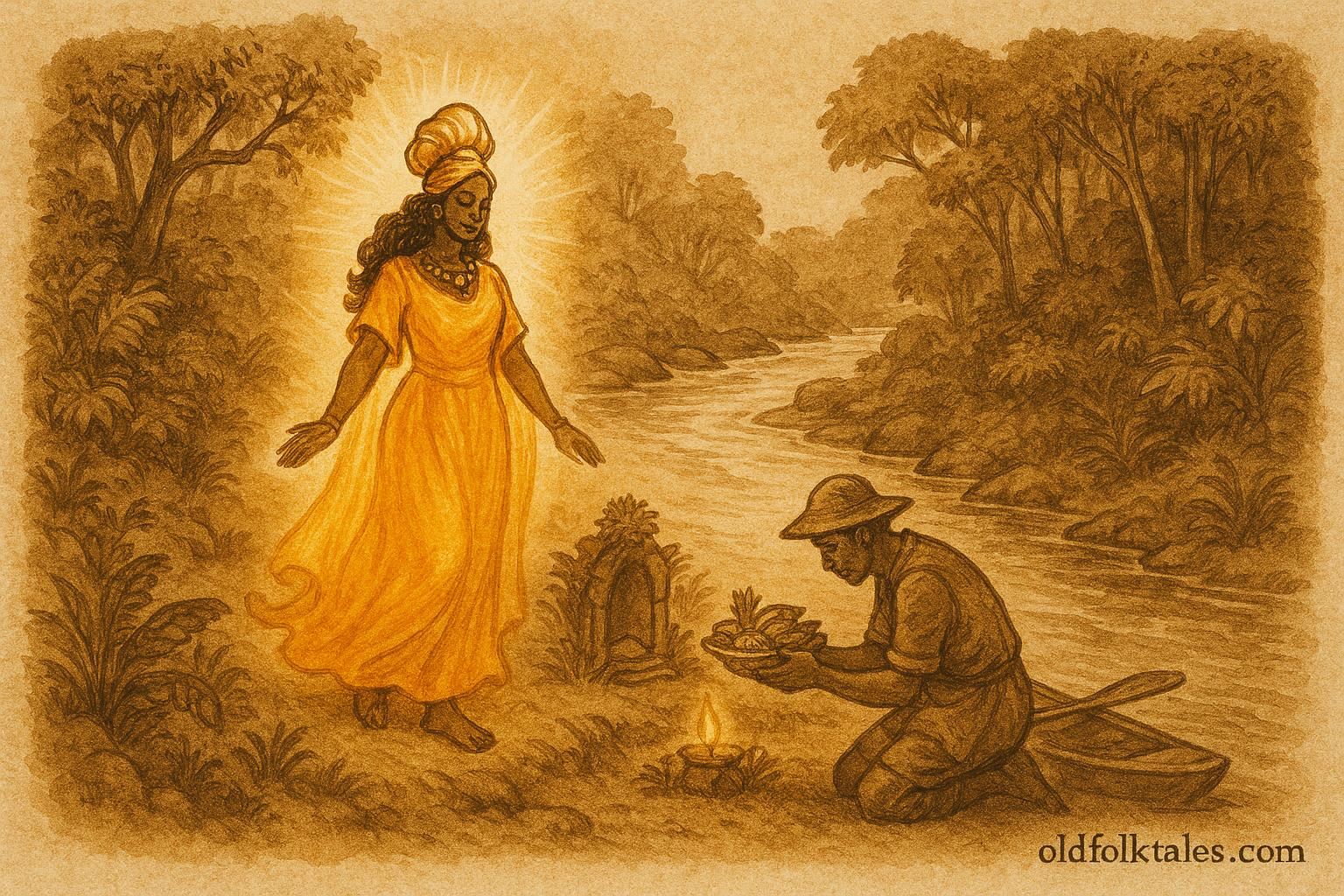
One morning, as mist hovered above the water, the fisherman saw a woman standing at the river’s edge. She was radiant, dressed in flowing yellow cloth, her presence calm yet commanding. She warned him gently to respect the river and take only what was needed. But blinded by pride, the fisherman ignored her and returned to his nets.
That night, the river began to change. Its flow slowed, the waters receded, and fish vanished. Day after day, the drought worsened. Crops withered, hunger spread, and the village suffered. The fisherman, now desperate, realized the truth of what he had done. He remembered the woman by the river and understood she was Oxum herself.
Filled with remorse, he went to Oxum’s shrine, bringing offerings of gold-colored cloth, honey, and fresh flowers. He knelt and begged forgiveness, promising to honor the river and its spirit. Hearing his sincere repentance, Oxum returned the river to life. The waters flowed once more, fish returned, and balance was restored.
From that day on, the fisherman never forgot his lesson. The village remembered as well that survival depends not on greed, but on harmony with nature and reverence for the spirits who sustain life.
Moral Lesson
This folktale teaches that greed disrupts balance, while respect for nature and reverence for spiritual forces ensure survival and renewal.
Knowledge Check
1. Who is Oxum in Afro-Brazilian folklore?
Oxum is the Yoruba goddess of rivers, fertility, beauty, and abundance.
2. Why does Oxum punish the fisherman?
He disrespects the river by taking more fish than needed.
3. How does the drought affect the village?
The river dries, fish disappear, and crops fail.
4. What does the fisherman do to restore balance?
He repents and offers gifts at Oxum’s shrine.
5. What does the river symbolize in the story?
The river represents life, balance, and divine presence.
6. Why is this story important in Afro-Brazilian culture?
It teaches environmental respect and spiritual responsibility.
Source: Yoruba mythology (Nigeria)
Preserved in: Candomblé and Afro-Brazilian river folklore
Cultural Origin: Afro-Brazilian (Yoruba-derived tradition)