Long ago, in the time before memory, when the Guaraní people first walked the forests of what is now Paraguay, there lived a young man whose heart overflowed with love for his community. His name has been lost to the winds of time, but his sacrifice remains immortalized in every mbocayá palm that rises from the red earth, its fronds reaching toward the sky like prayers of gratitude.
The youth was strong and capable, known throughout his village for his hunting skills and generous spirit. When he returned from the forest with game, he always ensured the elderly and the children ate first. When others struggled with their crops, he was the first to offer help. His mother had raised him with the understanding that the community’s wellbeing mattered more than individual glory, and he carried this teaching in his heart like a sacred trust.
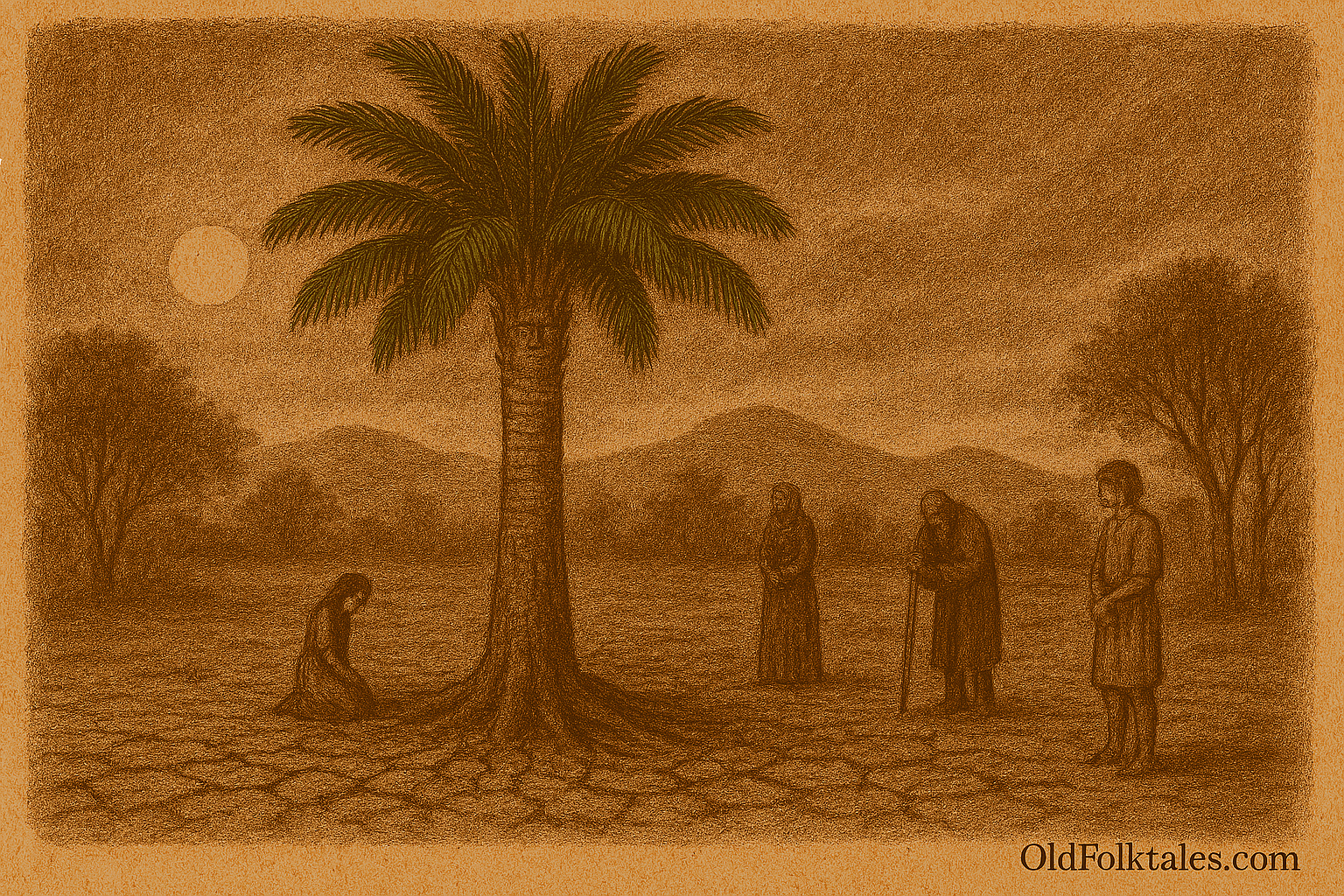
But in those ancient days, a terrible drought descended upon the land. The sky, once generous with rain, became hard and unyielding, a dome of relentless blue that offered no relief. Day after day, the sun blazed down with merciless intensity, baking the earth until it cracked like broken pottery. The rivers that had always flowed abundantly began to shrink, their waters receding to reveal dried mud banks where fish bones lay bleaching in the sun.
Click to read all South American Folktales — timeless stories from the Andes to the Amazon.
The crops that the Guaraní depended upon withered in the fields. Manioc roots shriveled in the ground. Corn stalks turned brown and brittle before they could produce ears. The forest itself seemed to retreat, its lush greenery fading to dusty browns and yellows. Animals grew scarce as they fled in search of water and food, making hunting nearly impossible. The abundance that had sustained the people for generations simply disappeared, as if the earth itself had turned away in anger.
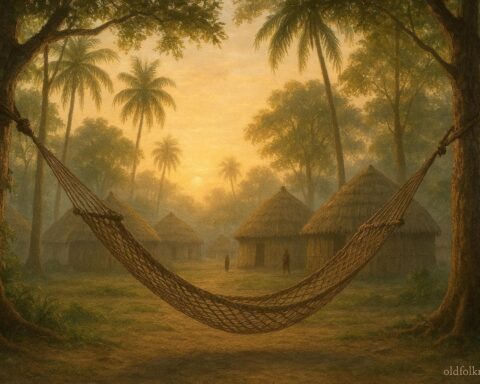
Hunger came to the village like an unwelcome guest that refused to leave. At first, the people shared what little they had stored, rationing carefully and supporting one another. But as days turned to weeks and weeks to months, the storage huts stood empty. Children cried with hollow stomachs. The elderly grew weak and frail. Even the strongest warriors felt their energy draining away, their bodies consuming themselves in the absence of nourishment.
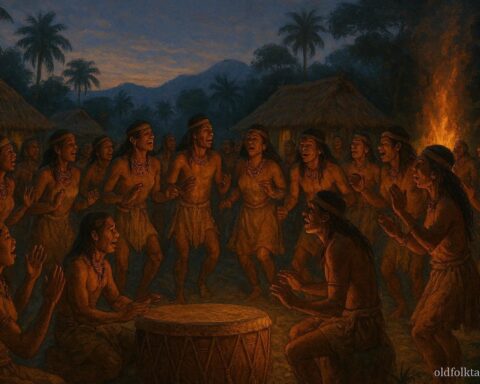
The village elders gathered in council, their faces gaunt with worry. They had tried everything they knew. Prayers had been offered to the spirits of the land and sky. Ceremonies had been performed with what little they had left. Shamans had sought visions and guidance. But the drought continued, indifferent to their suffering, and the specter of starvation loomed ever larger over the community.
The young man watched his people suffering and felt his heart breaking. He saw mothers unable to feed their babies, warriors too weak to hunt, elders sitting in silence because they lacked the strength even to speak. The vibrant, thriving community he loved was slowly dying, and the knowledge filled him with unbearable pain.
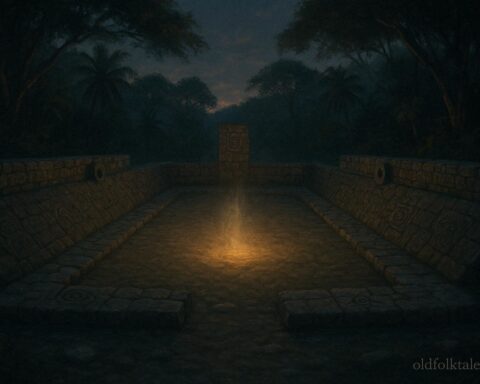
One night, beneath a sky glittering with indifferent stars, the youth made his decision. He walked alone into the forest, to a place where the oldest trees grew, where the spirits were said to dwell closest to the human world. There, he knelt upon the parched earth and spoke aloud to the forces that governed life and death, growth and decay.
He offered himself. His life, his body, his very essence, in exchange for salvation for his people. He asked not for rain to end the drought, for such things were beyond mortal bargaining. Instead, he asked that his sacrifice be transformed into something that could sustain the Guaraní, something that would grow even in harsh conditions, something that would feed them when all else failed.
The spirits heard his plea. They recognized the purity of his intention, the depth of his love, the completeness of his surrender. And they accepted his offer.
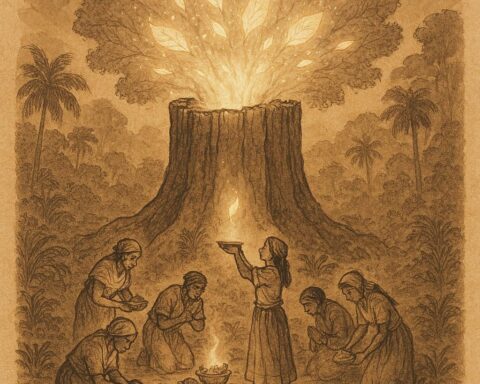
As the first light of dawn touched the forest canopy, the young man felt a strange sensation spreading through his body. It began in his feet, a tingling warmth that seemed to connect him to the earth itself. He felt his toes extending downward, pushing into the soil, spreading wide to anchor themselves deep in the ground. His legs grew rigid, transforming into a strong, sturdy trunk covered in rough bark.
His arms stretched upward and outward, his fingers multiplying and extending into graceful fronds that unfurled toward the sky. His skin became the protective covering of the palm, marked with the distinctive rings and patterns that would identify it forever. His heart, still beating with love for his people, became the very core of the tree, the source of its life and its gift.
Where the youth had knelt, a magnificent mbocayá palm now stood. Its trunk rose strong and proud, its crown of feathered fronds spreading wide to catch the sun. And from this tree came abundance. Small, round fruits appeared, clustered together like offerings. These fruits, though modest in size, were rich in oils and nutrients. They could be eaten fresh or dried, pressed for oil or ground into flour. The palm’s fronds could provide shade and be woven into roofs for shelter. Its trunk could provide wood when needed. Nothing was wasted; everything was given freely.
When the villagers discovered the palm, they understood immediately what had happened. They recognized the young man’s sacrifice in the tree’s generous nature, in the way it seemed to offer everything it had without reservation. Tears of sorrow and gratitude flowed as they gathered the first fruits, understanding that their beloved community member had given his very life to ensure their survival.
The mbocayá sustained the Guaraní through the remainder of the drought and beyond. More palms grew from the seeds of the first, spreading throughout the land, each one a reminder of the young man’s ultimate act of love. The people survived, and when the rains finally returned, they never forgot the sacrifice that had saved them.
To this day, the mbocayá palm grows throughout Paraguay, its fruits feeding people and animals alike, its presence a living testament to the power of selfless love. The Guaraní teach their children the story of its origin, ensuring that each new generation understands that the greatest strength lies not in what we take, but in what we are willing to give. Every mbocayá palm stands as a monument to the truth that one person’s sacrifice, made with pure intention and complete love, can sustain an entire people across countless generations.
Discover the sacred tales of llamas, condors, and gods who guard the Andes
The Moral Lesson
This powerful legend teaches that true heroism lies in selfless sacrifice for the greater good. The young man’s willingness to give his life to save his community demonstrates that the highest form of love is putting others’ needs above our own survival. The story emphasizes that generosity and community welfare should guide our actions, and that such sacrifices create lasting legacies that benefit future generations. The mbocayá palm serves as an eternal reminder that when we give ourselves completely to helping others, our impact extends far beyond our individual lives, sustaining and nourishing communities for all time.
Knowledge Check
Q1: Who was the hero in the origin story of the mbocayá palm?
A: The hero was a generous young Guaraní man known for his hunting skills and selfless spirit. Though his name has been lost to time, he was beloved by his community for always ensuring the elderly and children ate first and helping others with their struggles.
Q2: What crisis forced the young man to make his ultimate sacrifice?
A: A devastating drought struck the land, causing crops to fail, rivers to dry up, animals to flee, and bringing the Guaraní people to the brink of starvation. Despite prayers, ceremonies, and the elders’ best efforts, the drought continued and the community faced death.
Q3: What did the young man ask for when he offered himself to the spirits?
A: He did not ask for rain to end the drought. Instead, he asked that his sacrifice be transformed into something that could sustain his people, something that would grow even in harsh conditions and provide food when all else failed.
Q4: How did the transformation from human to palm tree occur?
A: At dawn, after the spirits accepted his offer, the youth’s feet became roots extending into the earth, his legs became the trunk, his arms became fronds reaching skyward, and his skin transformed into protective bark. His heart became the core of the tree, the source of its life giving nature.
Q5: What gifts does the mbocayá palm provide to the Guaraní people?
A: The palm produces nutritious fruits that can be eaten fresh, dried, pressed for oil, or ground into flour. Its fronds provide shade and materials for roof weaving. Its trunk supplies wood when needed. Every part of the tree serves a purpose, reflecting the young man’s complete generosity.
Q6: What is the cultural significance of the mbocayá palm to the Guaraní people of Paraguay?
A: The mbocayá palm represents the ultimate act of selfless sacrifice and community love. It serves as a living reminder that individual sacrifice for the collective good creates lasting benefits across generations. The story teaches children about generosity, courage, and the importance of putting community welfare above personal survival.
Source: Adapted from Paraguayan indigenous legends documented by Acosta, Aguilera, and Carlos Villagra Marsal in Mitos y Leyendas del Paraguay.
Cultural Origin: Guaraní Indigenous People, Paraguay