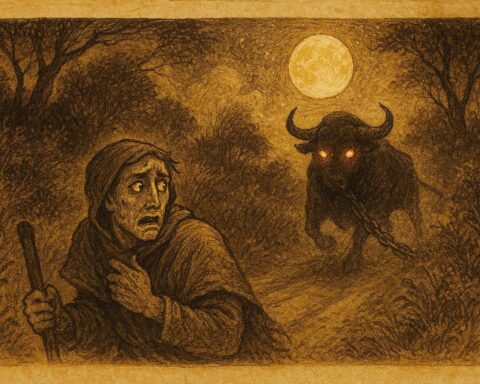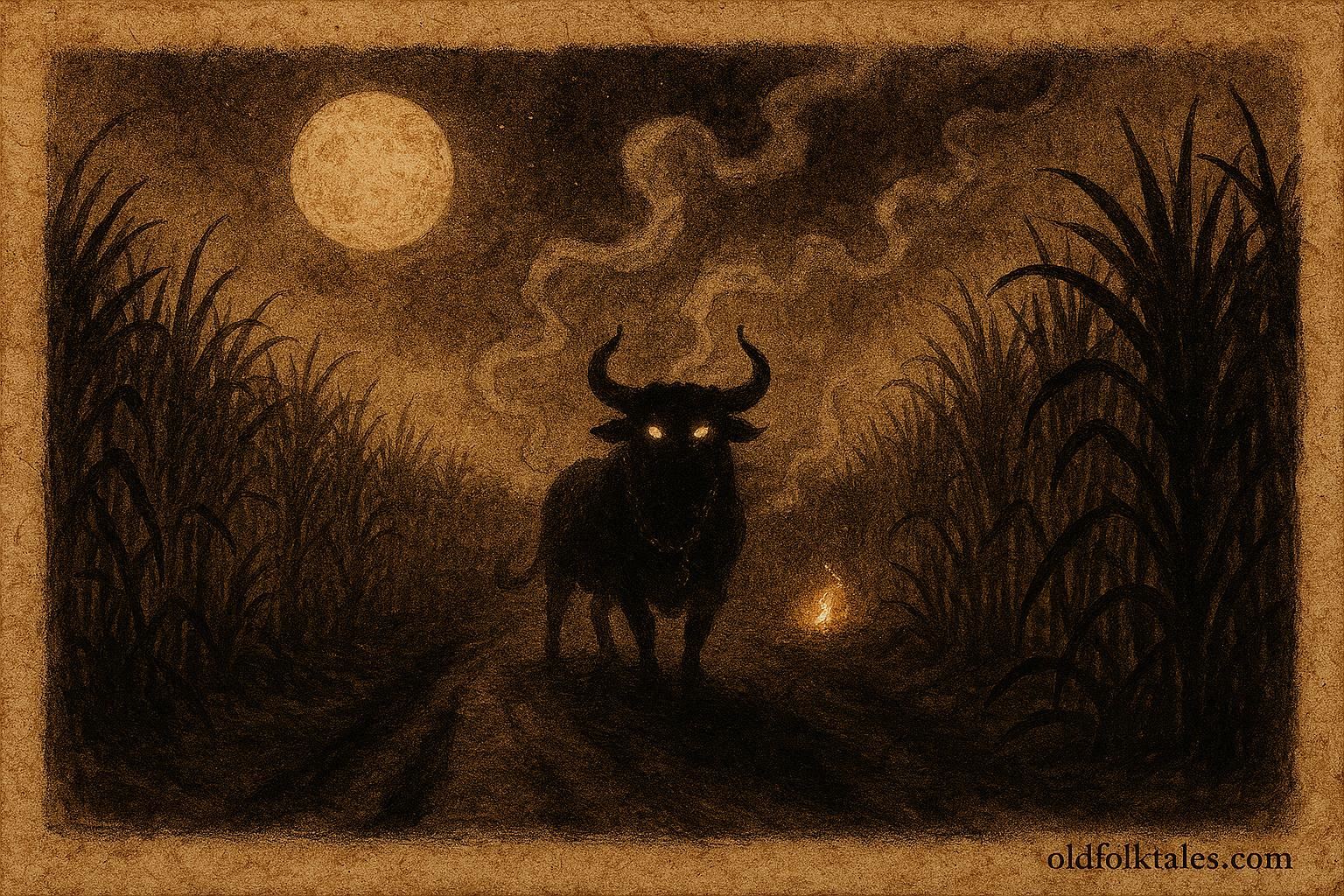
In the quiet, moonlit fields of rural Trinidad, travelers beware the dark roads that wind past pastures and abandoned plantations. For here lurks a creature known as the Rolling Calf, a spectral bull whose presence is feared across generations. It is no ordinary beast: its massive form looms out of the shadows, eyes blazing like molten coals, and smoke and flame pouring from its nostrils. Chains clatter around its enormous hooves, while the sulfurous stench of brimstone heralds its arrival.
Legends say that the Rolling Calf is the cursed spirit of a wicked man, perhaps a cruel butcher or an abusive estate owner, condemned to roam the earth in monstrous form. Its purpose is simple: to haunt, terrify, and remind the living of past misdeeds and lingering guilt. No traveler is safe after dark; even the bravest souls can feel their courage falter when the chains rattle in the distance.
One humid, starless night, a young man named Jahlani traveled a winding dirt road to return home from a late visit to a neighboring village. The cicadas’ chorus had quieted, leaving only the whisper of the wind through the sugarcane fields. Suddenly, a deep rumble shook the ground. Ahead, a shape emerged: a massive bull, larger than any living beast, eyes glowing like fire, nostrils flaring with flame, and chains dragging behind it. Its shadow stretched over the road, blotting out the moon.
Jahlani’s heart raced, his skin prickling with fear. He remembered the stories: the advice whispered by elders for escaping the Rolling Calf. Acting quickly, he drew a cross in the dirt with a stick. The bull paused, snorted, and stamped the ground, confused. Then, Jahlani threw himself flat on the earth, pressing his face into the soil as the chains rattled closer. The creature circled him, its fiery eyes scanning for a sign of life, before finally vanishing into the shadows, leaving only the scent of sulfur and the echo of clanging chains.
The next evening, another traveler, an older woman, encountered the same rolling nightmare. She recalled another folk prescription: removing her clothing and turning it inside out. The moment she did, the phantom bull halted, tilting its massive head, uncertain and disoriented. With a final snort that set sparks dancing along the ground, it disappeared into the darkness, leaving her trembling but alive.
The Rolling Calf embodies more than fright; it is a living memory of injustice, a symbol of guilt, cruelty, and the consequences that echo long after human misdeeds. The flames, chains, and sulfur smell are not mere theatrics, they are the lingering terror of a past filled with oppression, and the strategies for escape are ways that folk culture preserves wisdom and resourcefulness. Crossroads, playing dead, and inside-out garments all reflect cleverness and resilience, ensuring that even in the face of supernatural threat, the living can survive.
Across the villages of Trinidad, parents warn children to respect the land and its history, for the Rolling Calf often haunts places of former plantations or cruel labor. Travelers still carry sticks to draw crosses, and elders remind all that folklore preserves lessons about fear, morality, and the power of the past. In this way, the Rolling Calf remains alive, not only as a phantom bull of terror but as a symbol of collective memory and cultural vigilance.
Moral Lesson
The story of the Rolling Calf teaches that cruelty and injustice leave lasting marks. Respect, caution, and cleverness are necessary when navigating danger, whether real or symbolic. It reminds communities that the past continues to influence the present, and wisdom can outwit even fearsome forces.
Knowledge Check
1. What is the Rolling Calf?
A spectral bull that haunts rural Trinidad, associated with fire, chains, and sulfur.
2. Who is said to become the Rolling Calf?
The spirit of a wicked or cruel man, often a butcher or abusive estate owner.
3. What signs indicate the Rolling Calf’s presence?
Red-hot glowing eyes, flames from the nostrils, rattling chains, and a smell of sulfur.
4. What methods can travelers use to escape it?
Draw a cross in the dirt, lie flat and play dead, or turn clothes inside out.
5. What does the Rolling Calf symbolize?
It represents lingering guilt, cruelty, and the haunting effects of past injustices.
6. What cultural roots does the story reflect?
Afro-Trinidadian oral tradition, with parallels to Jamaican Rolling Calf legends and elements of the Lagahoo.
Cultural Origin
Source: Afro-Trinidadian folktale, Trinidad
Documented in rural collections and Carnival storytelling archives, with distinct local traits
Cultural Origin: Afro-Trinidadian folklore, related to Caribbean post-emancipation oral traditions