In the deep green countryside of Jamaica, where rivers wind patiently through stone and forest, people have long known that fresh water is not empty or unguarded. Elders say that spirits dwell where the river slows and deepens, where sunlight glimmers on the surface like gold. Among these spirits is the River Mumma, the ancient guardian of rivers and springs, whose presence demands respect and restraint from all who approach her waters.
One bright morning, three siblings set out from their village toward the river that lay just beyond the fields. The sun was high, and the air carried the sound of birds and rustling leaves. Their mother had warned them, as mothers often did, to be careful near the river and to take only what they needed. The two older children, confident and restless, walked ahead, laughing and pushing through the grass. The youngest, a quiet girl with observant eyes, followed closely behind.
When they reached the riverbank, the water flowed clear and cool over smooth stones. Tall trees leaned inward, casting soft shadows that danced on the surface. The children waded in, splashing and playing, unaware that they had entered a place held sacred for generations.
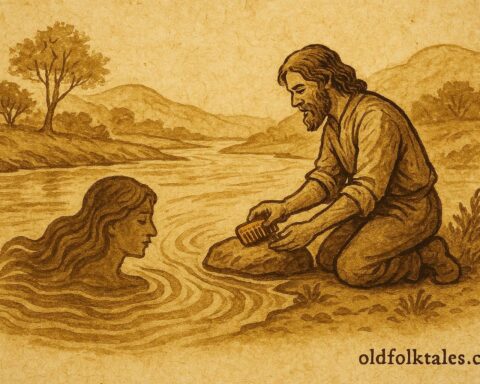
As the youngest child lingered near a bend in the river, she noticed something strange and beautiful. Perched upon a large rock in the middle of the stream sat a woman unlike any she had ever seen. Her skin gleamed softly in the sunlight, and her long hair flowed down her back like a dark river of its own. Calm and unhurried, the woman combed her hair with a golden comb that flashed brilliantly each time it caught the light.
The child froze, remembering the stories whispered by elders at night. This was the River Mumma, the keeper of the waters and their hidden riches. Fear and wonder filled her chest, but before she could turn away, the spirit vanished beneath the water, leaving only the rock—and the golden comb resting upon it.
The river fell silent.
The youngest child’s heart pounded. The comb was unlike anything she had ever seen, shining with a beauty that felt powerful and dangerous. Without fully understanding why, she reached out and took it, tucking it beneath her clothes. She ran back to her siblings, who noticed her fear but asked no questions.
Moments later, the river began to change.
The water rose suddenly, swelling and darkening as if stirred by anger from below. The current grew fierce, tearing at the banks and roaring through the stones. From the depths, the River Mumma rose in fury, her eyes flashing like storm-lit water. She cried out for what had been stolen, and her voice carried through the trees like thunder.
Terrified, the two older children fled without looking back. They scrambled up the riverbank and ran toward the village, thinking only of their own safety. The youngest followed at first, but then she stopped. She felt the weight of the comb against her chest and understood, at last, what she had done.
Turning back, she faced the raging river alone.
With trembling hands, she stepped forward, holding the golden comb high. She called out an apology, her voice shaking but sincere. She admitted her mistake and begged forgiveness, promising never again to take what did not belong to her or to the river.
The floodwaters stilled.
The River Mumma emerged once more, her expression softened but solemn. She took the comb and studied the child carefully. Seeing honesty and courage where fear might have ruled, the spirit’s anger faded. She spared the child and, as a sign of mercy, offered her a gift: a calabash that would never run empty, so long as it was shared and respected.
The River Mumma then vanished, and the river returned to its calm, clear flow.
The youngest child returned home safely, bearing the lesson of the river in her heart. The older siblings, however, were not so fortunate. Their selfishness brought hardship upon them, as the elders later said, for those who abandon responsibility lose the protection of both people and spirits.
From that day on, the village remembered. Children were taught to honor the river, to take only what was needed, and to understand that nature is guarded by forces older and stronger than any human desire.
Moral Lesson
This Jamaican folktale teaches that nature is sacred and protected, honesty can calm even great anger, and courage in admitting wrongdoing brings mercy, while selfishness leads to loss.
Knowledge Check: The River Mumma and the Three Children
1. Who is the River Mumma in Jamaican folklore?
The River Mumma is a water spirit who guards rivers, fresh water, and natural treasures.
2. What object does the youngest child take from the river?
She takes the River Mumma’s golden comb.
3. Why does the river flood in the story?
The flood occurs because the River Mumma is angered by the theft of her comb.
4. How do the older siblings respond to the danger?
They flee selfishly, abandoning responsibility and their sibling.
5. Why is the youngest child spared?
She returns the comb, apologizes sincerely, and shows courage and honesty.
6. What cultural lesson does this folktale convey?
It emphasizes respect for nature, honesty, courage, and communal responsibility.
Cultural Origin
Source: Jamaican folktale, Jamaica
Based on oral tradition associated with River Mumma, a Jamaican water spirit linked to Mami Wata traditions.