In the mist-covered highlands of Guatemala, where the cold winds sweep down from the mountains and the nights stretch long and dark, there once lived an old man in a small thatched hut at the edge of a village. His clothes were worn thin, and his bones ached from the chill. The villagers were busy people, too concerned with their own lives to notice him. He was poor, too poor even to buy firewood to warm his fragile body through the bitter season.
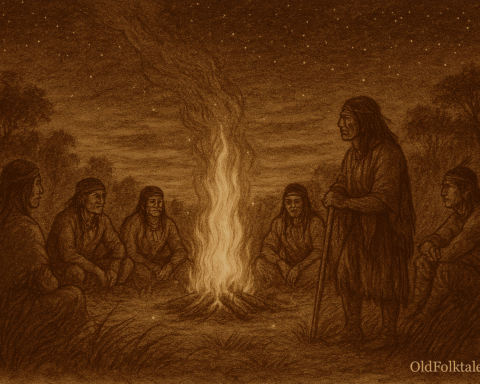
As the nights grew colder, the old man’s breath hung in the air like smoke. He wrapped himself in a threadbare blanket and whispered prayers to the mountain spirits, guardians of the earth and sky. “Great ones,” he murmured, “I have nothing but my faith. Please, keep me warm tonight.”
The mountains stood silent under the moonlight, their peaks glowing pale against the sky. The old man closed his eyes, shivering until sleep took him. But as the night deepened, something remarkable happened. A single glowing ember, bright and alive, rolled gently through the crack beneath his door. It glowed red like a heartbeat, pulsing with quiet warmth.
The old man awoke and gasped softly. “A gift,” he whispered. With trembling hands, he picked up the ember and placed it carefully in the ashes of his cold hearth. He fed it dry leaves and twigs until a steady flame rose. The small hut glowed golden in the darkness. For the first time in many nights, he slept in comfort, the warmth wrapping around him like a kind spirit.
The next night, as the wind howled outside, the same ember rolled in again, glowing brighter than before. The old man smiled and kept it alive, tending it with reverence. Each evening, the ember returned, lighting his hearth as if guided by unseen hands.
Word soon spread through the village. The neighbours wondered how a poor man could always have a warm fire when others struggled to find dry wood. Curiosity turned to greed. “He must have a secret,” whispered one woman. “Perhaps a treasure from the mountain gods,” said another. One night, when the old man slept, a group of neighbours crept to his hut. They waited until the ember rolled in, then snatched it from the hearth and carried it away in a clay bowl.
They placed the ember in their own fireplace and blew gently, hoping for the same warmth. But the ember dimmed. No matter how much they fanned or fed it, it turned black and cold. When they tried again the next night, it never appeared.
Meanwhile, in his hut, the old man awoke to find his hearth empty. He sighed, neither angry nor afraid. “The spirits give only to those who honour them,” he said softly. He knelt by the hearth and prayed again, thanking the mountains for their kindness, even if the gift was gone.
That very night, as he slept peacefully, the ember rolled once more through his door, glowing even brighter than before. The flames rose high, filling the room with a warm, golden light that reached the rafters. The old man smiled through tears, whispering, “Thank you.”
When morning came, the villagers saw smoke rising gently from his chimney. Ashamed, they gathered outside and begged for forgiveness. The old man only chuckled softly and said, “Fire belongs only to those who respect it.”
From that day on, no one in the village took the gifts of nature for granted. They prayed to the mountains before gathering wood, gave thanks before lighting their fires, and remembered the humble man whose faith had kept him warm.
Moral Lesson
The story teaches that true blessings cannot be stolen or possessed, they come only to those who show gratitude and respect. Fire, like faith, burns bright only in the hearts of the humble.
Knowledge Check
1. Who is the main character in the folktale?
A poor old man who receives warmth from the spirits of the mountains.
2. What does the ember symbolize in the story?
The ember represents the sacred power of fire, faith, and divine generosity.
3. Why does the ember stop burning for the greedy neighbours?
Because they tried to take what was meant to be shared with reverence, not stolen.
4. What lesson does the old man teach the villagers?
That true gifts from nature belong only to those who honour and respect them.
5. What role do the mountain spirits play in the story?
They reward the old man’s humility and faith by sending him warmth in his time of need.
6. What is the cultural origin of this folktale?
It originates from the Tz’utujil-Maya people of Santiago Atitlán in Guatemala.
Source: Adapted from the Tz’utujil-Maya folktale “The Old Man and the Fire” in According to Our Ancestors: Folk Texts from Guatemala and Honduras, SIL International.
Cultural Origin: Guatemala (Tz’utujil-Maya folklore)