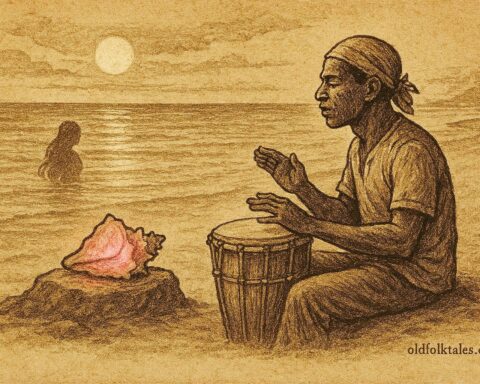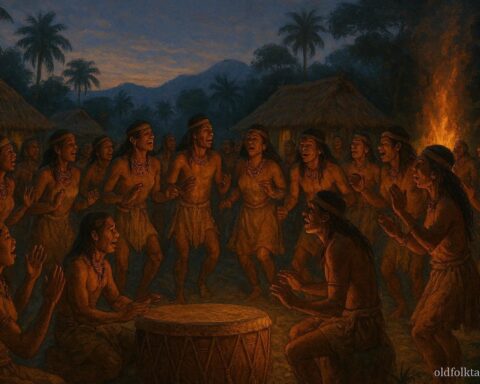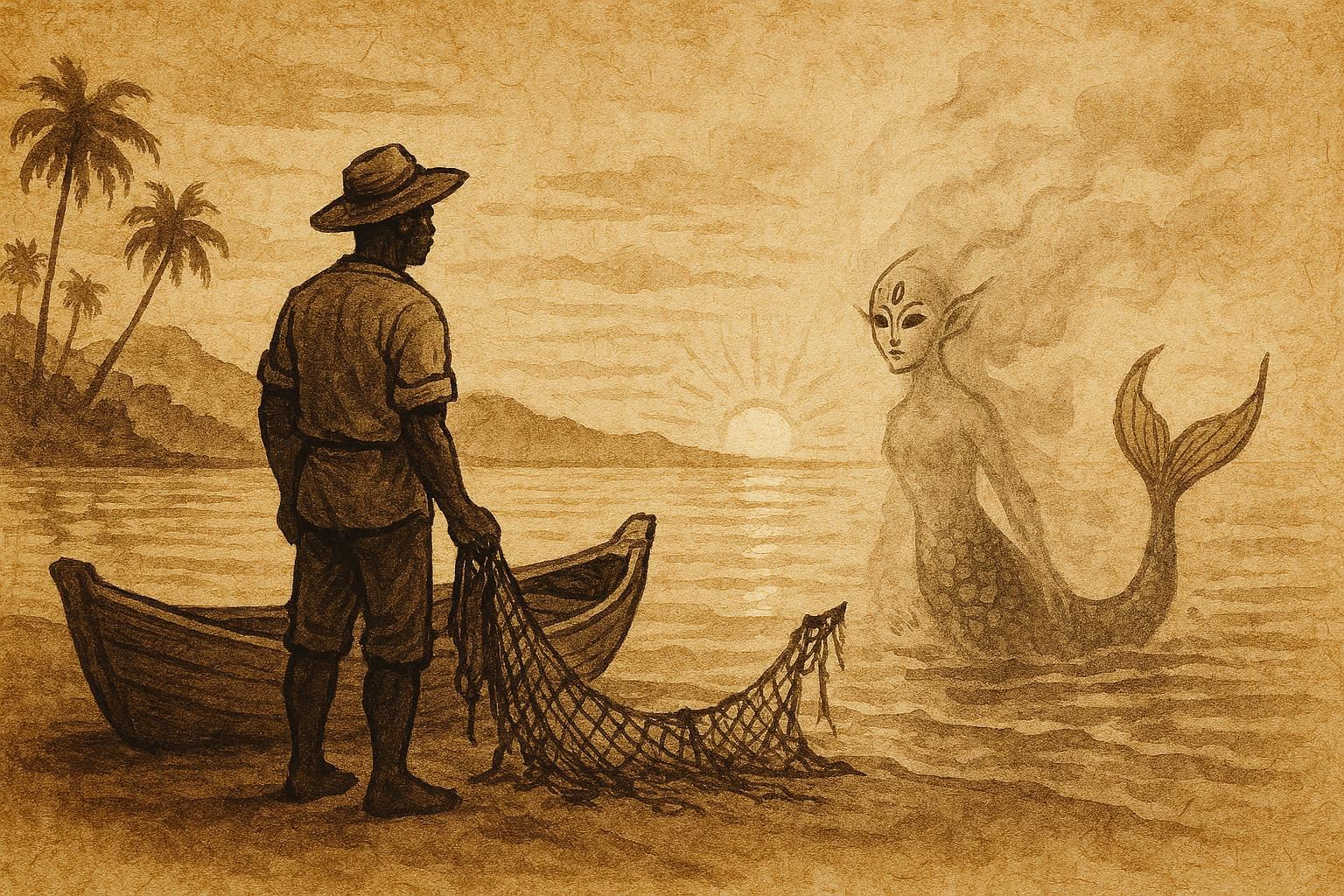
The Mermaid first appeared to the fisherman at dawn, when the Caribbean Sea lay calm and pale beneath the rising sun. He was Garífuna, born to the rhythms of tide and drum, and his canoe moved easily across the familiar waters near Trujillo. That morning, as he hauled in his net, he felt a sudden weight that did not move like fish. The rope strained in his hands, and when he pulled harder, he heard a sound like breath caught between waves.
Entangled in the mesh was a mermaid.
Click to read all South American Folktales — timeless stories from the Andes to the Amazon.
Her hair floated dark and heavy around her shoulders, tangled in nylon and rope. Her eyes were wide, not with anger, but fear. The fisherman froze. Among the Garífuna, the Himairaha were known and respected. They were not creatures of stories alone, but spirits of the sea, bound by rules as old as water itself.
Without speaking, the fisherman cut the net. He worked carefully, murmuring apologies to the sea as he freed her tail and arms. When the last strand fell away, the mermaid did not flee. Instead, she reached into the water and placed something cool and smooth into his palm.
It was a single scale, iridescent and alive with color.
“For one year,” she said, her voice steady as the tide, “your nets will be full. On the first full moon of next year, you must return this scale to the sea, or the debt reverses.”
Before he could answer, she slipped beneath the surface, leaving only ripples and the weight of the scale in his hand.
From that day forward, the fisherman prospered. Every net he cast returned heavy with fish. His canoe rode low with abundance. His family ate well, traded generously, and spoke of blessing. The scale remained hidden in his hut, wrapped in cloth, glowing faintly even in darkness.
As the year passed, neighbors whispered of his fortune. Some warned him to remember the promise. Others praised his luck. When the first full moon of the next year approached, fear and desire tangled in his chest. To return the scale meant surrendering his prosperity.
When his family asked, he lied. He said the mermaid had released him from the promise.
That night, the sea answered.
A storm rose without warning. Wind tore at the shore. Waves shattered his canoe against the rocks. The fisherman survived by clinging to debris, washed ashore at dawn bruised and broken. His boat was gone. His nets lay in ruin.
From that day on, his labor became futile. Every fish he caught turned to wood in his hands. Every net he cast came up filled with sand. Hunger returned, sharp and humiliating. The sea had not taken his life, but it had taken his reward.
The elders said the debt had reversed.
Years passed. The fisherman aged beneath the weight of his broken promise. His children learned to fish, but the curse followed him alone. Before his death, he told his granddaughter the truth. He placed the scale in her hands and wept.
But the debt could not be undone so easily.
The elders taught that only an unasked gift could balance a broken vow. The granddaughter would have to find a mermaid’s scale on her own and return it freely to the sea.
It took two generations.
The granddaughter grew old before the sea answered. One morning, walking the shore at low tide, she found a scale half-buried in sand, shining softly in the sun. She did not keep it. She carried it to the water and released it without asking for reward.
That night, the sea was calm.
The curse ended not with wealth, but with balance restored.
Moral Lesson
The folktale teaches that promises made to the spirit world are sacred, and greed turns blessing into burden.
Knowledge Check
Q1: Who saves the mermaid in the story?
A1: A Garífuna fisherman from Trujillo.
Q2: What gift does the mermaid give?
A2: A single iridescent scale.
Q3: What condition is attached to the gift?
A3: The scale must be returned after one year.
Q4: What happens when the promise is broken?
A4: The fisherman is cursed with futile labor.
Q5: Who ultimately restores balance?
A5: The fisherman’s granddaughter.
Q6: What cultural value does the story emphasize?
A6: The sacredness of contracts with spiritual beings.
Cultural Origin and Source
Source: Garífuna folktale, Honduras
Variant of the Himairaha mermaid traditions collected by ODECO cultural activists in Trujillo.