Long ago, in a land of deep forests, wide rivers, and long winters, there lived an Innu man in a small riverside settlement in what is now Eastern Canada. His name was Peni. He was known among his people as a patient hunter and a gentle husband, a man who spoke little but listened deeply. His life was simple and steady, shaped by the rhythm of the seasons and the teachings passed down by the elders.
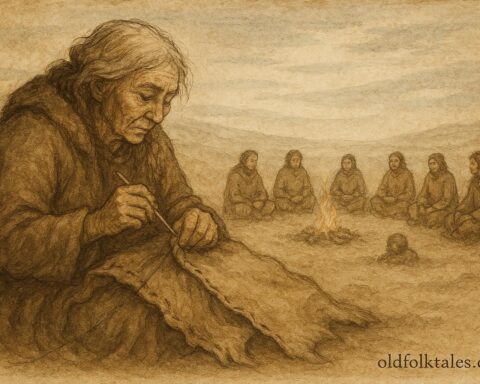
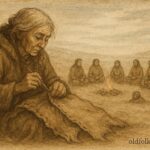
Peni lived with his wife, Miku, whose laughter warmed their lodge even during the coldest nights. She was skilled in preparing food and crafting clothing, and she carried kindness in her voice. Together, they shared a quiet happiness rooted in respect and companionship. But one winter, when the snow lay heavy on the earth and the river slowed beneath ice, illness came to the village. Despite prayers and care, Miku’s strength faded, and one morning she did not wake.
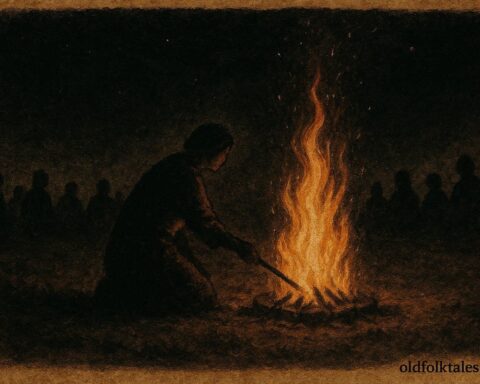
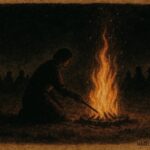
Her death left a silence that felt heavier than any snowfall. Peni carried on with daily tasks, but each action reminded him of her absence. The sound of the wind through the trees echoed her voice. The crackle of the fire reminded him of evenings they once shared. Sleep no longer brought rest, only dreams filled with longing. Though the elders spoke to him of time and healing, his grief remained sharp and restless.
Discover the blend of magic and wisdom that defines the folktales of the Caribbean islands
As days passed, Peni began to think of the stories he had heard since childhood. The elders had spoken of the Land of the Dead, a place where spirits traveled after leaving the human world. It was said that this realm lay beyond ordinary paths and that the living were forbidden to enter. The spirits required peace, and disturbing them brought imbalance. Peni knew these teachings well, yet grief has a way of bending even the strongest beliefs.
One night, when the moon hung low and pale above the trees, Peni made a decision. He wrapped himself in his fur cloak and stepped quietly away from the village. He did not tell anyone of his plan. In his heart, he believed that if he could only see Miku once more, speak her name, or hear her voice, his sorrow would ease.
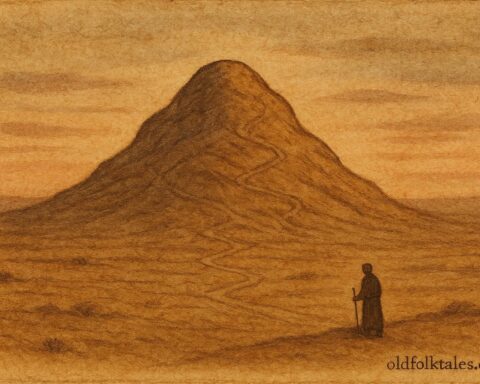
He walked for many hours, guided by instinct rather than direction. The forest grew unfamiliar as he traveled farther from known hunting grounds. The air felt colder, heavier, as though the land itself was holding its breath. Then he noticed something strange. The river ahead flowed against its natural course, moving silently backward, its surface glowing faintly as if lit from beneath.
Peni knew then that he stood at the boundary between worlds. Fear rose in his chest, but he pressed on, stepping carefully across stones that shimmered like bone in moonlight. On the far bank, the forest changed. The trees were tall and still, their branches bare yet alive with a quiet presence. No birds sang, no animals moved, yet the land did not feel empty.
Shapes began to appear among the trees. They were human in form but made of soft light, their movements slow and deliberate. These were the spirits of the dead. They walked without sound, their faces calm and distant, as if bound by laws unseen. Peni’s heart pounded as he searched among them, whispering Miku’s name into the still air.
At first, there was no answer. Then, from the far edge of the clearing, a familiar glow approached. Miku stood before him, her form lighter than mist yet unmistakable. Her eyes met his, filled with both love and sorrow. Peni reached toward her, tears falling freely. He wanted to speak, to ask her to return, to tell her how empty the world felt without her.
Before words could leave his mouth, a deep presence filled the air. The forest seemed to lean inward, and a voice, neither harsh nor kind, spoke from everywhere at once.
“You have crossed where the living must not tread. Love does not grant permission to disturb the dead. The worlds are separate for a reason.”
Peni fell to his knees. In that moment, he understood the weight of his choice. Though his love was true, his journey had broken a sacred boundary. Miku looked at him gently and shook her head. Without words, she told him what he already knew. Her path now belonged to the spirit world, and his belonged to the living.
With great effort, Peni rose and stepped backward. Each step felt heavier than the last. The spirits faded into the trees, and the glow of the river dimmed. When he crossed back into the human world, the forest returned to its familiar sounds. The night felt colder, but clearer.
Peni returned to his village by dawn. His body was weary, but his heart carried a new understanding. In the days that followed, he honored Miku in the ways taught by his people. He spoke her name with respect, made offerings, and shared stories of her kindness. He did not attempt to follow her again.
In time, Peni told others of his journey, not as a tale of bravery, but as a lesson. He spoke of grief, of longing, and of the importance of respecting the laws that guide both the living and the dead. His sorrow did not disappear, but it softened, shaped by acceptance rather than desperation.
And so, his story was passed down through generations as a reminder that love endures, but boundaries must be honored. The dead walk their own path, and the living must find strength in memory, not pursuit.
Moral Lesson
Grief is a natural and powerful emotion, but it must be guided by wisdom. The living must respect the sacred boundaries between worlds, honoring the dead through remembrance rather than disturbance. Acceptance allows healing to begin.
Knowledge Check
- Who is the main character in the story?
Answer: Peni, an Innu man grieving the loss of his wife. - What motivates Peni to journey to the Land of the Dead?
Answer: His deep grief and desire to see his wife again. - What marks the boundary between the living world and the spirit world?
Answer: A strange river flowing backward with a pale glow. - Why is Peni warned to leave the spirit world?
Answer: The living must not disturb the dead, as sacred boundaries protect balance. - How does Peni change after returning home?
Answer: He accepts his loss and honors his wife through remembrance rather than pursuit. - What central lesson does the story teach?
Answer: Love must respect spiritual law, and healing comes through acceptance.
Source: Inspired by traditional Innu oral folklore, Canada.
Cultural Origin: Innu First Nations — Eastern Canada.