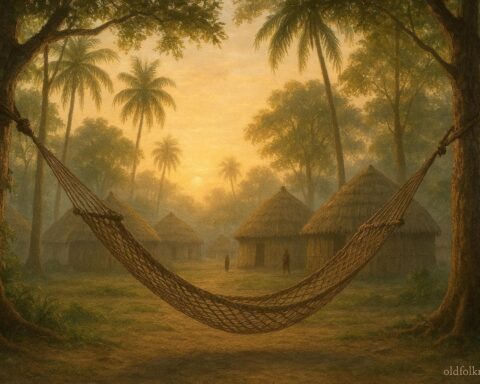
In the southern lands where mist clings to the valleys and the earth rises gently into rolling hills, the Mapuche people lived close to the land and listened carefully to its movements. They believed the earth was not silent. Hills watched. Rivers remembered. Stones carried stories older than human voices. Among these lands stood a hill that appeared ordinary by day but revealed its true nature after nightfall.
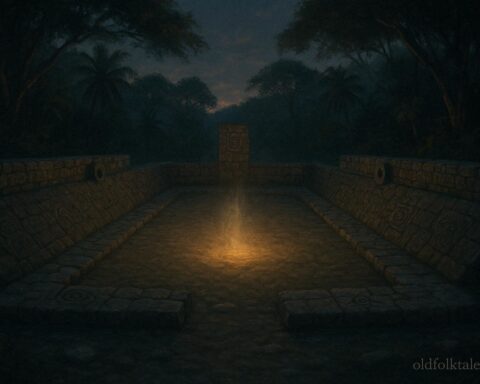
The hill lay just beyond the village, rising slowly from a field of grasses and wild flowers. Children played near its base, and elders passed by it daily without fear. Yet no one climbed its summit. The elders taught that the hill was not merely soil and stone but a guardian shaped by ancestral will. Beneath its surface rested burial grounds where generations of Mapuche ancestors were laid to rest, their spirits bound to the land they once protected.
For many years, the village lived in harmony with the hill. Paths curved naturally around it. Fires were never lit near its slopes. Songs were sung softly when passing, not as worship but as acknowledgment. The hill did not demand attention, only respect.
One season, strangers arrived from beyond the valleys. They traveled with tools and maps, speaking of land measurement and expansion. They admired the hill for its height and solid ground. To them, it was a place suitable for construction and clearing. The villagers warned them gently, explaining that the hill was sacred and must not be disturbed. The strangers listened politely but dismissed the warnings as superstition.
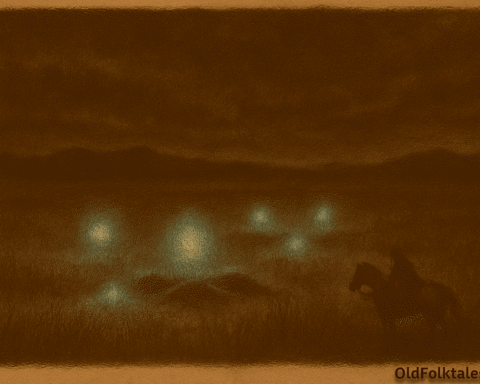
That night, the wind rose earlier than usual. The moonlight revealed subtle changes. The hill shifted. Its slopes curved differently, and the path that once led toward its side bent away. Stones that marked familiar routes were no longer where they had been. The earth moved without sound, as though breathing.
When morning came, the strangers returned with their tools. Confused, they argued among themselves. The hill no longer matched their maps. The ground sloped where it had once been flat. They blamed poor measurements and began again.
Night fell once more, and again the hill shifted. Each movement was small but deliberate. The summit leaned slightly away. The base widened. What had been accessible by day became unreachable by dawn.
The elders knew what was happening. The hill was protecting what lay beneath. It was turning away those who did not understand its purpose.
On the third day, one of the younger villagers, curious and respectful, approached the hill alone at dusk. He placed his hand on the ground and sat quietly. He did not ask for permission or offer demands. He listened. The earth was warm beneath his palm, steady and patient. In that silence, he understood what the elders had always known. The hill did not reject people. It rejected disruption.
The strangers persisted. They attempted to mark the land at night, believing the darkness would prevent further confusion. But when they returned at dawn, their markers were gone. Some lay buried. Others rested far from where they had been placed. Fear replaced frustration. Whispers spread that the land itself was alive.
At last, the strangers sought the elders. They asked why the hill resisted them. The elders explained that the hill was a guardian. It held the remains of ancestors whose duty had been to protect the land and guide future generations. Disturbing it would break the bond between the living and the dead.
The strangers listened more carefully this time. They stood before the hill and observed its stillness by day. One of them noticed something he had not seen before. The grass on the slopes grew thicker. Birds gathered there at dawn. The land was not hostile. It was attentive.
That night, the hill did not move.
Understanding replaced ambition. The strangers altered their plans, choosing land farther away. They left offerings of water and seeds, not as payment but as acknowledgment. The villagers watched as the hill settled into a shape it had not held before, broader and more rooted, as if relieved.
From that time on, the story of the shifting hill spread among the Mapuche. It was told not as a warning of danger but as a lesson in awareness. Sacred places did not need fences or guards. They protected themselves through balance and memory.
Children were taught that the land remembers every step taken upon it. Hills move not to punish but to preserve. What is meant to endure will always find a way to protect itself.
Even today, when the mist settles low and the night is quiet, some say the hill still shifts, gently adjusting its shape, ensuring that the resting place of the ancestors remains undisturbed. Those who pass by feel a sense of calm, as if the land itself is watching and breathing alongside them.
Discover ancient tales passed down by the Indigenous peoples of the Americas.
Moral Lesson
Sacred spaces require respect, not control. When humans act with humility and awareness, the land responds with balance. When they act without regard for memory and meaning, the land protects itself in quiet but powerful ways.
Knowledge Check
1. Why was the hill considered sacred by the Mapuche people?
The hill protected ancestral burial grounds and held spiritual significance tied to memory and guardianship.
2. What caused the hill to shift during the night?
The hill responded to attempts to disturb sacred land, reshaping itself to protect what lay beneath.
3. How did the villagers maintain harmony with the hill?
They avoided climbing it, respected its space, and acknowledged its presence without interfering.
4. Why did the hill stop shifting after the strangers changed their plans?
Once the threat to the burial grounds ended, the hill no longer needed to protect itself.
5. What role did listening play in understanding the hill?
Listening allowed the villagers to recognize the land’s intentions without force or confrontation.
6. What broader lesson does the story teach about land and memory?
That landscapes are living keepers of history and respond to human actions with purpose.
Source
Adapted from Chilean Indigenous land narratives; Museo Chileno de Arte Precolombino.
Cultural Origin
Mapuche peoples, Southern Chile and Argentina.