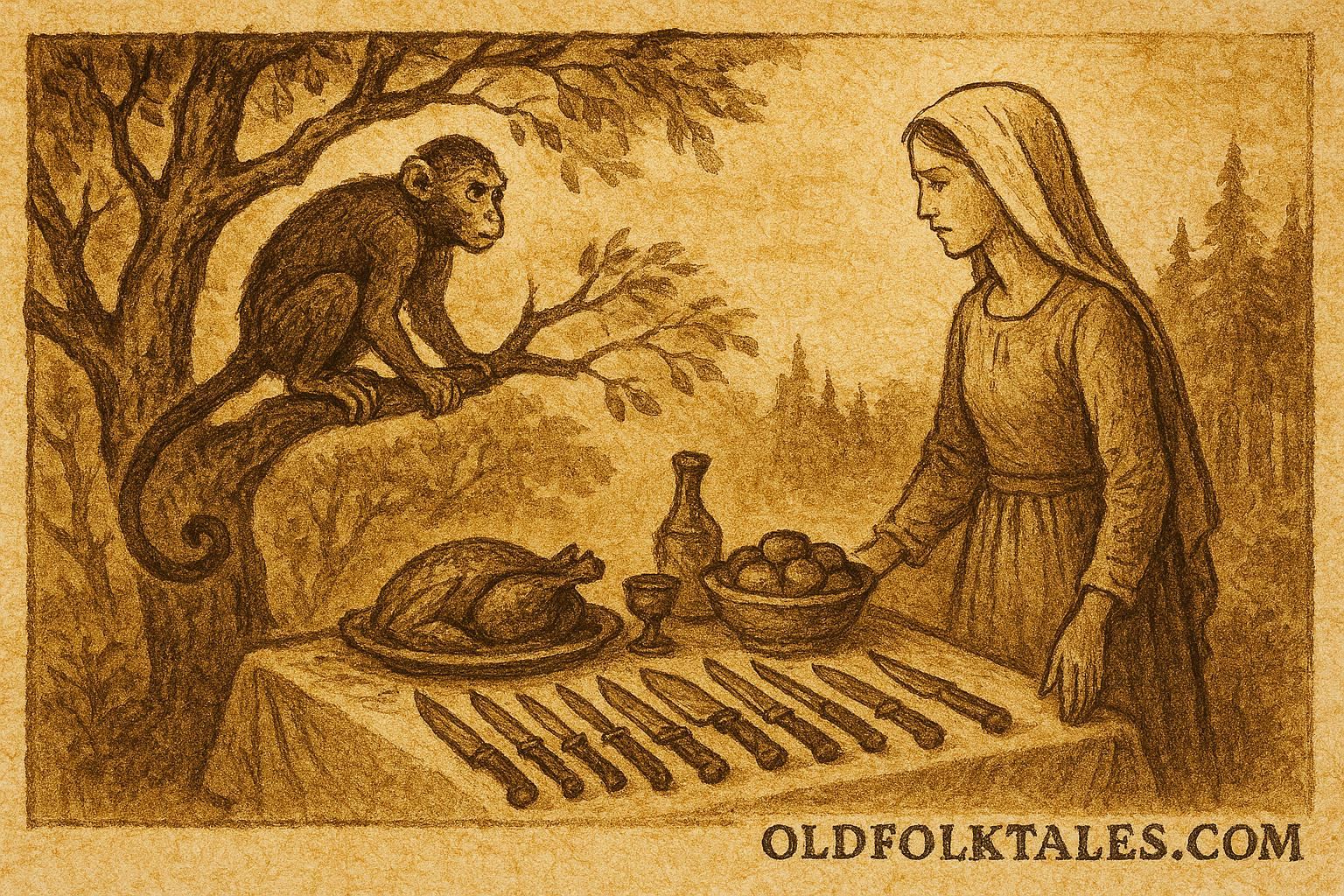
Long ago, when animals still listened closely to the ways of people, there lived a woman whose heart was weighed down by fear and desperation. Her only son lay weak upon a mat in their small home, his breath shallow, his body fading day by day. She had tried herbs, prayers, and careful tending, yet nothing eased his suffering. Each sunrise brought more dread, for she believed she was watching her child slip away.
In her despair, the woman sought out an Obeah man, known in the community for his knowledge of hidden forces and ancient remedies. He listened to her story in silence, then spoke gravely. The sickness, he said, could not be cured by ordinary means. Only one thing could restore the boy’s strength: the liver of the Monkey of No Sorrow, a creature said to live freely without grief or care. Its liver carried joy and life within it, powerful enough to chase away death itself.
The woman did not question the price of such a cure. She thanked the Obeah man and left at once, her thoughts fixed on finding the monkey. In the nearby forest lived many monkeys, playful and curious, often venturing close to human paths. Among them was one especially clever monkey, known for his sharp eyes and cautious nature.
The woman prepared a feast and carried it to the edge of the forest. She called out sweetly, praising the monkeys and inviting them to share her food. Most kept their distance, but the clever monkey approached, tempted by the rich smells and the woman’s gentle voice. She welcomed him warmly, laying out fruits and roasted treats, urging him to eat his fill.
As the monkey ate, his eyes wandered. He noticed something strange. Around the cooking place lay many knives, sharpened and carefully arranged. The sight unsettled him. No feast, he thought, required so many blades. He paused and looked at the woman, his voice calm but alert, and asked why she had brought so many knives to a meal meant for friendship.
Startled, the woman forgot herself. Fear for her son rushed to her tongue faster than caution. She cried out that she needed the monkey’s liver to save her child and that the knives were meant to cut it from him. The words hung in the air, heavy and final.
In an instant, the monkey sprang away. He leapt into the trees, his heart pounding with shock and betrayal. From a safe branch, he looked back at the woman, who now stood frozen, realizing too late what she had revealed. The monkey called out that humans could not be trusted when desperation ruled their hearts. Then he vanished deeper into the forest.
The monkey did not keep the danger to himself. He gathered the other monkeys and told them what had happened, warning them of the woman’s trick and the cruel purpose behind her kindness. He urged them to leave the forests near human homes and seek safety where people could not reach them. The monkeys listened, their fear growing with every word.
That very day, they followed him into the high mountains and deep wilderness, places far from villages and roads. From there on, they lived apart from humans, watchful and wary, never again accepting food offered too easily.
The woman returned home empty-handed. Whether her son recovered or not, the story does not say. What remained was the lesson she had taught the animals and herself: that greed and desperation, when spoken aloud, can destroy trust forever.
And that is why monkeys are said to live far away from towns, keeping their distance from human hands and human promises.
Moral Lesson
This folktale teaches that desperation does not excuse betrayal and that revealing harmful intentions brings swift consequences. It also warns against exploiting nature for selfish gain and reminds listeners that trust, once broken, cannot easily be restored.
Knowledge Check
1. Why does the woman seek the Monkey of No Sorrow?
To cure her dying son using its powerful liver.
2. Who tells the woman about the monkey liver cure?
An Obeah man.
3. What makes the monkey suspicious during the feast?
The presence of many sharp knives.
4. How does the woman reveal her plan?
She blurts out that she intends to cut out the monkey’s liver.
5. What action does the monkey take after escaping?
He leads all monkeys far away from human settlements.
6. What behavior of monkeys does this tale explain?
Why monkeys avoid humans and live deep in the wilderness.
Source & Cultural Origin
Source: Caribbean folktale, oral tradition
Cultural Origin: Caribbean (African diasporic animal folklore)