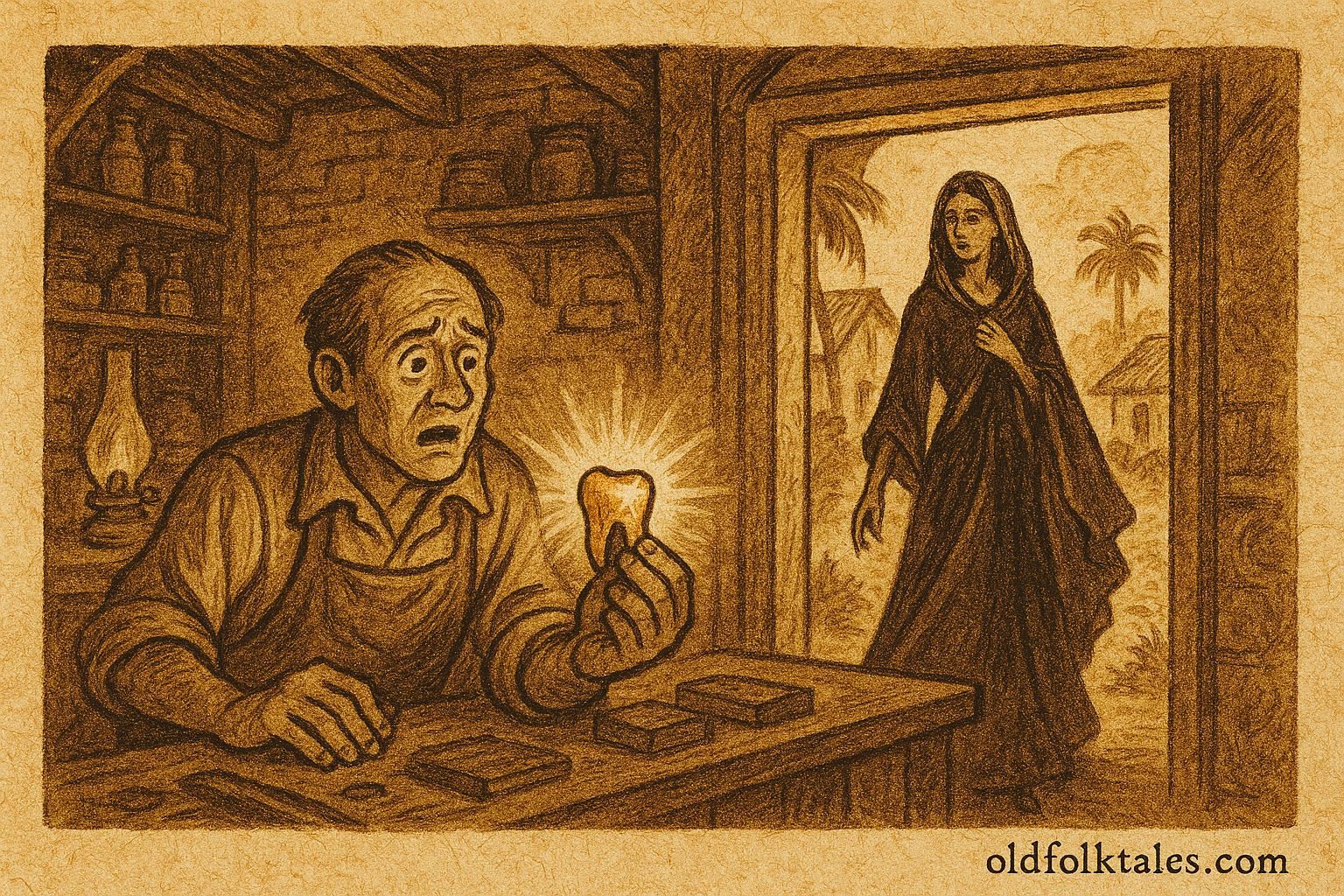
Greed sat like a second shadow over the small rural village, and nowhere was it darker than in the shop owned by a man whose name people spoke with distrust. From dawn until nightfall, he weighed flour with a light hand, trimmed cloth short of its measure, and sold spoiled goods to those too poor to argue. He smiled often, but it was the smile of someone always counting what more he might take. In a place where neighbors relied on one another, his shop stood as a warning rather than a comfort.
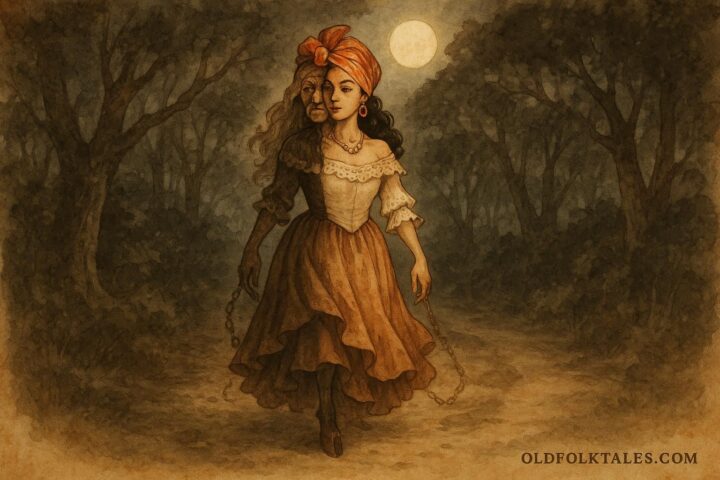
One humid afternoon, as cicadas sang and the road lay quiet, a strange woman entered the shop. She was impeccably dressed, her clothes old-fashioned yet finely kept, and her speech carried a foreign accent. She asked politely for a bolt of cloth, examining it carefully. When she paid, she placed an old Spanish gold coin on the counter, worn smooth by time but unmistakably valuable.
The shopkeeper’s eyes sharpened. He recognized the coin at once. Calculations moved faster than courtesy. He wrapped the cloth and returned change as though the coin were worth only a fraction of its true value. The woman did not protest. She accepted the coins, smiled calmly, and as she turned to leave, the shopkeeper noticed a brief flash of gold in her mouth, bright as a glint of sunlight.
That night, as rain tapped softly on the roof, pain bloomed in the shopkeeper’s jaw. A deep ache pulsed through one of his molars. By morning, the pain had faded, replaced by astonishment. When he looked in a shard of mirror, he saw that the aching tooth had turned into solid gold, smooth and gleaming.
Joy overtook fear. He pried the tooth from his mouth and sold it at the market for a fortune. Before the day ended, a new tooth pushed up in its place, also gold. The shopkeeper laughed, believing himself blessed beyond measure. Each morning brought another golden tooth, and each day he sold it. His shop grew larger. His house filled with goods. People who once scorned him now bowed their heads.
But the gold carried a price. As the teeth vanished, his gums began to shrink. His smile became strained. Soon his jaw ached constantly, though the pain did not stop the gold from growing. With each tooth removed, his mouth decayed further. Flesh pulled away from bone. His speech slurred, then faltered. Still, the teeth returned, shining as ever.
Wealth poured in, yet his body withered. His jawbone softened and crumbled, leaving his face sunken and distorted. He could no longer chew food, only swallow thin liquids. People stopped visiting his shop. Children whispered that he was cursed. Mirrors showed him less of a man and more of a warning.
At last, he understood. The woman with the gold coin had not been an ordinary traveler. She was an avenging spirit, one who measured debts not in money but in consequence. The gold was not a gift, but a curse. His fortune was drawn from his own decay, a perpetual debt he could never repay.
Time passed, but death did not come. He remained alive, a skeletal figure with golden teeth endlessly growing from ruined bone. Unable to eat, unable to speak, unable to escape, he became a living monument to his own wrongdoing. Villagers avoided the place, and his shop fell into ruin, leaving only the story behind.
Moral Lesson
This folktale teaches that Greed consumes the one who feeds it. Wealth gained through deceit brings lasting consequence, and debts owed to the spirit world are never settled with gold alone.
Knowledge Check
1. What kind of man was the shopkeeper known to be?
He was known for cheating customers and valuing profit over fairness.
2. What payment did the strange woman use?
An old Spanish gold coin of great value.
3. What supernatural change happened to the shopkeeper?
His molar turned into solid gold and kept growing back.
4. Who was the strange woman revealed to be?
An avenging spirit enforcing moral balance.
5. Why was the gold considered a curse?
It caused the shopkeeper’s body to decay while trapping him in endless suffering.
6. What cultural lesson does the story reinforce?
That spiritual debts and moral wrongs bring unavoidable consequences.
Source and Cultural Origin
Source: Afro-Trinidadian folktale collected by J.D. Elder from Sangre Grande elders
Cultural Origin: Trinidad and Tobago, Afro-Trinidadian Creole tradition