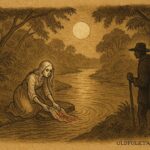
In the days when kings ruled by custom and word traveled faster than horses, there lived a powerful king whose only child was a daughter of great beauty and wisdom. Many sought her hand, but the king, wary of pride and empty boasts, declared that she would marry only a man proven in spirit as well as strength.
In the heart of the kingdom stood an abandoned house, long avoided by all. It was said to be haunted by duppies, restless spirits of the dead who wandered at night, groaning and stirring the air with fear. Inside the house were three enchanted shirts: one of gold, one of silver, and one of lead. The king proclaimed that any man who could wear each shirt for a full night, three nights in succession, within the haunted house would earn the right to marry his daughter.
The first to try were two proud princes from wealthy lands. The elder prince entered the house wearing the golden shirt. Before midnight, the shirt burned with unbearable heat, scorching his skin as though he stood inside a furnace. Screaming in pain, he fled into the night. The second prince, mocking his failure, donned the silver shirt the following evening. But as darkness fell, an icy cold spread through his bones, freezing his limbs until he could scarcely move. Terrified and numb, he too ran from the house, never to return.
The king’s court laughed bitterly at their arrogance, and many believed the task impossible. Yet among the listeners stood a humble youth, often called Jack or sometimes John Crow, a poor third son with no inheritance but good manners and a calm heart. Though others doubted him, Jack stepped forward and asked permission to try.
On the first night, Jack entered the haunted house and put on the golden shirt. As the heat rose and spirits whispered, he did not shout or strike. Instead, he spoke gently into the darkness, saying, “Mass Spirit, you too hot. Cool yourself.” At once, the burning eased, and the night passed quietly.
The second night, he wore the silver shirt. The cold crept toward him like frost, but again he spoke with respect. “Mass Spirit, you too cold. Warm yourself easy.” The chill softened, and dawn found him unharmed.
On the third night, Jack lifted the leaden shirt onto his shoulders. Its weight pressed him toward the floor, heavier than stone. The duppies crowded near, groaning and stirring the shadows. Still, Jack did not fight. He bowed his head and said, “Mass Spirit, you too heavy. Rest yourself.” The weight lifted, and the spirits grew still.
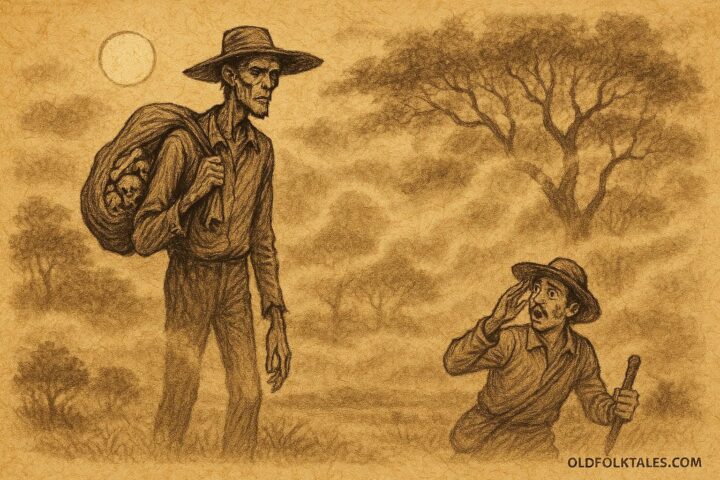
At last, the duppies spoke. They told Jack they were trapped souls, cursed to wander because their bones lay unburied and forgotten. They asked for his help. Moved by pity, Jack gathered their remains and buried them properly, saying prayers as best he could.
Freed at last, the spirits thanked him. They revealed that the shirts were no longer cursed. When Jack put them on again, each fit him perfectly, neither burning, freezing, nor crushing him. At dawn, he returned to the king wearing all three in triumph.
True to his word, the king gave Jack his daughter’s hand in marriage. The people celebrated, for they saw that humility and respect had succeeded where pride had failed. And the haunted house was never feared again.
Moral Lesson
This folktale teaches that respect, humility, and proper conduct toward the dead are stronger than arrogance or brute courage. Kind words and courtesy can turn curses into blessings and fear into peace.
Knowledge Check
1. What challenge does the king set for his daughter’s suitors?
To wear three enchanted shirts for three nights in a haunted house.
2. Why do the first two princes fail?
Their arrogance and lack of respect leave them unable to endure the shirts.
3. How does Jack respond to the spirits’ torment?
He speaks respectfully and calmly, addressing them as “Mass Spirit.”
4. What are the duppies revealed to be?
Trapped souls whose bones were never properly buried.
5. How does Jack free the spirits?
By burying their bones with care and respect.
6. What cultural value does the story emphasize?
Respect for the dead and proper spiritual etiquette.
Source & Cultural Origin
Source: Jamaican folktale
Adapted from “Golden Buttons” in Jamaican Song and Story by Walter Jekyll.
Cultural Origin: Jamaica (Afro-Caribbean folklore)