In a small Haitian village shaped by hard labor and deep faith, a girl was born under unusual signs. At the center of her forehead shone a radiant star, small yet unmistakable, glowing softly as though lit from within. Elders whispered that the child was marked by divine favor, chosen in ways unseen but deeply felt. From her earliest days, the star never dimmed, no matter the heat of the sun or the darkness of night.
Her mother died when the girl was still young, and her father later took another wife. The new woman brought with her a daughter of her own, and from the moment she entered the household, envy settled in her heart. She could not bear the sight of the shining star, nor the quiet grace with which the girl moved through the world. Though the child never boasted of her gift, the star spoke for her, and that was enough to provoke resentment.
Determined to erase what she could not possess, the stepmother forced the girl into servitude. She dressed her in rags, sent her to draw water, scrub floors, and labor from dawn until nightfall. She smeared ash across the girl’s face and bound her hair, hoping filth and exhaustion would conceal the glow. Yet the star could not be hidden. Even beneath dirt and cloth, its light pressed through, soft but constant.
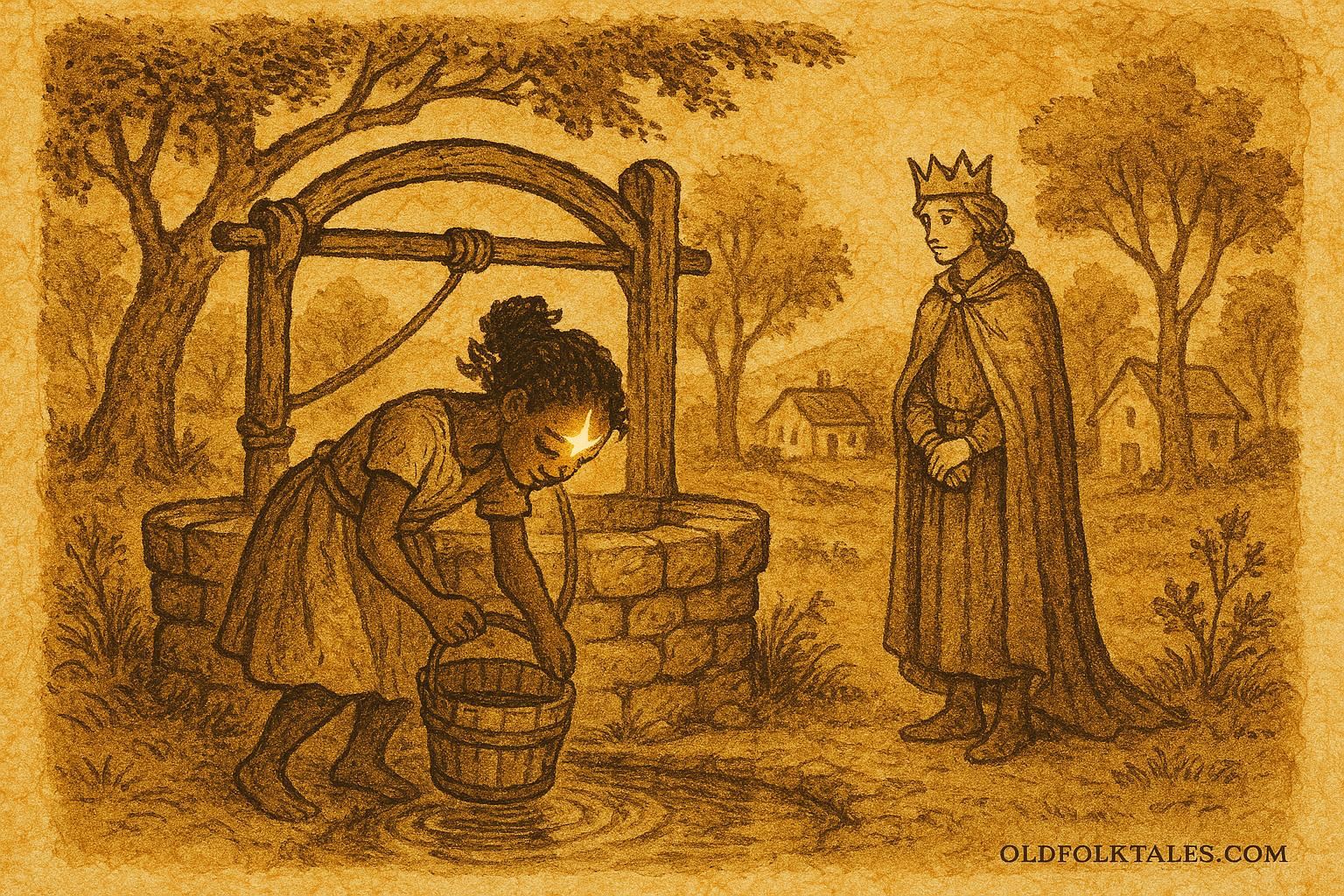
One day, while fetching water from a well beyond the village, the girl leaned forward to lower her bucket. In the dark surface of the water, her reflection appeared, and the star shimmered like a fallen piece of the sky. At that moment, a young prince traveling through the countryside paused nearby. As he approached the well, he saw the reflection too and was struck by its beauty. When the girl looked up, startled, their eyes met, and the prince saw the star with his own eyes.
He spoke gently and asked who she was. Fearful of her stepmother’s wrath, the girl answered simply and returned home. But the prince could not forget her. He returned again and again, sometimes glimpsing her reflection in a stream, sometimes catching sight of the light as she worked. Each time, the star shone just as brightly, untouched by hardship.
The stepmother soon noticed the prince’s interest and demanded to know why he lingered near their home. When she learned the truth, her envy turned cruel. She resolved that if her stepdaughter’s star had brought fortune, then her own daughter would bear a mark as well. She took a blade and carved a moon, or in some tellings a star, into her daughter’s forehead, believing that imitation would bring the same blessing.
Instead, the wound festered. What was meant to shine became swollen and painful, a mark of suffering rather than favor. No light came from it, only infection and shame. The daughter cried out in agony, and the household fell into fear and bitterness.
When the prince returned and saw the difference for himself, he understood. He recognized that the true star was not merely a sign of beauty, but of destiny and spiritual worth. He asked for the girl’s hand in marriage, lifting her from servitude and restoring her dignity before the village.
The stepmother and her daughter were left to face the consequences of their jealousy. Their attempts to steal what was never meant for them brought only disgrace. The girl with the star on her forehead entered her new life with humility, her light unchanged by hardship or triumph.
Moral Lesson
This folktale teaches that true worth is spiritual and cannot be hidden, stolen, or imitated. Destiny and divine favor reveal themselves in time, while envy brings only suffering.
Knowledge Check
1. What does the star on the girl’s forehead represent?
It symbolizes divine favor, destiny, and spiritual election.
2. Why does the stepmother force the girl into servitude?
Because she is jealous of the girl’s beauty and spiritual mark.
3. How does the prince first notice the girl?
He sees her reflection and the shining star in a well or stream.
4. What happens when the stepmother’s daughter imitates the mark?
The carved symbol becomes a festering wound instead of a blessing.
5. Why does the prince choose the star-marked girl?
He recognizes her true spiritual worth and destiny.
6. What cultural belief does the story reinforce?
That spiritual value outweighs social status and cannot be concealed.
Source & Cultural Origin
Source: Haitian folktale, Haiti
Adapted from versions recorded by Suzanne Comhaire-Sylvain and related Haitian folklore collections.
Cultural Origin: Haiti (Haitian folklore, Vodou-influenced tradition)