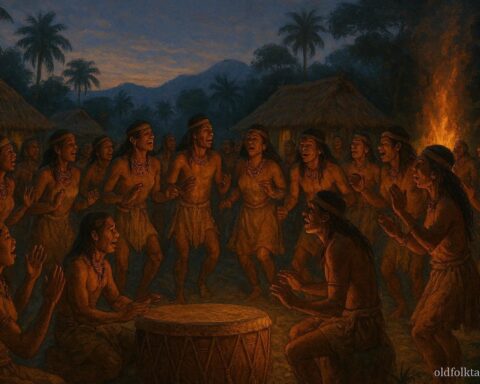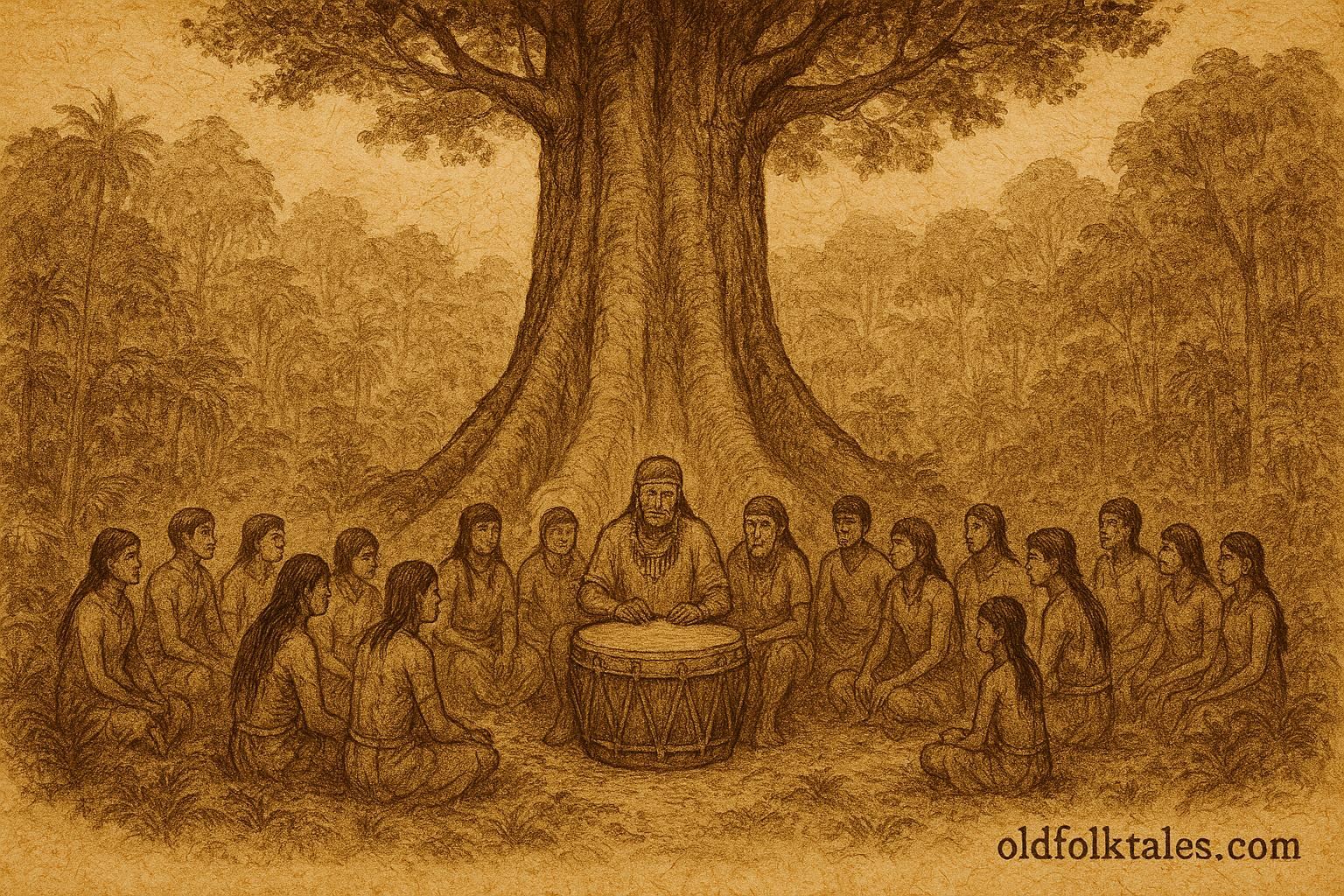
Long before paths were cut through the rainforest and before distant villages learned to meet face to face, the people of the Western Amazon relied on sound to bind their world together. Dense trees rose like walls of living green, rivers curved endlessly through the land, and mist clung to the forest floor at dawn. In those days, the forest itself carried messages, through birds, wind, and most importantly, a sacred drum.
At the heart of the forest stood a towering ceiba tree, its roots twisting deep into the earth like ancient veins. From its fallen trunk, the elders carved a drum unlike any other. It was wide and hollow, stretched with animal hide, and painted with symbols of rivers, animals, and stars. The elders said the drum did not belong to one village alone. It belonged to all who lived beneath the forest canopy.
Journey through Central America’s heartlands and hear its stories of creation, courage, and nature.
When struck with care, its voice rolled through the jungle, leaping across rivers and hills. One rhythm meant celebration. Another warned of danger. A slow, steady beat called for gathering and counsel. Through this drum, villages far apart lived as neighbors, sharing news, help, and warnings as if no distance existed at all.
For many seasons, harmony ruled the forest. When one village lacked food, another answered the drum’s call. When floods came or illness spread, the drum spoke first, and hands followed. The people believed the drum carried the spirit of unity, and they treated it with reverence.
But as time passed, one village grew proud.
This village stood closer to the great river, where fish were plentiful and trade was easier. Its leaders began to believe their fortune came from strength alone rather than shared goodwill. When disputes arose with neighboring villages, they struck the drum not to seek counsel, but to command. They used its voice to demand aid without offering help in return. They beat false rhythms, calling gatherings for matters that served only themselves.
At first, the other villages answered, trusting the old ways. But confusion spread. The drum’s messages lost clarity. Some arrived too late. Others contradicted one another. Slowly, resentment grew, and trust began to thin like mist under the midday sun.
One morning, a child ran to the drum platform to sound an alarm. A fire had broken out near the dry season fields. But when the drum was struck, no sound traveled. The forest swallowed the beat, leaving only a dull thud beneath the child’s hands.
The elders tried next. They struck harder, then softer, then with careful rhythm, but the drum remained silent. Its voice, once strong enough to cross miles of forest, had vanished.
Fear spread quickly. Without the drum, villages were alone. Messages could not travel. Help could not arrive in time. The forest felt larger, darker, and more dangerous than ever before.
The elders gathered beneath the ceiba tree and listened, not for sound, but for understanding. At last, one elder spoke. The drum, she said, was not broken. It had withdrawn. Its spirit could not survive where its voice was used for division instead of unity.
Ashamed, the proud village sent messengers on foot and by canoe. They crossed rivers and trails to speak directly with those they had wronged. They admitted their misuse of the drum and asked forgiveness, not to reclaim power, but to restore balance.
In a rare gathering, leaders from all villages met at the sacred clearing. They spoke openly, shared grievances, and renewed their promises to one another. No drum sounded that day. Only human voices carried truth.
At sunset, when the last words were spoken and hands were joined, the elders approached the drum once more. This time, they struck it gently, together.
The sound returned.
It rolled through the forest, steady and clear, echoing through trees and across water. Villages heard it and knew harmony had been restored. From that day forward, the drum was never struck by one village alone. Its voice belonged to many, or it would belong to none.
And so the forest remembered.
Discover South America’s folktales filled with magic, transformation, and ancestral wisdom
Moral Lesson
This folktale teaches that communication is sacred and powerful. When used selfishly, it loses meaning; when guided by unity and respect, it strengthens entire communities.
Knowledge Check
1. What role did the forest drum serve in the story?
The drum allowed distant Amazonian villages to communicate, warn one another, and maintain unity.
2. Why did the drum fall silent?
It was misused by one village for selfish purposes, breaking the spirit of shared communication.
3. What does the drum symbolize in Amazonian folklore?
It represents unity, cooperation, and respectful communication among communities.
4. How was the drum’s voice restored?
Through reconciliation, honesty, and renewed unity among all villages.
5. What cultural belief does this story reflect?
That natural objects hold spiritual power tied to human behavior and harmony.
6. What lesson does the story teach modern readers?
True communication requires responsibility, fairness, and collective respect.
Source: Indigenous oral tradition; recorded in Western Amazon folklore
Cultural Origin: Amazon Basin (Indigenous folklore)