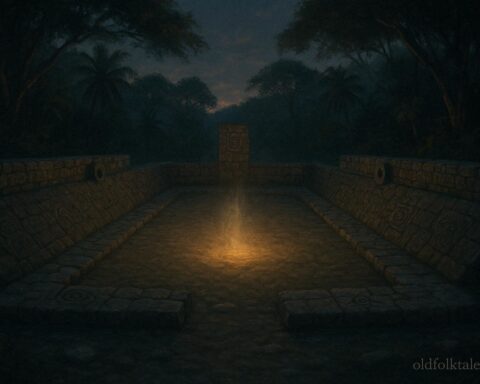
The pampas of Uruguay held secrets beneath their golden grasses, secrets that had been buried for generations in unmarked graves and forgotten places. The land remembered what people tried to forget: battles fought over territory, bodies left unburied in haste, treasures hidden by desperate men who never returned to claim them. And on certain nights, when the air grew heavy and still, the land revealed these secrets through mysterious lights that danced across the fields like living flames.
The gauchos called them Luz Mala, the evil lights, though some elders insisted they were not evil at all, merely guardians of what should remain hidden. These strange luminous orbs appeared without warning, glowing with colors that seemed wrong somehow: sickly greens, pale blues, ghostly whites that pulsed and flickered like heartbeats. They hovered over burial grounds, drifted across abandoned battlefields, and congregated where violence or injustice had stained the earth.
Click to read all South American Folktales — timeless stories from the Andes to the Amazon.
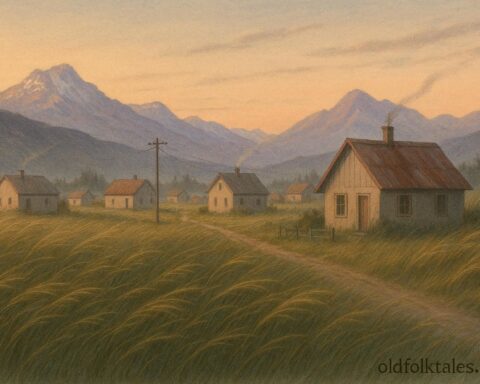
In the small settlement of Paso de los Toros, everyone knew the stories. Old Doña Carmen, who had lived through more years than anyone could count, would gather children around her fire on winter evenings and warn them with a voice like rustling paper.
“The Luz Mala are not for the curious,” she would say, her clouded eyes reflecting the firelight. “They mark places where the dead are restless, where truths have been buried along with bones. Those lights are warnings, children. Heed them.”
But not everyone heeded warnings.
Julio was a young gaucho, barely twenty years old, with more courage than sense and a hunger for adventure that burned in his chest like a coal. He had heard the stories all his life, but he dismissed them as superstitious nonsense, tales told by frightened old people who saw ghosts in every shadow.
One autumn evening, as dusk painted the sky in shades of purple and gold, Julio was riding home across the pampas after a long day working cattle. The air felt thick and strange, pressing against his skin like invisible hands. His horse, a usually steady mare named Estrella, began to dance nervously, her ears flicking back and forth.
Then Julio saw them.
Three lights appeared in the distance, hovering about a man’s height above a field he knew had once been a burial ground for soldiers who died in the civil wars decades ago. The lights were beautiful in a terrible way, glowing with an ethereal blue-green luminescence that seemed to call to something deep within him.
Julio felt a pull toward those lights, an inexplicable desire to approach them, to understand what they were. His rational mind told him they were probably just marsh gas igniting, a natural phenomenon with a scientific explanation. The stories were just stories.
“Stay back,” he whispered to Estrella, but the mare needed no encouragement. She planted her hooves firmly and refused to move forward, her whole-body trembling.
Julio dismounted, his curiosity overcoming his caution. As he walked toward the lights, they seemed to respond to his presence, brightening and swirling in patterns that looked almost deliberate. He could feel heat radiating from them now, though he was still dozens of paces away. The air smelled strange, like old iron and earth freshly turned.
When he was perhaps twenty steps from the nearest light, something changed. The beautiful glow suddenly seemed menacing. Images flashed through Julio’s mind, unbidden and unwelcome: soldiers screaming, blood soaking into the ground, hands clawing at dirt, faces twisted in agony and fear. He felt the weight of old sorrows, the echo of violence that had never been properly mourned or resolved.
His chest tightened. He couldn’t breathe. The lights began to move toward him now, no longer passive but aggressive, as if angered by his intrusion. Julio stumbled backward, his heart hammering against his ribs like a trapped bird. The heat intensified until he thought his skin might blister.
“I’m sorry!” he gasped, though he didn’t fully understand what he was apologizing for. “I didn’t mean to disturb you!”
He turned and ran, his legs pumping desperately as the lights pursued him across the darkening field. Behind him, he could hear a sound like wind through hollow bones, a whisper that might have been voices or might have been his imagination pushed to its breaking point. Estrella, seeing him flee, reared and whinnied in terror.
Julio reached his horse and threw himself into the saddle. Estrella needed no urging; she bolted away from the lights as fast as her legs could carry her. They didn’t stop running until they reached the settlement, both of them covered in sweat and trembling with exhaustion and fear.
That night, Julio developed a fever that lasted three days. He thrashed in his bed, crying out about soldiers and blood and lights that burned with cold fire. Doña Carmen came to his bedside and placed her gnarled hand on his forehead.
“The Luz Mala do not like to be approached,” she said quietly. “They guard what should stay buried. Some truths are not meant for the living to disturb.”
When Julio finally recovered, he was changed. The cocky confidence had been burned out of him, replaced by a deep respect for things he could not explain or control. He never again dismissed the old stories as superstition. He had learned that the pampas held mysteries older than human understanding, and some of those mysteries were best left alone.
Years later, when Julio became an elder himself, he would tell his own grandchildren about the night he met the Luz Mala. And unlike his younger self, they believed him, because they could see the truth written in the shadows behind his eyes, shadows that the fire lights had placed there and that would remain until his dying day.
The Luz Mala still appear on the Uruguayan pampas, dancing over burial grounds and places where the past refuses to stay buried. The wise give them wide berth, understanding that some guardians should never be challenged, and some secrets are protected for good reason.
Click to read all Andean Highland Folktales — echoing from the mountain peaks of Peru, Bolivia, and Ecuador.
The Moral of the Story
The Fire Lights of the Pampas teach us to respect boundaries, both physical and spiritual. Not all mysteries are meant to be solved, and not all curiosities should be satisfied. Some truths are buried because they are too painful or dangerous for the living to bear. Wisdom lies in recognizing when to approach and when to turn away, honoring the warnings of those who came before us and understanding that some forces exist beyond our control or comprehension.
Knowledge Check
Q1: What are the Luz Mala in Uruguayan folklore?
A: The Luz Mala, meaning “evil lights” or “bad lights,” are mysterious luminous orbs that appear over burial grounds, battlefields, and places where violence or injustice occurred in the Uruguayan pampas. They glow with unnatural colors like sickly green, pale blue, or ghostly white, and are believed to guard buried remains and hidden truths.
Q2: Why did the elders warn people not to approach the fire lights?
A: Elders warned against approaching the Luz Mala because these lights guard places where the dead are restless and truths have been buried. They act as supernatural guardians protecting secrets that should remain hidden, and those who disturb them may experience physical illness, psychological trauma, or encounter the painful memories and violence associated with those burial sites.
Q3: What happened to Julio when he approached the Luz Mala?
A: When Julio approached the lights, he experienced terrifying visions of soldiers dying, felt overwhelming sorrow and violence from the past, and was pursued by the aggressive lights. He developed a three day fever afterward and was permanently changed by the encounter, losing his skepticism and gaining deep respect for the supernatural forces of the pampas.
Q4: What do the Luz Mala symbolize in Uruguayan culture?
A: The Luz Mala symbolize the unresolved past, the weight of historical violence and trauma, and the boundaries between the living and the dead. They represent how certain truths and memories, particularly those involving violence or injustice, cannot simply be buried and forgotten but continue to manifest as reminders of what occurred.
Q5: Where do the fire lights typically appear on the pampas?
A: The Luz Mala appear over burial grounds, abandoned battlefields from Uruguay’s civil wars, and locations where violence, death, or injustice occurred. They congregate in places where bodies were left unburied or where the dead were not properly mourned, marking sites of historical trauma across the Uruguayan landscape.
Q6: What cultural lesson does the Luz Mala legend teach about respect for history?
A: The legend teaches that historical trauma and the suffering of the past should be respected rather than dismissed or disturbed. It emphasizes the importance of honoring collective memory, acknowledging violence and injustice even when uncomfortable, and recognizing that some aspects of history continue to affect the present in ways that demand reverence rather than curiosity.
Source: Adapted from Uruguayan pampas folklore records and regional Río de la Plata oral traditions documenting supernatural phenomena of the grasslands.
Cultural Origin: Gaucho communities and rural settlements of Uruguay and the greater Río de la Plata region, South America