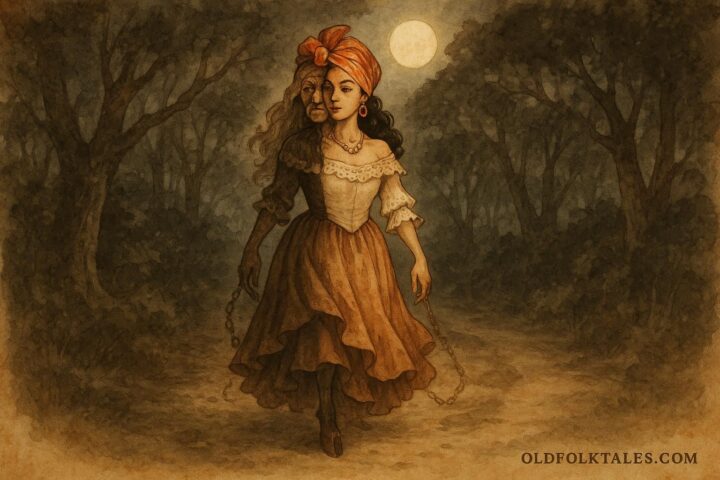
In a quiet Brazilian quilombo village, nestled between rolling hills and dense forests, lived a poor but kind-hearted girl named Amara. Her home was humble, and her family often went hungry. Yet Amara’s spirit was generous, always ready to offer a smile or share the little she had with neighbors.
One morning, as the sun painted the sky in soft golds and pinks, Amara wandered near the edge of the forest in search of firewood. There, half-buried in the soil, she discovered a calabash unlike any she had seen. Its surface shimmered faintly, and the air around it seemed warm and welcoming. Curiosity sparked, she lifted it carefully, and to her astonishment, it spoke.
“Amara,” it said in a gentle, melodic voice, “I can provide endless food. Feed others with me, and your generosity will be rewarded.”
Amara could scarcely believe her ears. Returning home, she filled the calabash with rice, beans, and fresh fruits, and soon the village gathered in wonder. No one went hungry that day, nor the next, as the calabash produced nourishing meals without end. Families laughed, children danced, and the villagers praised Amara for her kindness.
However, not everyone admired her generosity. A neighbor, jealous and greedy, watched from a distance, planning to claim the magic for himself. One night, while the village slept, he sneaked into Amara’s home and stole the calabash. With greedy hands clutching it, he demanded it produce food, but the calabash remained silent. Frustrated, he shook it violently, muttering that it must serve him, yet nothing happened.
By morning, the calabash had transformed into solid stone, heavy and cold. When Amara discovered what had happened, she felt sorrow but not anger. She reminded the village of the lesson the magical gift had offered: generosity nurtures life, while greed destroys it. Though the enchanted calabash was gone, the villagers carried forward its spirit, sharing what they had, helping neighbors in need, and valuing kindness over wealth.
From then on, the tale of Amara and the calabash was told at every village gathering, not as a story of loss, but as a reminder that blessings grow when shared and vanish when hoarded. The villagers never forgot that a generous heart sustains abundance far beyond magic.
Moral Lesson
Generosity nurtures abundance and strengthens community bonds; greed, by contrast, destroys blessings and trust.
Knowledge Check
1. Who is the main character in the folktale?
Amara, a poor but kind-hearted girl living in a Brazilian quilombo village.
2. What magical object does Amara find?
A calabash that produces endless food.
3. How does the calabash reward Amara?
By providing nourishment for the entire village, reflecting her generosity.
4. What happens when a greedy neighbor steals the calabash?
It turns to stone and no longer produces food.
5. What cultural tradition does this story reflect?
Yoruba-Bantu motifs preserved in Afro-Brazilian quilombo folklore.
6. What is the key lesson of the story?
Generosity sustains abundance, while greed destroys blessings.
Source: Afro-Brazilian folktale
Tradition: Yoruba and Bantu motifs preserved in Brazilian quilombo communities