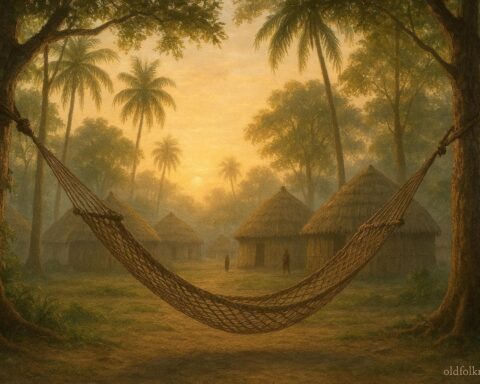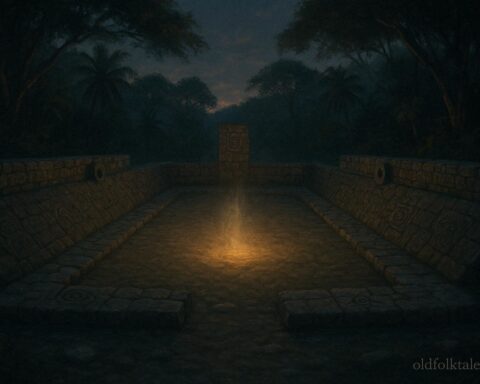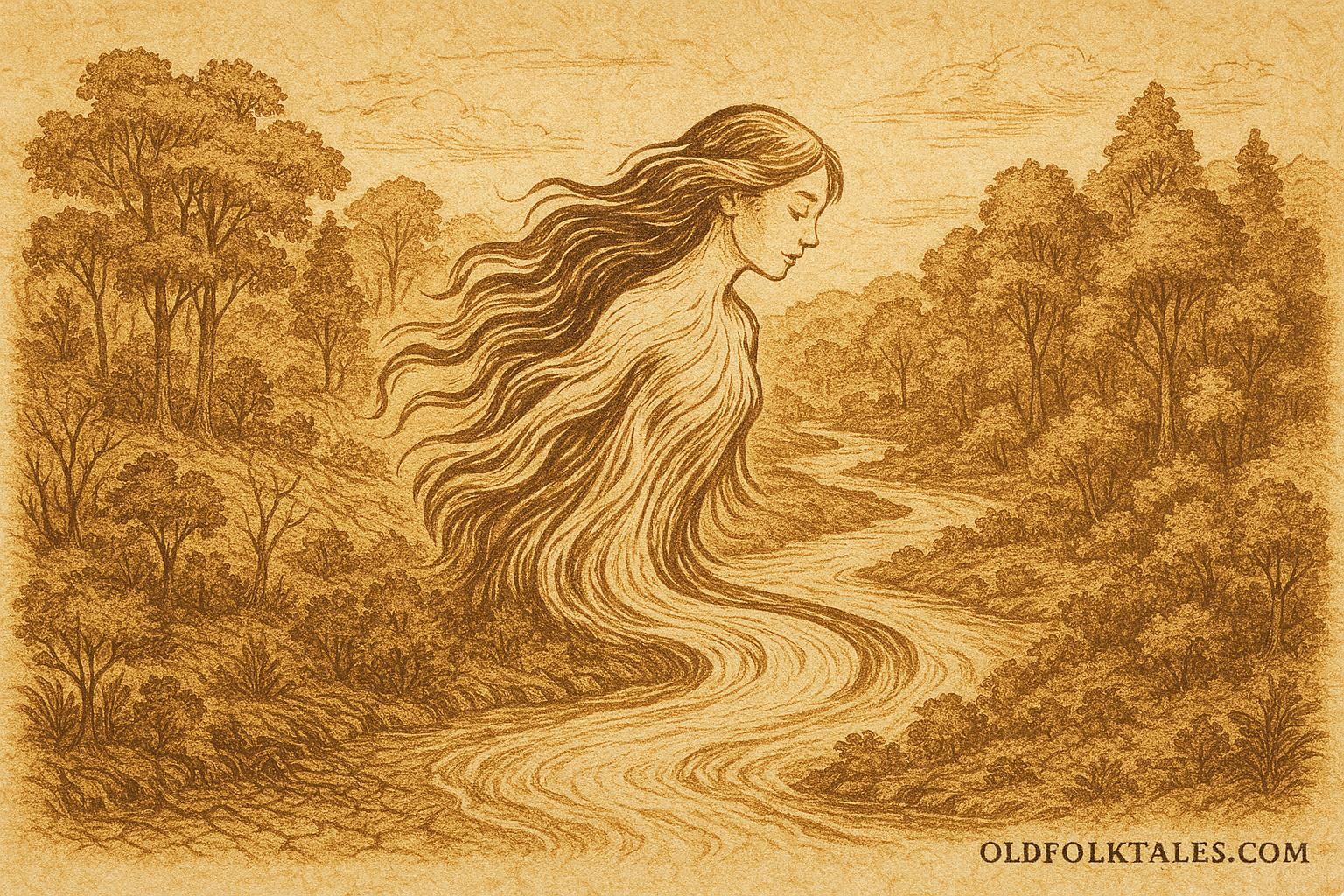
Long before the forest stretched endlessly beneath the sky, and before the great river carved its winding path through the land, the world of the Amazon was out of balance. The earth lay dry and cracked beneath the sun. Once-fertile soil crumbled into dust, and the plants that had fed both people and animals withered under the relentless heat. Streams shrank into shallow pools, and the air itself seemed heavy with thirst.
The people suffered, as did the animals who shared their world. Hunters returned empty-handed, and children cried from hunger and exhaustion. Elders gathered beneath the shade of dying trees, lifting their voices in prayers to the unseen forces that governed the land. They believed the forest listened, that the spirits of nature watched over all living things, even in times of hardship.
Discover the vibrant legends of Guatemala, Honduras, and Costa Rica in our folktale collection.
Among these spirits was a powerful maiden, born of the earth and sky. She moved unseen among the suffering people, her heart heavy with compassion. She saw animals collapse beside dry riverbeds and mothers struggle to keep hope alive for their children. Each cry of pain echoed within her, and she understood that the land itself was crying out for restoration.
The spirit maiden knew that imbalance had taken hold. The harmony that once bound humans, animals, and the natural world had been broken. Without balance, life could not endure. Though she possessed great power, she also understood the cost required to restore what had been lost.
After long contemplation, the maiden made her choice.
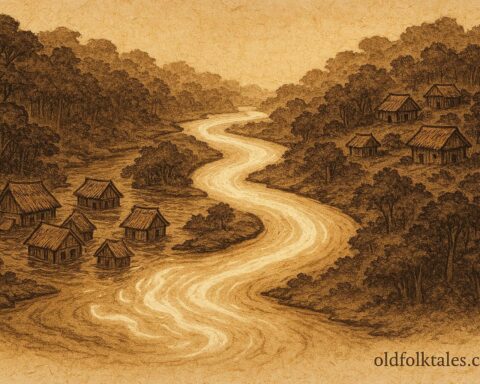
Standing upon the parched earth, she offered herself to the land. With no anger and no hesitation, she surrendered her spirit and form, allowing her essence to flow outward. Her body transformed, becoming living water that spread across the dry plains. From her sacrifice emerged a vast, flowing river, deep and powerful, moving with purpose and grace.
As the waters surged forward, the land began to heal. The cracked earth softened, absorbing the gift it had long awaited. Plants stirred and rose once more, their roots drinking deeply. Animals returned to the forest paths, and fish filled the new waters, gliding through the river’s depths. The people watched in awe as life returned before their eyes.
The river grew wider and longer, winding through the heart of the forest. It nourished everything it touched, carrying the spirit maiden’s sacrifice within its endless flow. The people came to understand that the river was not merely water, but a living being, one born of compassion, balance, and selflessness.
With renewed life came renewed responsibility. The elders taught that the river must be respected, for it carried both generosity and danger. When honored, it provided food, travel, and abundance. When abused or taken for granted, it reminded humans of its immense power through floods and destruction. The river demanded gratitude and restraint, just as the spirit maiden had given all to restore balance.
From that time onward, the people lived with greater care. They remembered that survival depended not on domination of nature, but on harmony with it. The Amazon River flowed endlessly, a sacred reminder that life thrives only when balance is maintained and sacrifice is honored.
Explore myths and legends from Brazil, Peru, and Argentina rooted in spirit and survival.
Moral Lesson
This creation myth teaches that life flourishes through balance, gratitude, and selfless sacrifice. True harmony comes when humans respect nature as a living force rather than a resource to be consumed without restraint.
Knowledge Check
1. What caused suffering in the land before the river was created?
A severe drought and imbalance between nature and living beings.
2. Who created the Amazon River in the myth?
A powerful spirit maiden moved by compassion for humans and animals.
3. How was the river formed?
The spirit maiden sacrificed herself, transforming into flowing waters.
4. What does the river symbolize in Amazonian culture?
Life, balance, sacred power, and the consequences of human actions.
5. Why must the river be respected?
Because it provides life but can also bring destruction if dishonored.
6. What lesson did the people learn after the river’s creation?
Survival depends on harmony, gratitude, and restraint toward nature.
Source: Indigenous oral myth; recorded in ethnographic studies
Cultural Origin: Amazon Basin (Peruvian–Brazilian Indigenous traditions)