In the hushed streets of old Belize City, the name Cowfoot is spoken with a mix of sorrow and caution. Long after the great hurricane tore through Queen Street and left homes shattered, people claimed they still saw a refined woman walking hurriedly at dusk, as though time itself had forgotten to move on without her.
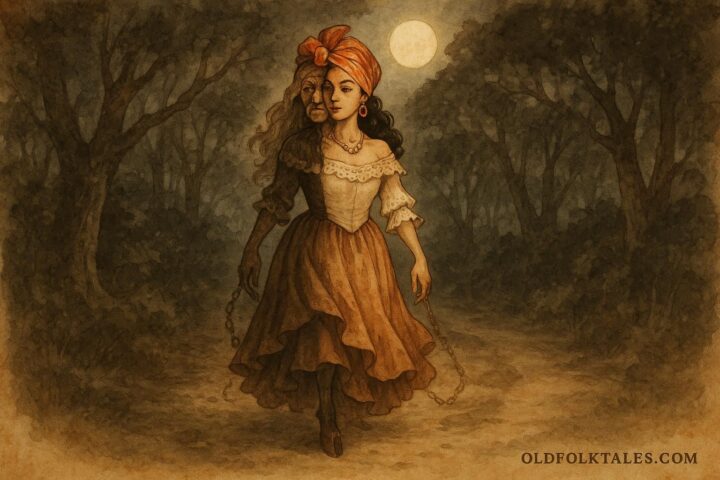
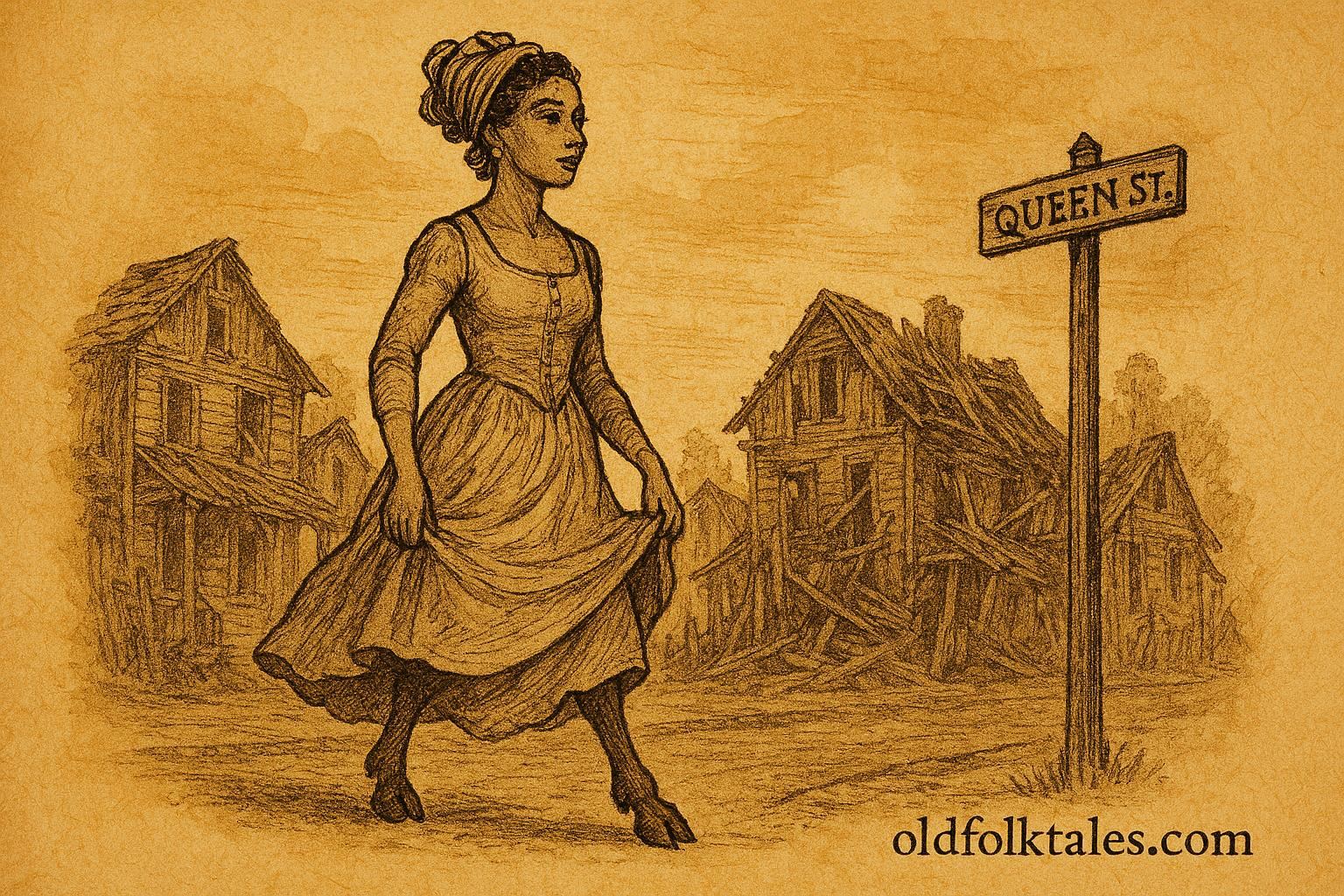
She appeared most often in the early evening, when the sun dipped low and the air cooled. Dressed neatly in lace and gloves, she carried herself with dignity despite her limp. Those who noticed her walk could not forget the sound that followed her steps. It was not the soft tap of leather soles but a steady clip-clop that echoed unnaturally against the pavement. As she walked, she muttered anxiously to herself, repeating the same words again and again about needing to get home before dark.
At first, passersby assumed she was a harmless woman unsettled by the disaster. Belize City had seen many broken souls after the hurricane. Entire neighborhoods had been displaced, and grief lingered in every street corner. Yet something about the woman unsettled those who crossed her path. She never looked up for long, and her pace quickened if anyone followed too closely.
One evening, a curious boy decided to trail her from a distance. He watched her carefully as she moved along Queen Street, her posture tense, her face drawn with quiet urgency. When she reached a stretch of road illuminated by fading light, the boy crouched low and looked down at her feet. What he saw froze him in place. Beneath the hem of her skirt were no shoes at all. Instead, her feet were cloven hooves, dark and solid, striking the ground with the sound of a farmyard animal.
The boy fled, spreading the story among neighbors, and soon the truth of the Cowfoot Lady became known. She was the spirit of a Creole woman who had died during the hurricane while trying to save her prized dairy cow. As the floodwaters rose and the wind tore apart her home, she had refused to abandon the animal she called Bessie. In death, the spirits of woman and cow merged, bound together by devotion and loss.
The Cowfoot Lady is not cruel. She wanders because she cannot accept what was taken from her. Her home no longer stands, yet she continues searching for it, driven by memory rather than reality. When spoken to, she will stop and turn slowly, offering a sad and weary smile. In a soft voice, she asks only one question: “Have you seen my Bessie?”
Those who answer honestly and say no are spared. She sighs deeply, her shoulders sagging, and she resumes her endless walk. But those who lie and say yes invite disaster. Her face twists, melting away into the skull of a cow, hollow-eyed and bone-white. A mournful moo tears through the air, lingering long after she vanishes. It is said that anyone who hears that sound will suffer a week of misfortune, as though the hurricane’s chaos has followed them home.
The Cowfoot Lady remains a reminder of what was lost and how deeply trauma can root itself in the soul. She walks not to frighten but because she cannot let go of a life swept away by the storm.
Moral Lesson
This folktale teaches that unresolved grief binds the spirit, and that honesty and empathy are essential when encountering the pain of others.
Knowledge Check
1. Who is the Cowfoot Lady?
She is the ghost of a Creole woman merged with her dairy cow after dying in the hurricane.
2. Where does the Cowfoot Lady appear?
Along Queen Street in Belize City at dusk.
3. What reveals her true nature?
Her cloven hooves and the clip-clop sound of her steps.
4. What question does she ask travelers?
“Have you seen my Bessie?”
5. What happens if someone lies to her?
She reveals her cow skull face and brings a week of bad luck.
6. What does the Cowfoot Lady symbolize?
Displacement, trauma, and loss after the great hurricane.
Source and Cultural Origin
Source: Urban Kriol folktale, Belize
Recorded in Belize City newspapers and NICH Urban Folklore Project
Cultural Origin: Urban Kriol tradition shaped by post-hurricane trauma