Gueguense was already an old man when his name became a whisper of quiet resistance across the towns of western Nicaragua. Known formally as El Güegüense, and mockingly as Macho Ratón, he was an indigenous merchant who traveled the dusty colonial roads with mules, goods, and a sharp tongue hidden behind exaggerated courtesy. In a time when Spanish colonial officials ruled through taxation and intimidation, Gueguense survived not by force, but by wit.
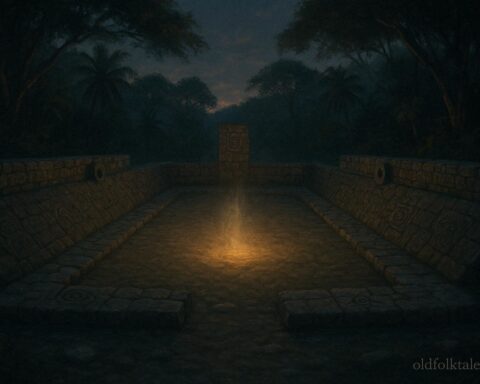
The setting of the story lies in colonial-era Nicaragua, particularly around Diriamba, where indigenous communities lived under the constant pressure of tribute demands. Spanish governors and tax collectors arrived with authority, uniforms, and ledgers, expecting obedience. Gueguense met them with smiles, bows, and words so polite they bordered on nonsense.
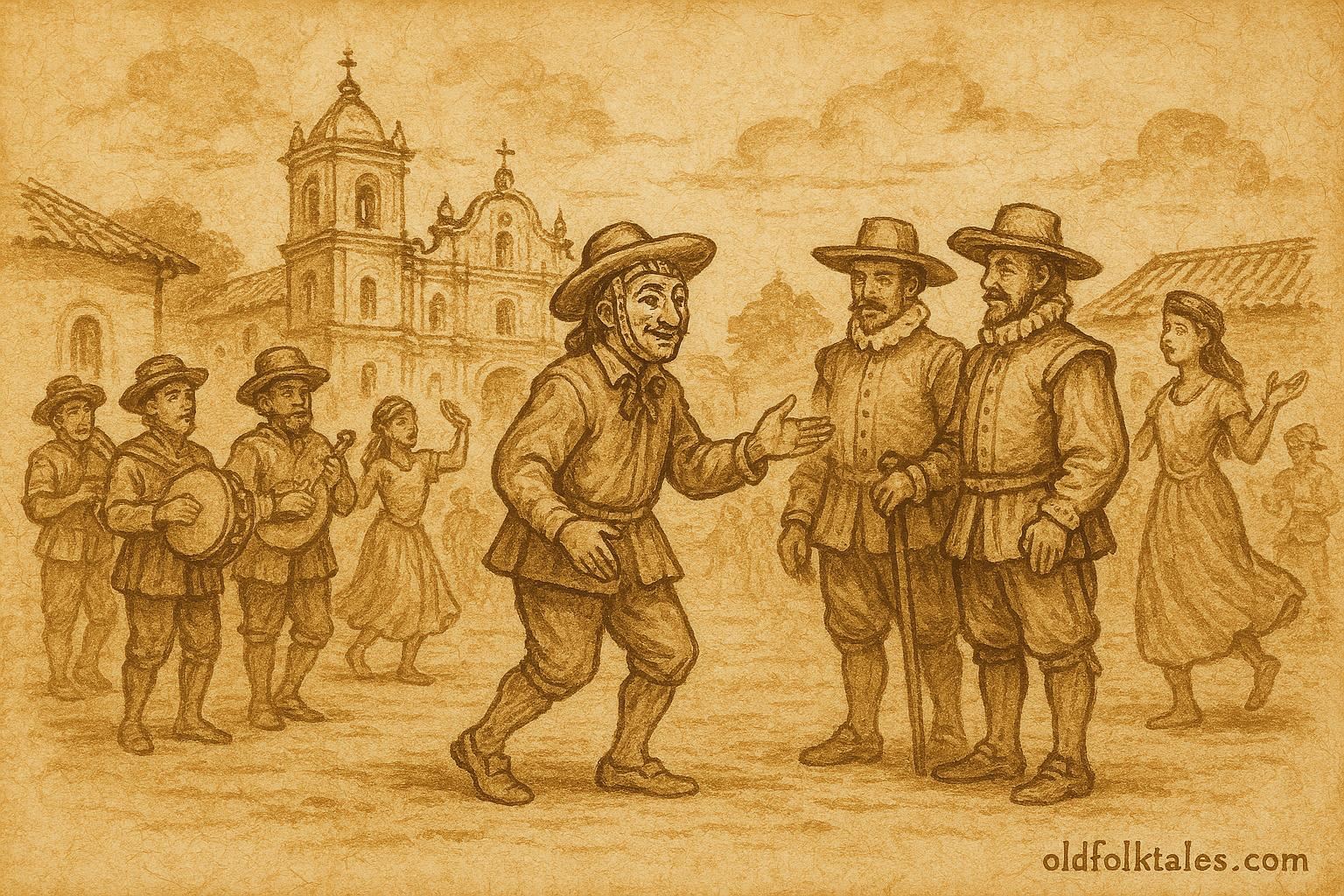
When officials demanded that he pay new taxes on his goods, Gueguense pretended not to understand. He tilted his head, cupped his ear, and replied with riddles, jokes, and unrelated stories about his travels. If asked for money, he spoke of mules. If ordered to obey, he praised the official’s fine boots. His replies sounded respectful, yet they never answered the question.
The colonial authorities grew frustrated, but Gueguense never crossed the line into open defiance. His language remained courteous, his gestures theatrical. Behind carved wooden masks and accompanied by music and dance, the story unfolded as a performance. Each misunderstanding was deliberate. Each joke exposed the greed and arrogance of colonial rule without naming it directly.
As the story continues, Gueguense cleverly protects his wealth. He agrees to impossible terms, knowing they cannot be enforced. He flatters officials until they appear foolish. The audience, drawn from the indigenous population, understands the deeper meaning. Laughter becomes a shield. Humor becomes resistance.
Gueguense’s sons appear beside him, echoing his exaggerated politeness and reinforcing the performance. Together, they turn obedience into mockery. The Spanish officials, bound by their own need for authority, cannot punish a man who never technically disobeys. Instead, they become characters in the satire themselves.
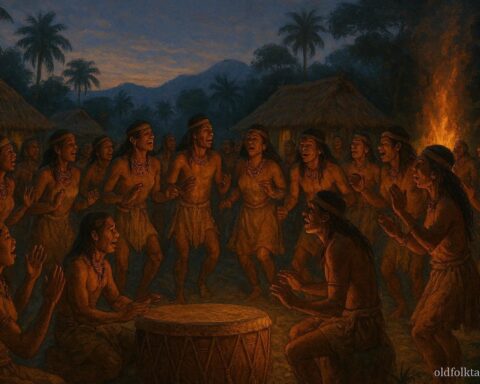
The narrative is not told as a simple spoken tale. It lives through dance, music, and dialogue, performed during festivals. Masks exaggerate expressions. Movements are deliberate. Every step reinforces the balance between submission and defiance. Gueguense never attacks colonial power directly, yet he undermines it completely.
By the end of the performance, the officials leave without the satisfaction they sought. Gueguense remains standing, wealth intact, dignity preserved. The audience understands that survival, under oppression, sometimes depends on intelligence rather than confrontation.
To this day, El Güegüense remains a cornerstone of Nicaraguan cultural identity. Passed down through generations, the story preserves indigenous resistance through laughter. It reminds listeners that power can be challenged quietly, and that wisdom often speaks in riddles rather than shouts.
Moral Lesson
The story of El Güegüense teaches that intelligence, humor, and patience can be powerful tools against injustice. It shows that resistance does not always require force, and that dignity can be preserved through wisdom even in the face of oppression.
Knowledge Check
1. Who is El Güegüense in the story?
El Güegüense is an elderly indigenous merchant who uses wit and humor to resist Spanish colonial authority.
2. What historical period does the folktale represent?
The story is set during the Spanish colonial period in Nicaragua.
3. How does Gueguense resist colonial power?
He pretends to misunderstand orders, using satire, politeness, and riddles instead of open rebellion.
4. Why is the story performed with dance and masks?
The performance format allows satire to be communicated safely through symbolism and humor.
5. What does Macho Ratón symbolize?
The nickname reflects how colonial officials underestimated Gueguense, despite his intelligence.
6. Why is El Güegüense culturally important today?
It represents indigenous resistance and is a key symbol of Nicaraguan identity and heritage.
Cultural Origin and Source
Source: Nicaraguan folktale, Nicaragua
Adapted from El Güegüense o Macho Ratón, recorded by Carlos Mántica and recognized by UNESCO as Intangible Cultural Heritage.
Cultural Origin: Colonial-era indigenous oral tradition, western Nicaragua (Diriamba)