In the early ages of the world, before people walked confidently across the valleys and highlands of what is now Guatemala, the earth was still learning what it meant to hold life. Mountains were young, rivers wandered freely, and the spirits who shaped the world watched closely, measuring each attempt at creation with patience and caution.
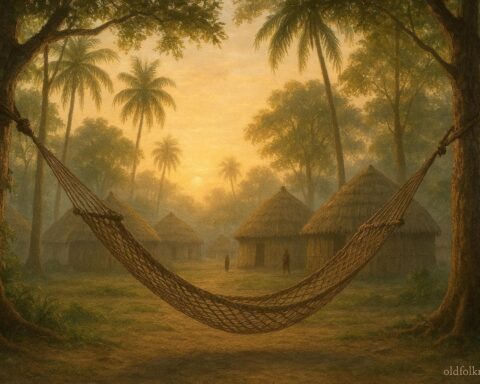
Among the first people were skilled makers. They shaped stone into tools, wove fibers into cloth, and learned how to mold the soft clay found along riverbanks. Clay was precious, for it held memory. It remembered the pressure of hands and the intention behind each touch. The elders taught that clay should be shaped only with respect, because it carried the quiet breath of the earth itself.
One day, a young maker named Ixmucané’s Apprentice, known simply as K’oyem, believed he understood clay better than the elders. He had watched hands turn earth into bowls, figures, and ceremonial masks. He believed that if clay could remember shape, it could also remember life. K’oyem was not cruel, but he was impatient. He wanted to create something that would prove his skill and secure his name among the people.
At the edge of the village, near a bend in the river where the water moved slowly and deeply, K’oyem gathered fine clay. He cleaned it carefully, removing stones and roots, kneading it until it was smooth and responsive. Over many days, he worked alone, shaping a figure of a woman. He gave her strong legs, steady hands, and a face calm and alert. He pressed details gently, believing care alone was enough.
When the figure was complete, K’oyem placed it upright in the shade and whispered prayers he had overheard but never been taught to speak. He asked the earth to recognize his work. He asked the wind to move through it. He asked the spirits to see his effort.
That night, something unexpected happened.
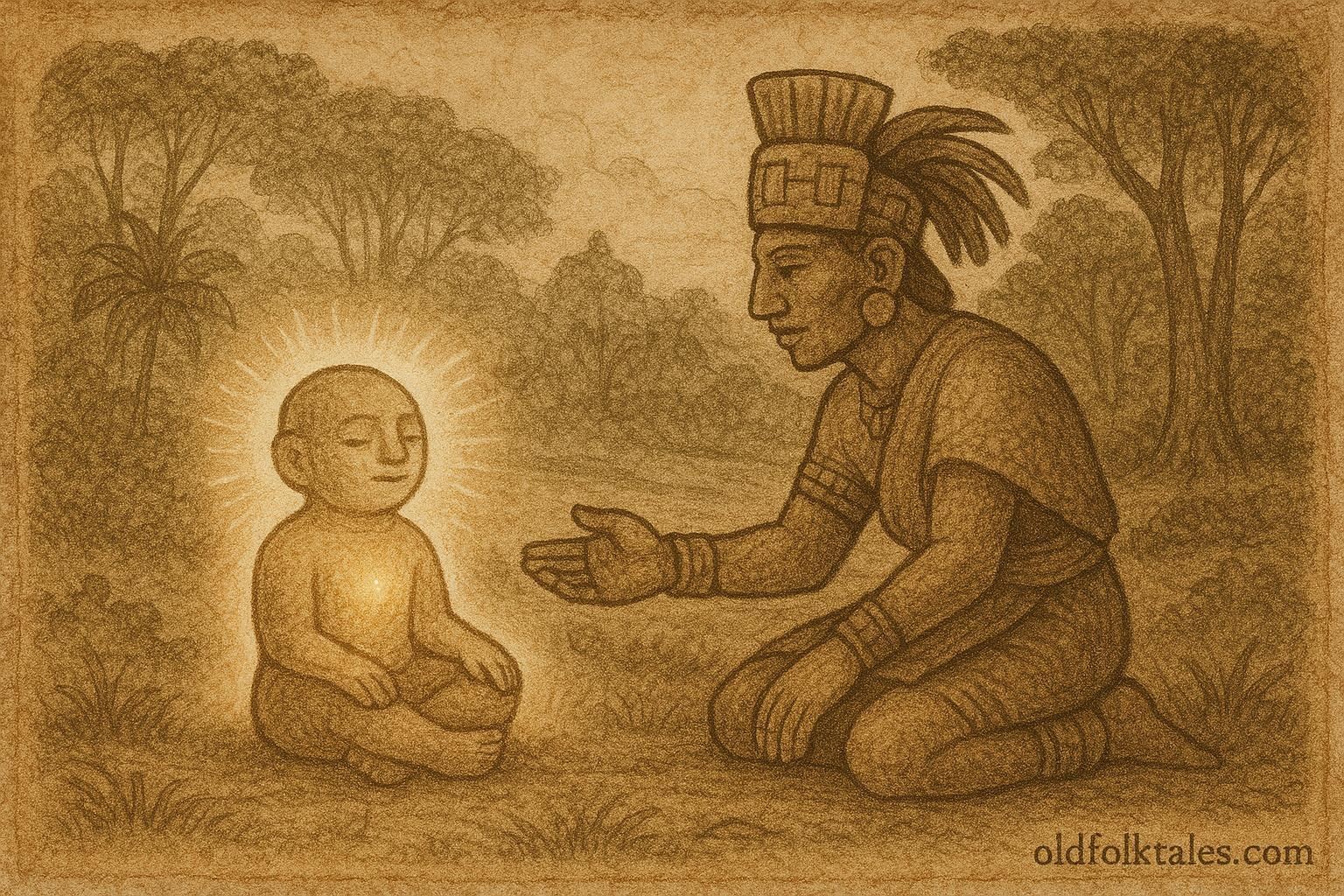
As the moon climbed, the clay figure shuddered. A sound like breath passing through leaves stirred the air. Slowly, the figure’s chest rose and fell. The clay woman opened her eyes.
She did not speak at first. She looked at the river, at the sky, and then at K’oyem, who stood frozen in disbelief. When she finally spoke, her voice was soft, like earth settling after rain.
“I am here,” she said.
Word spread quickly. The elders gathered, uneasy but curious. The clay woman moved carefully, as if learning weight and balance. She could walk, see, and hear. She could even laugh, though the sound was hollow, like wind passing through a vessel.
But there was something missing. She did not feel hunger, warmth, or pain. When the sun burned, she did not sweat. When the night chilled the village, she did not shiver. She existed, but lightly, as if her place in the world was uncertain.
The elders understood immediately. This was not true life. It was borrowed motion.
They warned K’oyem that creation without permission carried consequence. Life was not only form and movement. It was breath shared by the spirits, bound by responsibility. The clay woman had been allowed to move only to teach a lesson.
For several days, the clay woman remained among the people. She helped grind maize, fetched water, and listened to stories. She learned kindness by watching, not feeling. Children liked her, but elders kept their distance. They knew her time was limited.
One evening, as rain began to fall, the clay woman stood by the river and spoke to K’oyem.
“I can breathe,” she said, “but the breath does not belong to me.”
She explained that every step she took weakened her body. Water softened her skin. Sun dried and cracked her limbs. The earth was reclaiming what had been taken too soon.
At dawn, the elders led a ceremony by the river. They sang not to give life, but to return balance. The clay woman stood calmly, understanding what the makers had failed to accept.
As the final song ended, her breathing slowed. Her body softened and collapsed gently into the riverbank, dissolving back into the clay from which she was shaped.
The river carried the memory away.
K’oyem wept, not because he had lost his creation, but because he had learned what creation truly demanded. From that day forward, the Maya taught that humans could shape forms, but only the spirits could give lasting life. Clay was honored again as material for vessels, not beings.
And it is said that when potters work patiently and humbly, the clay listens.
Discover ancient tales passed down by the Indigenous peoples of the Americas.
Moral Lesson
Creation without humility leads to imbalance. True wisdom lies in knowing the limits of human power and respecting the responsibility that comes with making, shaping, and influencing life.
Knowledge Check
1. Why did K’oyem create the clay woman?
He wanted recognition and believed skill alone could create life.
2. What made the clay woman different from living humans?
She could move and speak but lacked true sensation, warmth, and lasting breath.
3. What warning did the elders give about creation?
That life requires spiritual permission and responsibility, not just form.
4. Why did the clay woman’s existence end?
Because her life was borrowed and could not remain without disrupting balance.
5. What did K’oyem learn from the experience?
That creation demands humility and respect for spiritual boundaries.
6. How does the story explain the sacred nature of clay?
Clay holds memory and must be shaped with care, not used to imitate life.
Source
Adapted from Popol Vuh comparative studies; University of Texas Mesoamerican Archive.
Cultural Origin
Maya peoples, Guatemala Highlands.