Long before the borders of nations were drawn, when the high plains between the mountains of what is now Bolivia and Peru were guided by ancestral law, there existed a ceremonial path made entirely of packed clay. It ran between villages, across open land and gentle hills, linking people not only to one another but to the memory of their ancestors. The Aymara people believed that the earth was not silent. It listened, remembered, and responded.
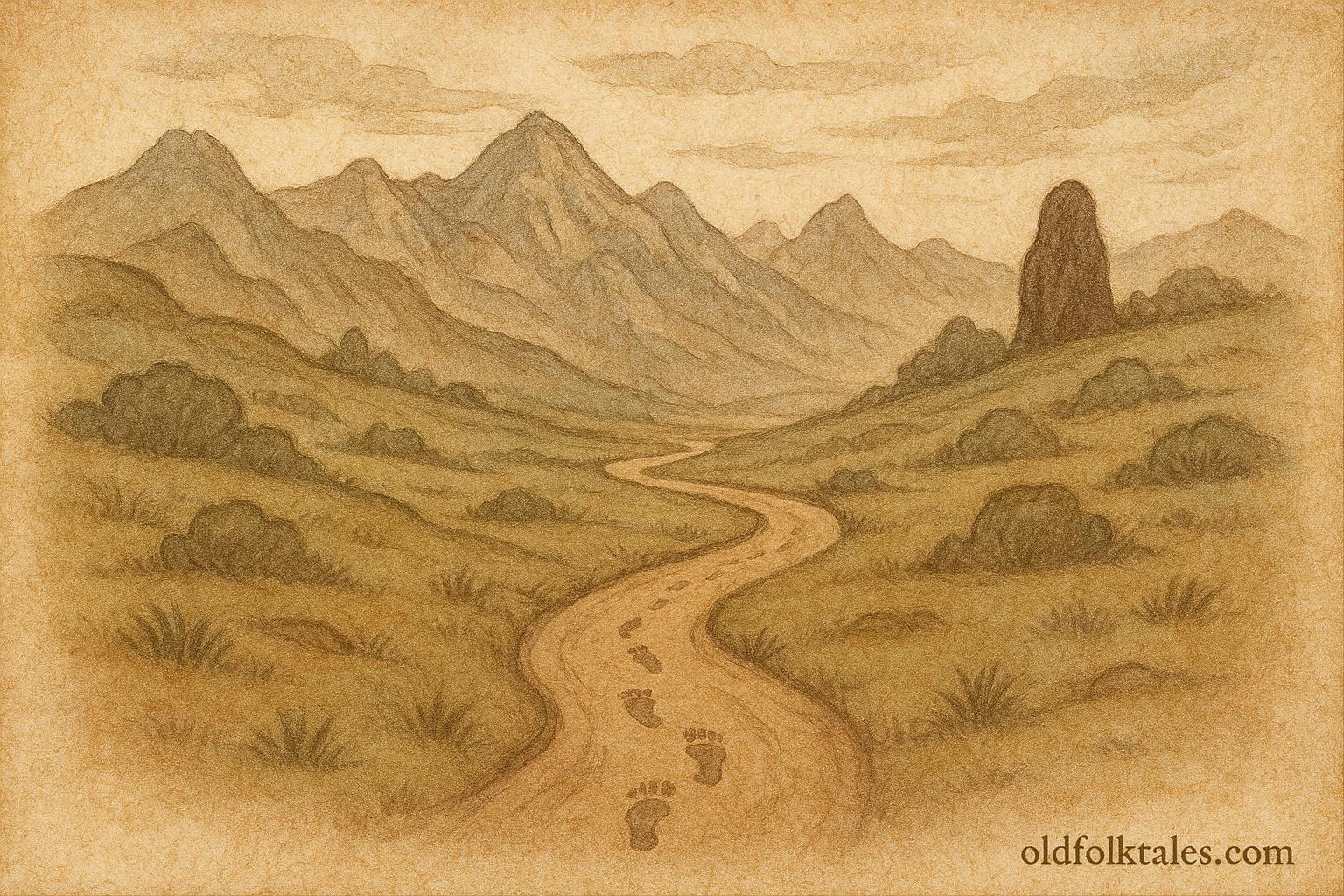
This path was not marked by stones or signs. It appeared smooth and unremarkable to the eye, blending with the surrounding land. Yet the elders taught that it was alive. Every footstep left more than a physical impression. It carried intention. Those who walked with respect found the path steady and welcoming. Those who walked with greed, deception, or pride found themselves disoriented, delayed, or turned away.
A young man named Kusi lived in a village near the eastern end of the path. He was known for his sharp mind and quick movements, but also for his impatience. Kusi wanted more than his life offered. He believed the ceremonies were slow and unnecessary, and that ancestral rules held people back. When he heard that traders from another region were traveling the path with valuable goods, he decided to reach them first and bargain for personal gain.
Immerse yourself in Latin America’s stories of passion, transformation, and spirit.
At dawn, Kusi stepped onto the clay path. The surface was cool beneath his feet. At first, the path felt firm and straight. He walked quickly, hardly noticing the sky or the sound of wind through the grass. He focused only on his goal. Soon, however, the ground beneath him softened. His feet sank slightly with each step. The path curved unexpectedly, bending away from where he believed the traders would pass.
Annoyed, Kusi increased his pace. The faster he walked, the more uneven the path became. His footprints deepened, filling with moisture as though the clay were responding to his weight and intent. After hours of walking, Kusi realized he was no closer to his destination. When he looked back, the path behind him had smoothed itself, erasing his footprints as if he had never been there.
Exhausted and confused, Kusi turned back toward his village. The return was easier. The clay hardened beneath his feet, guiding him home. When he arrived, the elders were seated near the fire circle. They had watched the clouds shift and felt the land stir. Without accusation, one elder spoke. The path remembers why you walk. It answers accordingly.
Days later, a woman named Chaska prepared to walk the same path. Her purpose was different. She carried woven cloth and dried herbs as offerings for a neighboring village that had suffered loss. Before stepping onto the path, she paused. She placed her hand on the earth and spoke words of gratitude. She acknowledged the ancestors and asked permission to pass.
As Chaska walked, the clay path remained firm and smooth. The wind cooled her skin. Birds flew low, guiding her direction. Where the land rose, the path leveled. Where streams crossed, the clay hardened just enough to allow safe passage. Her footprints remained visible behind her, not deep or damaged, but clear and steady.
Halfway through her journey, Chaska noticed markings along the path. Footprints layered upon footprints. Some were sharp and heavy. Others were light and even. The elders had taught that the path did not forget. It carried the memory of every traveler. It reshaped itself according to the weight of human intention over generations.
As she approached the neighboring village, the people welcomed her with relief and gratitude. They told her that travelers with selfish aims often failed to arrive. Only those walking with care and responsibility reached them. Chaska stayed several days, helping repair roofs and sharing stories. When she returned home, the path guided her effortlessly.
Over time, the story of the clay path spread. Parents taught children to walk slowly and mindfully. Hunters learned that rushing or taking more than needed caused the path to twist and delay them. Leaders understood that decisions made without communal consent were reflected in difficult journeys.
Years passed, and drought tested the region. Some villages debated abandoning old agreements in favor of survival at any cost. A council was called. Representatives from many communities gathered at the beginning of the clay path. One by one, they walked it together, speaking aloud their intentions. The path responded by remaining open and firm, reminding them that cooperation and accountability were still possible.
Kusi, now older, walked the path again. This time, he carried no desire for personal gain. He walked with awareness of his past mistakes and with a commitment to serve. The path welcomed him. His footprints remained, not erased, but accepted as part of its memory.
The Aymara elders taught that the path did not punish. It reflected. It was a mirror of human action, shaped by moral intent. The clay held the story of every choice. To walk it was to face oneself.
Even today, it is said that certain paths change beneath the feet of those who walk without thought. Those who listen closely understand why.
Explore the ancestral legends of Canada, Mesoamerica, and South America’s Indigenous tribes.
Moral Lesson
The land reflects human intention. Actions guided by respect and accountability create harmony, while selfish choices reshape the world in ways that delay or deny progress.
Knowledge Check
1. What made the clay path different from ordinary paths?
The path was believed to be alive and capable of remembering the moral intent of those who walked on it.
2. Why did Kusi struggle on the path during his first journey?
He walked with selfish intent and impatience, causing the path to soften, twist, and delay him.
3. How did Chaska’s approach differ from Kusi’s?
She walked with gratitude, respect, and communal purpose, which allowed the path to guide her smoothly.
4. What did the footprints on the path symbolize?
They represented layers of memory left by past travelers and their intentions.
5. How did the path respond to communal decision making during the drought?
It remained firm and open, reflecting cooperation and shared responsibility.
6. What lesson did Kusi learn over time?
That intention shapes outcomes and that service to the community brings balance and guidance.
Source
Adapted from Andean ritual path studies, Pontificia Universidad Católica del Perú; Andean Oral History Project.
Cultural Origin
Aymara peoples, Bolivia and Peru.