Taxi headlights cutting through the darkness were once a familiar and feared sight in Guatemala City during the 1980s. In those years, the city lived under a weight of silence shaped by curfews, whispered names, and vehicles that arrived without warning. Among them was a particular beige Toyota taxi, a model ordinary enough to blend into traffic by day and unforgettable by night.
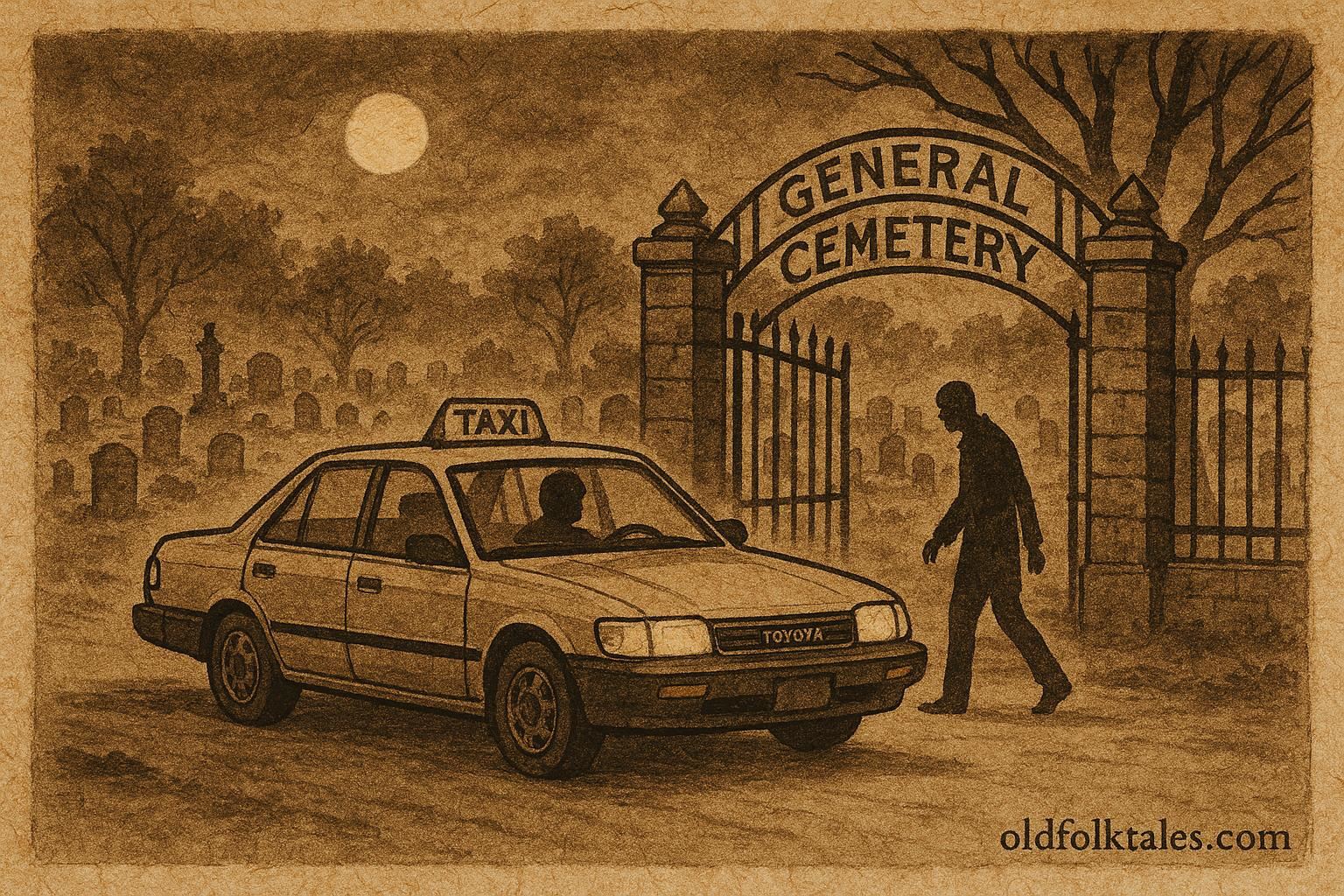
This taxi bore unmistakable signs. Its windshield was cracked in a webbed pattern that never changed. One rear door lacked a handle entirely, forcing passengers to enter from one side only. During the Cold War years, vehicles just like it were used by clandestine groups for forced disappearances, carrying people away who were never seen again. When peace officially returned, most believed those days were buried. The taxi was not.
Long after midnight, in the older zones of the city, lone pedestrians sometimes heard an engine idling behind them. Turning, they would see the beige taxi rolling slowly at walking pace. The driver’s window would slide down, revealing a shadowy figure whose features were impossible to make out, even under streetlights.
“¿Necesita un ride?” the driver would ask calmly.
Those who refused watched the taxi drift away and vanish at the next corner. Those who accepted stepped inside, drawn by exhaustion, politeness, or the false comfort of routine. The door shut with a hollow sound, heavier than it should have been. Inside, the taxi smelled faintly of dust and old vinyl, untouched by time.
The ride began normally, passing familiar streets and intersections. But gradually, the route changed. Street names grew unfamiliar. Buildings thinned. Streetlights became sparse, their glow dimmer with every block. The driver never spoke again. The radio stayed silent. Even the city’s distant noise faded, replaced by an oppressive stillness.
Eventually, iron gates appeared ahead, tall and unmistakable. The taxi stopped before the entrance to the General Cemetery, a place long associated with unmarked graves and forgotten names. Only then did the driver turn.
Where a face should have been, there were no features. No eyes. No mouth. Only a smooth, shadowed surface that reflected nothing.
“Aquí es su parada,” the figure said evenly. “La cuenta se pagó en el ochenta y tres.”
The passenger stumbled out as the taxi pulled away without sound. At the cemetery gates, their watch had stopped at exactly 3:00 AM. From that night forward, they carried an unshakable feeling of debt, as though history itself had charged them for crimes they never committed and suffering they never caused.
The taxi continues to roam, a moving reminder of unresolved memory, appearing only to those walking alone when the city is quiet enough to remember.
Moral Lesson
Unacknowledged history does not disappear. When a society avoids reckoning with its past, its unresolved debts return in haunting forms that demand remembrance.
Knowledge Check
Q1: What vehicle is central to the legend?
A1: A beige Toyota taxi associated with Cold War-era disappearances.
Q2: What time does the passenger’s watch stop?
A2: 3:00 AM.
Q3: Where does the taxi always stop?
A3: At the gates of the General Cemetery.
Q4: What does the driver say at the end of the ride?
A4: That the fare was paid in 1983.
Q5: Why is the taxi significant historically?
A5: Similar vehicles were used for forced disappearances in the 1980s.
Q6: What theme does the legend emphasize?
A6: Collective memory and historical accountability.
Cultural Origin and Source
Source: Urban Ladino legend, Guatemala
Collected in the 1990s in Guatemala City Zone 1 and archived in CIRMA contemporary folklore files.