In the mist-shrouded highlands and along the rushing, rock-strewn rivers of rural Honduras, there is a warning passed down through generations. It is a warning not of a beast, but of a silence, a profound, unnatural quiet that heralds the presence of La Sucia. She is the terror that walks the lonely paths, a spirit whose very appearance is a sentence of sudden sickness, a lesson carved from fear.
La Sucia haunts the liminal spaces between the village and the wild. She is found near the riverbanks where women wash clothes by day, now empty and echoing under the moon. She lingers by the old stone bridges that arch over gorges, and along the narrow forest trails that wind through the coffee fields and pine forests. She is a fixture of the landscape’s shadow-self, emerging when the sun vanishes and human company grows scarce.
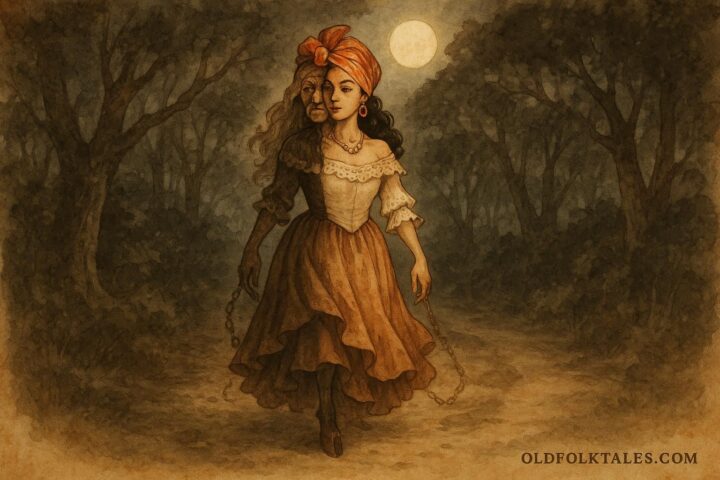
Those who have glimpsed her, and lived to feel the consequences, describe a figure of profound disquiet. She is a woman, yet not a woman. Her form is shrouded in tatters or a dirty, faded dress that seems to blend with the night. But it is her hair that chills the blood: a wild, matted cascade, thick with leaves and river silt, hanging like a veil over her face. No features are visible behind that curtain, only a suggestion of something watching from the dark. She stands perfectly still, a statue of neglect, and she makes no sound. No moan, no whisper, no rustle of cloth. It is this absolute, predatory silence that freezes the soul.
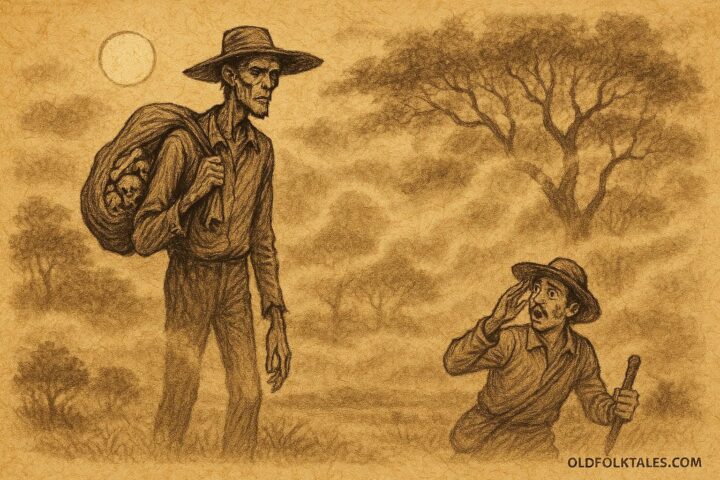
Her encounter is not a conversation; it is an affliction. A farmer, hurrying home after dusk, might feel the air grow cold. He glances toward the river and sees her, a still shape among the reeds, facing him. A woodsman, taking a shortcut, might round a bend and find her standing on the path ahead, her head tilted as if studying him through that wall of hair. The sight alone is a curse.
The victim does not always flee. Often, they are rooted by a paralyzing dread. Then, the physical punishment begins. A sudden, violent chill wracks their body, or a fever blooms in their skull like a poisonous flower. Some crumple to the ground unconscious on the spot, as if their very spirit has been struck. Others manage to stumble home, only to fall into a bedridden delirium, babbling of the silent woman by the water. In some accounts, her movement is as terrifying as her stillness. She is said to leap across impossible distances, from one riverbank to the other, from the road to the treetops, vanishing and reappearing without a sound, a ghostly traversal that defies nature.
Her chosen prey, the stories agree, are often men traveling alone at night. This detail is not incidental; it reinforces a core belief woven into the fabric of the legend: that isolation invites supernatural danger. To be alone, vulnerable, and far from the hearth’s light is to become a target for the things that watch from the dark places.
Because of her, mothers pull their children indoors before nightfall. Travelers plan their journeys to avoid being caught out after dark. Young men are sternly cautioned against taking lonely paths, especially near the rivers where her presence is strongest. The elders say La Sucia is more than a ghost; she is a manifestation. She represents the moral decay that comes from straying from the community’s light and the very real, tangible dangers, be they animal, human, or accident, that lie hidden in unguarded places. She is the story that gives form to every rustle in the bushes, every strange shape in the twilight, a cultural shorthand for the consequence of carelessness.
She does not speak her warning. She is the warning. A silent, staring monument to the perils of the lonely road.
The Moral Lesson:
This folktale serves as a powerful communal caution, emphasizing the dangers of isolation and venturing into unknown or untamed places alone, especially at night. It teaches respect for the boundaries between the safe, social world and the wild, potentially perilous unknown, and warns that vulnerability can attract unseen dangers.
Knowledge Check
Q1: Where does the Honduran spirit La Sucia typically appear?
A1: She appears near rivers, bridges, and forest paths in the rural highlands of Honduras.
Q2: What is the most distinctive and frightening feature of La Sucia’s appearance?
A2: Her long, matted hair that completely obscures her face, and her utter, predatory silence.
Q3: What happens to a person after they encounter La Sucia?
A3: They typically fall suddenly and violently ill, experiencing intense fever, chills, or loss of consciousness.
Q4: According to the legend, who is most likely to be targeted by La Sucia?
A4: Men who are traveling alone at night, highlighting the theme that isolation invites supernatural danger.
Q5: How is the story of La Sucia used within Honduran communities?
A5: It is used as a cautionary tale to warn people, especially the young, against traveling after dark or approaching unfamiliar figures near isolated places like waterways.
Q6: What does La Sucia symbolically represent in this folklore?
A6: She represents both the concept of moral decay from straying from community and the very real physical dangers that can be found in unguarded, isolated places.
Source: Adapted from Cuentos y Leyendas de Honduras and regional oral accounts.
Cultural Origin: Honduras (Folklore of the central and eastern rural highlands).