In the quiet river villages of Belize, when the moonlight shimmers on still waters and mist curls over the reeds, the old people whisper the name Llorona the Weeping Woman. Her tale is one of sorrow and warning, passed through generations of Mestizo and Garifuna storytellers who speak of her eternal search for the children she destroyed in her rage.
Long ago, there lived a woman of rare beauty. Her dark hair flowed like the river itself, and her laughter was said to light up even the gloomiest market morning. Many men courted her, but she gave her heart to a handsome wanderer, a man with kind words and false promises. Together they had two children, and for a time, her world was filled with joy.
But happiness is as fragile as the moon’s reflection on water. One day, her lover left her for another. He walked away down the dusty road, never once looking back. Consumed by fury and betrayal, her heart turned to ice. She wandered to the riverbank, where her children played. Her eyes burned with grief and anger; her mind clouded by jealousy. In that terrible moment, she lifted them and plunged them into the cold, rushing current.
The river swallowed their cries.
When the rage passed, she looked down and saw only the ripples, and understood what she had done. Horror filled her heart. She ran along the banks, calling out their names, “¡Mis hijos! ¡Mis hijos!” My children! My children! But no voice answered except the whisper of the flowing water.
Overcome with despair, she threw herself into the same river, hoping that death might reunite her with them. But peace never came. Her soul was condemned to wander the waterways forever, trapped between this world and the next.
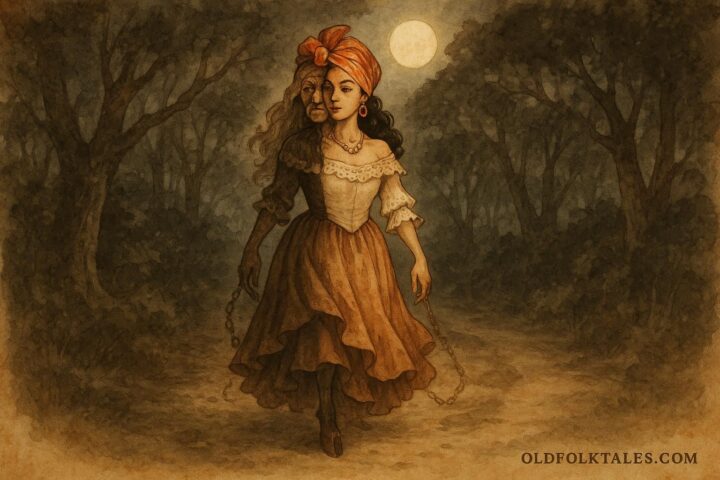
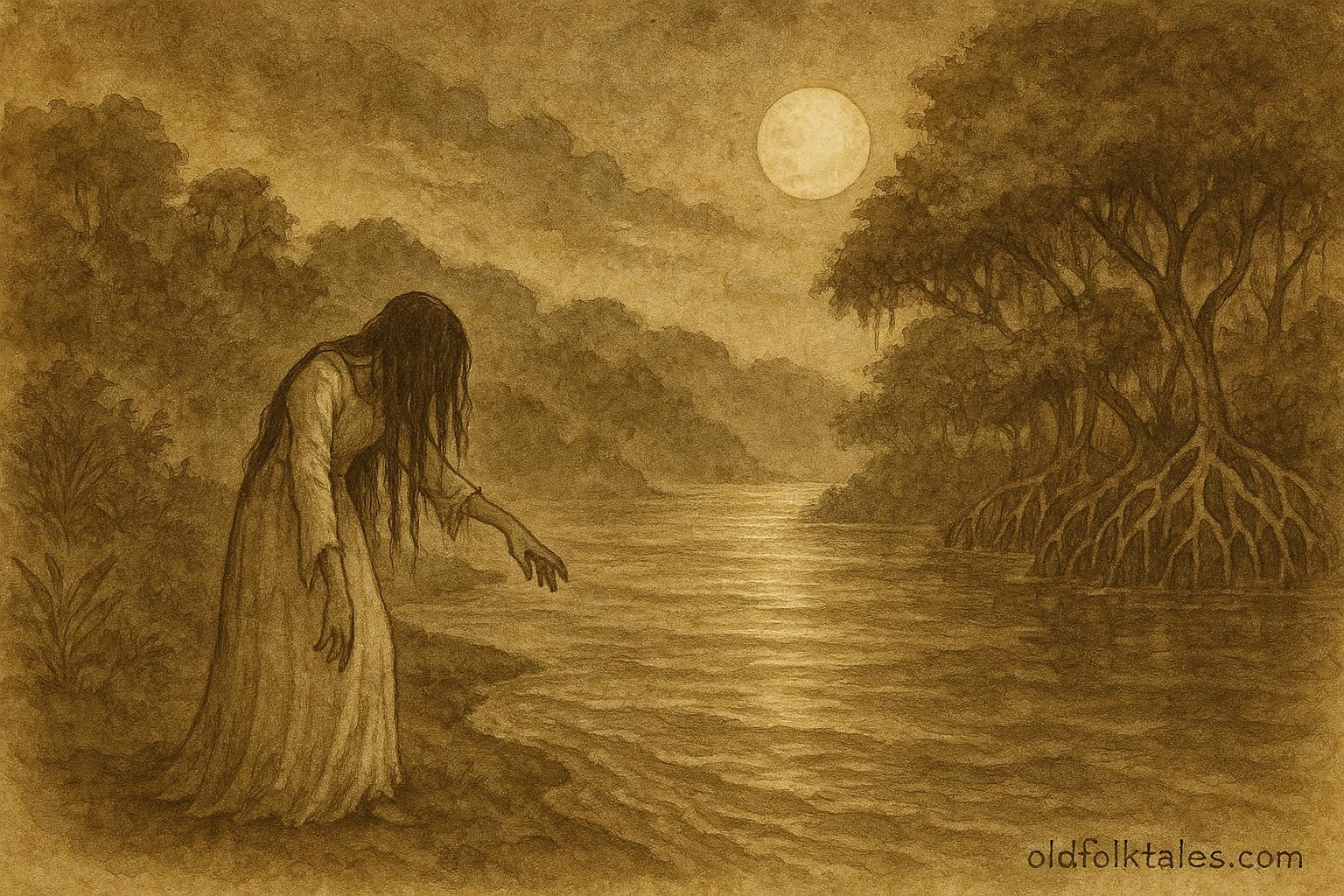
Since then, villagers say that when the mist rises from the rivers of Belize and the night grows unnaturally cold, La Llorona can be heard weeping. Her cry echoes through the mangroves and across the still lagoons, “¡Mis hijos!” She drifts along the banks, her long white gown soaked, her face hidden beneath her hair.
Fishermen who stay too late on the river say that she appears beside their canoes, her pale form shimmering above the water. If they look upon her or listen too closely to her cries, she mistakes them for her lost children. Her ghostly hands reach out to embrace, and drag them beneath the surface.
Parents in northern and western Belize still warn their children: “Come home before the river cries.” It is not just superstition, it is remembrance. For every river remembers her sorrow, and every echo of her voice reminds mortals of what grief and rage can destroy.
Generations have passed, yet the story of La Llorona endures, her tears mingling with the rivers she once defied. She remains a mother cursed by her own cruelty, a warning whispered across Belize’s waterways, that love twisted by jealousy leads only to eternal mourning.
Moral Lesson
Grief born of cruelty never finds peace. What we destroy in anger may haunt us forever.
Knowledge Check
1. Who is La Llorona in Belizean folklore?
La Llorona is the Weeping Woman, a spirit condemned to wander Belize’s rivers in sorrow after drowning her children.
2. What caused La Llorona’s transformation into a ghost?
She drowned her children in a jealous rage after her lover abandoned her, leading to her eternal punishment.
3. What lesson does the folktale of La Llorona teach?
The tale warns against letting anger and jealousy destroy love and family, showing that cruelty leads to lasting regret.
4. Why do villagers fear hearing La Llorona’s cry?
Because she mistakes listeners for her lost children and may drag them into the river.
5. What do Belizean parents mean when they say “Come home before the river cries”?
It’s a warning to stay safe and avoid wandering near the rivers at night, when La Llorona is said to roam.
6. What is the cultural significance of La Llorona in Belize?
The legend symbolizes the consequences of unchecked emotion and serves as a moral compass in Mestizo and Garifuna traditions.
Source: Adapted from the Mestizo–Garifuna folktale “La Llorona” in If Di Pin Neva Ben: Folktales and Legends of Belize and BelizeHub Legends Section.
Cultural Origin: Belize (Mestizo and Garifuna folklore)