In the quiet border towns of northern Mexico and the dusty stretches of the American Southwest, people whisper about La Lechuza. Her story has traveled through generations, carried by the wind that sweeps across desert plains and the cries of owls that echo through the night.
They say she appears when the world is asleep, when only the hum of cicadas and the rustle of dry mesquite break the silence. A shadow moves in the darkness, wings wide and eyes glowing like embers. Some claim she is a witch, a woman wronged long ago who learned the forbidden arts. Others insist she is no longer human at all but a spirit of vengeance, half woman, half owl.
By day, La Lechuza is unseen, hidden among abandoned shacks, thorny cacti, or the outskirts of forgotten villages. But at night, she hunts.
The Curse of the Owl-Woman
Long ago, in one such village near the edge of the desert, lived an old woman who kept to herself. The townspeople whispered that she was strange, that she spoke to birds and gathered herbs under the moonlight. When storms destroyed crops or children fell ill, suspicion turned to her. One night, anger and fear boiled over, the villagers accused her of witchcraft. Some say they drove her away with stones; others say worse was done.
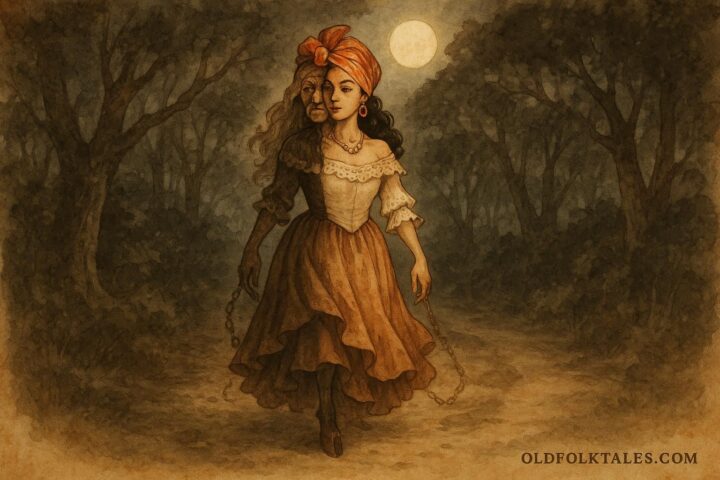
No one saw her again in human form. But not long after, the winds began to howl in strange ways at night. Owls, once rare in the area, started to gather near the village. And sometimes, when the moon was full, people claimed to see a huge owl with the face of the very woman they had wronged. Her voice carried through the wind, crying curses upon those who had harmed her.
From then on, La Lechuza was said to wander the borderlands, her spirit neither living nor dead.
Encounters in the Night
Many have claimed to see her. A rancher riding home late at night swore a giant bird followed him for miles, swooping low and brushing his hat with its wings. A group of men returning from a cantina in a nearby town said a pale-faced owl-woman blocked their path, shrieking so loud it deafened them. They fled, and by morning, one of them was found unconscious by the roadside, his hair turned white as snow.
Others speak of La Lechuza targeting men who mistreat women or drink too much. They say she waits outside taverns, watching from rooftops until her prey stumbles into the open. Her whistle, soft and shrill, calls them by name. When they look up, they see her wings spread against the stars. Some vanish without a trace. Others return home trembling, unable to speak of what they saw.
Parents tell children: “Don’t wander after dark, or La Lechuza will take you.” The warning echoes through generations, a tale to keep young ones safe from danger and strangers in the night.
Between Myth and Lesson
In modern towns and cities across the Southwest, her legend still thrives. Truck drivers claim to see her on lonely highways. Families in small border towns hang crosses or play church bells to drive her away.
But behind the terror lies a deeper meaning. La Lechuza reminds her listeners of the balance between respect and wrongdoing, between cruelty and justice. She is the embodiment of consequences: a spirit that punishes those who harm others, mock the old, or wander into sin under cover of night.
When the desert wind stirs the dry grass and an owl’s cry pierces the silence, some say she is near, watching, waiting, reminding mortals that every action has a price.
Moral Lesson
La Lechuza teaches that cruelty, disrespect, and violence always return to the one who causes them. Every choice leaves a shadow, and those who harm others will one day face the echoes of their deeds.
Knowledge Check
1. Who is La Lechuza in Mexican-American folklore?
La Lechuza is a witch or vengeful spirit who transforms into a giant owl, haunting those who commit cruelty or misdeeds.
2. What regions is the legend of La Lechuza most common in?
The story is told throughout northern Mexico and the American Southwest, especially in Tejano and border communities.
3. What moral lesson does the tale of La Lechuza teach?
It warns that disrespect, violence, and cruelty always bring consequences, justice comes in one form or another.
4. Why do some versions portray La Lechuza as a tragic figure?
Because she was once an innocent woman falsely accused of witchcraft and mistreated by her community, turning her spirit vengeful.
5. What symbols are key in this folktale?
The owl represents wisdom, mystery, and vengeance; night symbolizes secrecy and punishment for hidden sins.
6. How is La Lechuza’s story used today in modern culture?
It serves both as a cautionary tale for children and a supernatural legend that connects modern communities with ancestral folklore.
Source: Adapted from the La Lechuza legend as collected in Mexican and Tejano oral traditions; references include Texas Standard and regional folklore archives.
Cultural Origin: Mexico and the American Southwest (Mexican-American folklore)