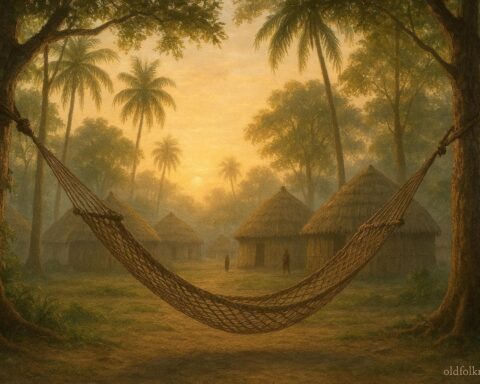
In the quiet villages and forest-edged settlements of Honduras, people once spoke softly at night of a presence that moved unseen through the darkness. This presence was known as La Chorca, also called La Mujer Lechuza, a figure rooted deeply in Indigenous and mestizo oral tradition. Her story was not told for entertainment alone, but as a warning shaped by fear, uncertainty, and the fragile boundary between the known and the unseen.
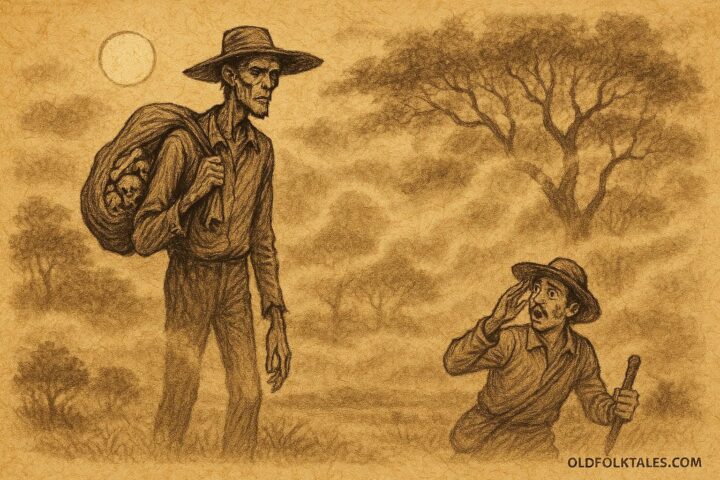
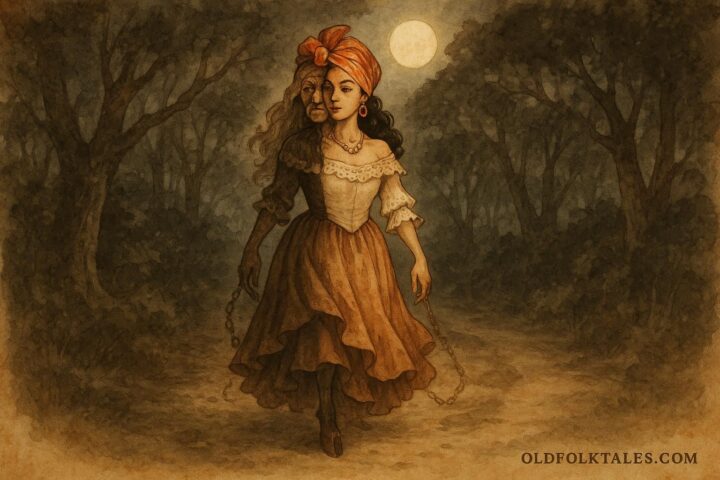
By daylight, La Chorca appeared to be an ordinary woman. She walked among neighbors, greeted others at wells and paths, and showed no outward sign of the nature attributed to her after sunset. It was only when night fell, when lamps dimmed and the countryside grew still, that her other form was said to emerge.
According to legend, La Chorca transformed into an owl-like creature once darkness settled over the village. Silent and watchful, she was believed to move through the air above rooftops and trees, her presence marked not by sound but by unease. Owls, already associated with mystery and omens in many cultures, became the perfect vessel for explaining what could not be seen or understood.
Villagers claimed that unexplained childhood illnesses or small, puzzling marks were signs of La Chorca’s nocturnal visits. These stories arose in times when medical knowledge was limited and loss often arrived without explanation. Rather than describe acts directly, elders spoke in symbols and cautions, reinforcing vigilance and care within the household.
To protect their homes, families relied on rituals passed down through generations. Prayers were spoken before sleep, iron objects were placed near doorways, and protective charms were hung where moonlight touched the walls. These actions were not merely defensive; they provided comfort and a sense of control in a world filled with uncertainty.
La Chorca was not portrayed as a creature of random cruelty. Instead, she embodied fear itself, the anxiety that surrounded illness, nighttime vulnerability, and the dangers believed to lurk beyond the safety of community. Her legend reminded parents to remain watchful and emphasized the value of collective care.
Over time, the story of La Chorca became less about a single being and more about the shared experience of loss and protection. By naming the threat, communities found a way to speak about grief without facing it directly. The owl, silent and distant, symbolized the mysteries of life that could not be explained but had to be respected.
Even today, her name carries weight in rural memory. Though few claim to believe literally in her transformation, the lessons remain. Night is treated with caution, children are guarded with care, and the old rituals are remembered as signs of respect for ancestors who endured hardship with limited answers.
La Chorca stands as a reminder that folklore often arises where knowledge ends. Through her story, fear was given form, and vigilance became tradition.
Moral Lesson
The legend of La Chorca teaches respect for the unknown, the importance of communal protection, and compassion in the face of life’s uncertainties.
Knowledge Check
-
Who is La Chorca in Honduran folklore
A woman who transforms into an owl-like spirit at night -
What animal is La Chorca associated with
An owl -
What did villagers believe her presence explained
Unexplained illness and nighttime fear -
How did families protect themselves
Through prayers, rituals, and iron objects -
What does La Chorca symbolize
Fear of the unseen and life’s fragility -
Where did this legend originate
Indigenous and mestizo communities of Honduras
Source: Honduran folkloric studies
Cultural Origin: Honduran folktale, Indigenous and mestizo traditions