In the heart of Nicaragua, beneath the silver light of the moon and the hum of crickets in the warm night air, people whisper the name Cegua, a spirit of beauty and horror. Her story drifts through generations, a warning wrapped in mystery and moonlight. To speak her name is to call forth the ancient fear that grips travellers who wander home after dark.
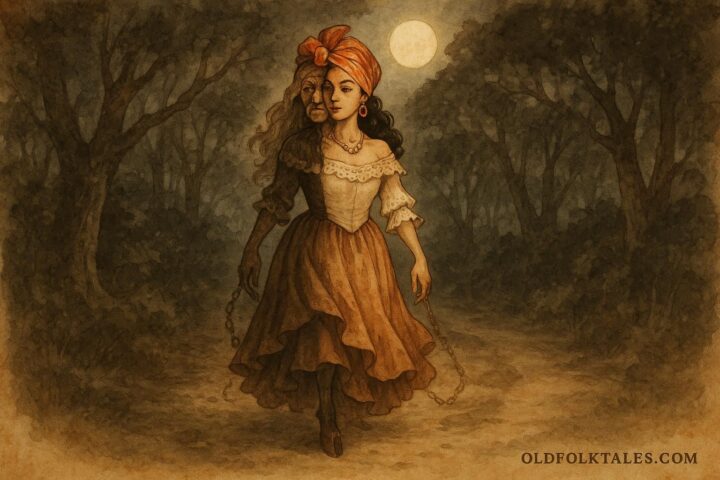
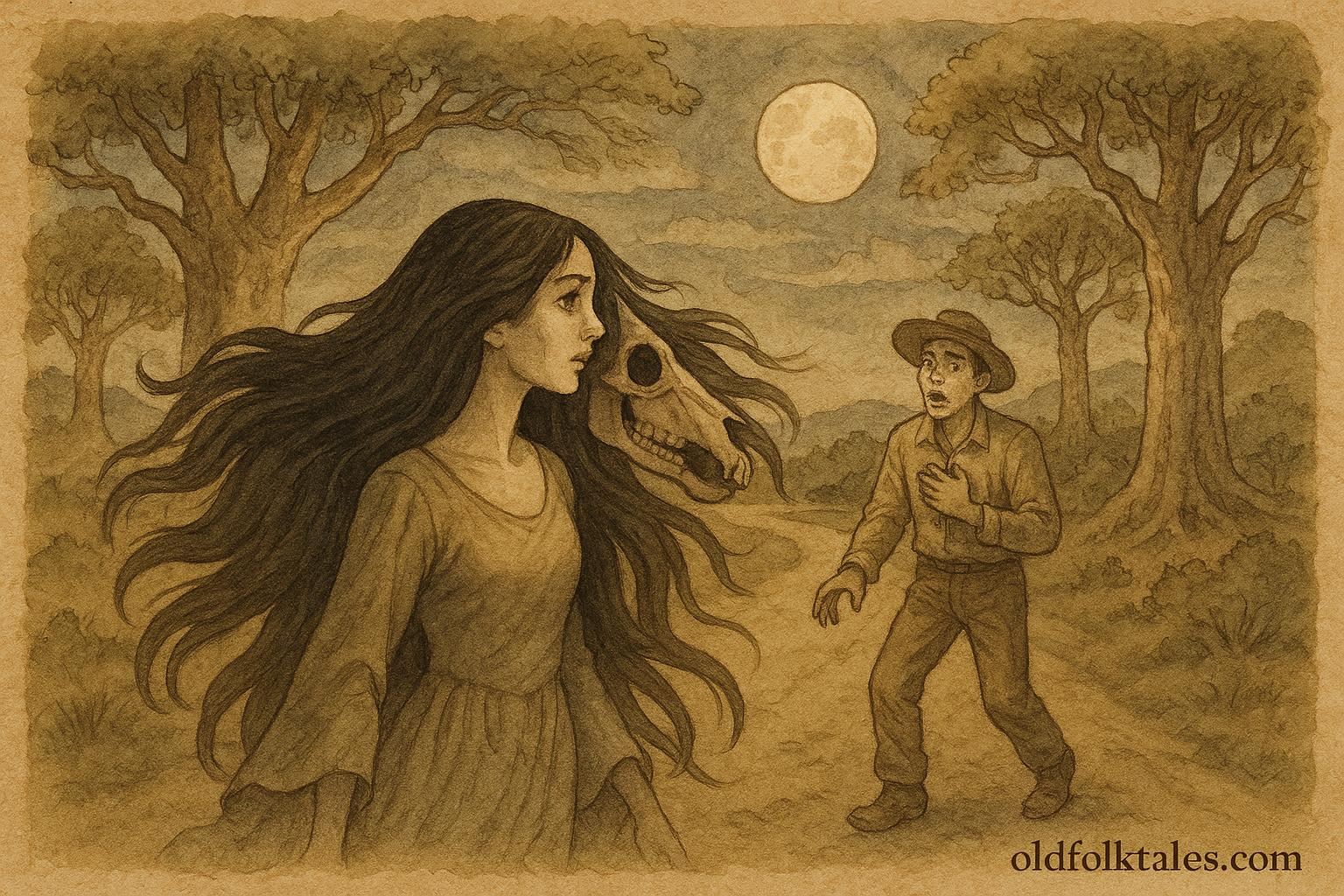
On lonely roads lined with ceiba trees and dry grass, men returning from taverns often encounter her. She appears as a woman of astonishing beauty, long black hair cascading over her shoulders, skin pale as moonlight, and a scent of jasmine that clings to the breeze. Her eyes, dark and inviting, seem to promise affection and warmth to anyone who dares to meet her gaze.
The Cegua, they say, is the embodiment of temptation. She waits where the road bends and shadows stretch long, calling out softly to weary men. Sometimes she asks for a ride on horseback; other times, she simply smiles and walks beside them, her perfume clouding their senses. Her voice is gentle, her laughter sweet, and her presence irresistible.
But her beauty is only a mask.
As the man draws closer, drawn by desire or pride, the night stills. The wind stops. The crickets fall silent. Then, in an instant, her true face is revealed — a ghastly skull of a rotting horse, eyes glowing red like burning coals. Her teeth gleam with decay, her breath reeks of death, and her laughter twists into a demonic scream that chills the soul.
Those who see her real form are struck with madness or terror. Some flee blindly through the fields until they collapse from exhaustion. Others die where they stand, their hearts bursting from fear. A few survive, but they are never the same again. Their hair turns white, their eyes hollow, their minds forever haunted by the image of the demon woman they once thought beautiful.
According to legend, La Cegua punishes arrogant or unfaithful men, those who indulge in lust, pride, and deceit. She appears to those who scorn women, mistreat their wives, or boast of their conquests. Her vengeance is not swift but poetic; she seduces them with illusion and destroys them with truth.
In the towns of Masaya and Granada, elders recount her tale as a warning to the young. “Beware of beauty that comes in the dark,” they say. “For not all that shines in moonlight is meant for love.” Mothers tell their sons not to wander after midnight, and men crossing lonely paths whisper prayers as they ride. They know that the road between sin and salvation is often walked alone, and La Cegua waits for those who stray.
No one knows her true origin. Some say she was once a proud woman who mocked her mother’s advice and betrayed her honour. Her mother, in grief and rage, cursed her daughter to wander forever as a creature of vengeance. Others whisper that she is a spirit sent by divine justice to remind men of their mortal weakness. Whatever her beginning, her presence has become a living part of Nicaraguan folklore, where stories serve as moral mirrors of human desire and regret.
Even today, truck drivers and motorcyclists tell of strange encounters on misty roads. A beautiful woman, standing by the roadside, lifts her hand for a ride. If the driver stops, she leans close, her hair falls forward, and her perfume fills the cabin. But if he looks too closely, he sees the hideous face beneath, and his fate is sealed. Some crash in panic; others vanish into the night, leaving only the echo of their screams.
The legend of La Cegua reminds every traveller that evil often hides behind a smile and that temptation is the path to ruin. In every telling, the story remains the same, beauty deceives, lust blinds, and pride destroys.
Moral Lesson
Vanity and lust walk the same road; beware of false beauty and the pride that blinds the heart.
Knowledge Check
1. Who is La Cegua in Nicaraguan folklore?
La Cegua is a ghostly woman with the head of a decaying horse who punishes arrogant or unfaithful men.
2. What does La Cegua symbolize?
She represents vanity, lust, and the consequences of moral corruption.
3. Why does La Cegua appear to men at night?
She appears to lure prideful or unfaithful men as a form of punishment or warning.
4. What is the most terrifying part of her appearance?
Her transformation from a beautiful woman into a demonic horse-headed spirit with red, blazing eyes.
5. What moral lesson does the story of La Cegua teach?
It warns against arrogance, infidelity, and chasing deceptive beauty.
6. Where in Nicaragua is this legend most often told?
The tale is strongest in the regions of Masaya and Granada, where it remains a well-known piece of traditional folklore.
Source
Adapted from Cuentos, Leyendas y Mitos de Nicaragua and NicaraguaEducA PDF
Cultural Origin: Nicaragua (Central American Folklore)