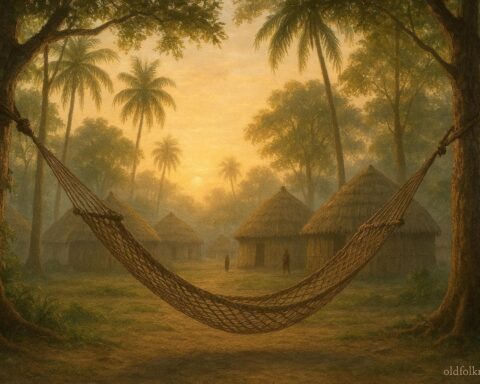
Innocence lingered in the quiet village long after grief had settled there. Nestled near Moruga, where the guava forest thickened at the edge of family yards and dusk arrived softly, a woman lived with memories she rarely spoke aloud. Years earlier, she had given birth to twin boys who lived only briefly. They died before they could be christened, and in that loss, a silence entered her home that never fully left. Life continued, as it must, and in time she bore a daughter who grew strong and curious beneath the Caribbean sun.
As the girl learned to walk and talk, her laughter returned music to the yard. Yet as she grew older, she began to speak of companions no one else could see. At dusk, when the guava leaves darkened and the cicadas began their song, she would run toward the forest edge, calling to “two boys with big hats.” She spoke of games, of chasing and hiding, of shared secrets whispered among roots and fallen fruit. Her mother listened with unease, the old grief stirring like a tide pulled by the moon.
Click to read all South American Folktales — timeless stories from the Andes to the Amazon.
At first, the woman told herself it was imagination. Children invented friends. But the descriptions were too precise, the timing too constant. Always at dusk. Always two boys. Always hats pulled low. A chill settled in her bones, and one evening she resolved to see the truth with her own eyes.
She hid among the guava trees as the light faded. The air smelled of ripe fruit and damp earth. Soon, her daughter appeared, laughing freely, spinning and darting between trunks. Then the woman saw them. Two small figures emerged from the shadows, their faces hidden beneath wide pakot straw hats. They moved lightly, but something was wrong. As they ran, their feet turned backward, heels where toes should be. The mother pressed her hand to her mouth, knowing without doubt what she was witnessing.
They were douens, spirits spoken of in whispers, said to be the souls of unbaptized children. These were not strangers. These were her sons.
The douens did not frighten the girl. They followed her joy, drawn to her living warmth. They were not cruel or mischievous as other tales warned. They were lonely. When the girl finally returned home, the figures melted back into the forest, their laughter fading into the night.
The mother wept, torn between love and fear. She knew the danger douens could pose if they lingered too long among the living, even unintentionally. Seeking guidance, she went to an obeah woman known for her knowledge of old rites and careful mercy. The obeah woman listened without judgment and spoke with firmness.
“Them children need rest,” she said. “They trapped between worlds. You must baptize them by proxy.”
At noon the next day, when douens were said to be powerless beneath the full sun, they went to the riverbank. The water shimmered brightly, revealing every stone beneath its surface. The obeah woman called the twins’ names aloud, names the mother had spoken only once before in the delivery room. She sprinkled blessed water into the river, invoking protection and release, binding the rite with prayer and ancestral words carried across generations.
That evening, as dusk fell once more, the daughter returned to the forest edge. The mother watched anxiously. The two boys appeared again, standing quietly this time. They did not run. They lifted their hats just enough to wave. Then, slowly, they sank into the earth, leaving behind silence and the gentle rustle of leaves.
By morning, a patch of wildflowers had bloomed where they vanished. The flowers carried a sweetness unlike any the woman had known. The family never picked them. They grew there year after year, untouched, a living reminder of innocence released and grief transformed.
Moral Lesson
This folktale teaches that innocence must be protected with wisdom, and that love sometimes requires letting go so that spirits and the living may find peace.
Knowledge Check
1. Who were the douens in the story?
They were the spirits of the woman’s unbaptized twin sons.
2. Why did they appear to the daughter?
They were drawn to her vitality and companionship.
3. What physical sign revealed their true nature?
Their feet were turned backward beneath their straw hats.
4. Why was the ritual performed at noon?
Douens are believed to be powerless under the midday sun.
5. What symbol marked their departure?
A patch of sweet-smelling wildflowers blooming in the forest.
6. What cultural belief does the story reflect?
The importance of baptism and proper spiritual passage in Afro-Trinidadian folklore.
Source and Cultural Origin
Source: Field recordings by J.D. Elder, Moruga
Cultural Origin: Afro-Trinidadian Creole folklore, associated with infant mortality and baptismal rites