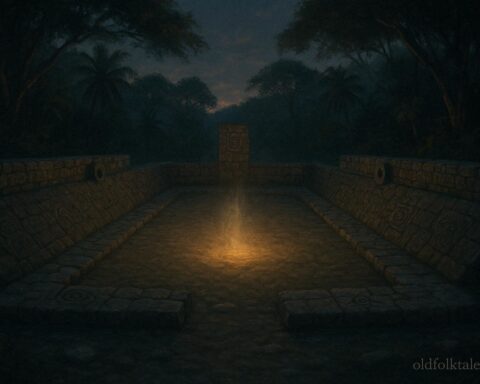
Hubris ruled the thoughts and speech of St. Clair long before it destroyed his fortune. In the fertile plains of Trinidad, where cane fields bent with the wind and the night sky stretched wide and brilliant, St. Clair was known as a man who believed all things existed to be measured by his hand and mastered by his mind. He was wealthy, educated, and endlessly confident, and he often declared that there was nothing in heaven or on earth that could not be counted, weighed, or reduced to figures in a book.
At his grand estate, guests gathered beneath verandas lit by oil lamps while St. Clair boasted of his achievements. He spoke of land surveyed, crops tallied, profits calculated down to the smallest coin. One evening, as the stars emerged above the hills, he laughed and gestured upward, claiming that even the heavens could be brought to order if a man possessed enough intelligence and resolve. His words carried far, and among those who heard them was a wandering pundit, a Hindu priest traveling from village to village, offering counsel and quiet wisdom.
The pundit listened without interruption. When St. Clair finished speaking, the old man stepped forward and said calmly, “Then, sir, count the stars in the sky.” The laughter fell away. St. Clair, stung by the suggestion, took it not as advice but as a challenge. He declared that he would do exactly that and prove, once and for all, that nothing lay beyond human reach.
Within weeks, construction began. St. Clair ordered a tall tower built at the highest point of his land, rising above the cane fields and trees so that nothing would obstruct the view of the heavens. He hired clerks and assistants, men trained to write quickly and copy numbers faithfully. Ledgers were purchased by the dozen. Charts were drawn. Instruments were imported. Each night, they climbed the tower and set to work beneath the stars.
At first, the endeavor thrilled St. Clair. The clerks grouped stars by brightness, noting their positions and assigning numbers. Books filled rapidly. But soon confusion crept in. Some stars faded. Others appeared where none had been recorded before. Clouds rolled in without warning. Meteors streaked across the sky and vanished. Each morning, St. Clair demanded revisions, corrections, and new calculations. Hubris pushed him onward, refusing to accept uncertainty.
Months turned into years. The tower required constant repair. Clerks fell ill or left, exhausted by endless nights and impossible demands. St. Clair poured more money into the project, selling parcels of land to finance the work. His health began to fail. His eyes burned from sleeplessness, and his hands shook as he flipped through ledgers thick with conflicting figures. Still, he insisted the task could be completed.
The estate suffered. Fields went untended. The great house grew quiet. Where once there had been music and conversation, there was now only scratching pens and whispered arguments over numbers that never stayed the same. Each night, the stars defied the count, shifting and multiplying beyond control.
At last, St. Clair collapsed. He was carried from the tower to his bed, frail and hollow-eyed. His fortune was gone, his lands reduced to debt, his great project unfinished. One evening, as the sky darkened beyond his window, the wandering pundit returned. He stood at the bedside and looked upon the broken man without triumph or scorn.
With his final strength, St. Clair whispered, “The number is… it is…” His voice faded as he searched for an answer that had eluded him for a lifetime. The pundit leaned closer and said gently, “The number is ananta, without end. Only God can count what is infinite. You counted your hubris and found it empty.”
St. Clair closed his eyes, and the stars continued to shine above the ruined tower, countless and unconcerned.
Moral Lesson
This folktale teaches that hubris blinds human judgment, and that humility is essential when confronting the vastness of nature and the divine.
Knowledge Check
1. Who was St. Clair in the story?
A wealthy and arrogant planter who believed everything could be measured.
2. What challenge did the wandering pundit give him?
To count the stars in the night sky.
3. Why did the counting always fail?
The stars constantly changed due to clouds, movement, and natural forces.
4. What happened to St. Clair’s estate?
It fell into ruin as he spent his fortune on the impossible task.
5. What does the word ananta mean in the story?
It means without end or infinite.
6. What cultural lesson does the tale emphasize?
Human limits must be respected in the face of the infinite.
Source and Cultural Origin
Source: Recorded in Trinidadian proverbs and folktales collected by Lise Winer
Cultural Origin: Multicultural Trinidadian folklore, influenced by African and Indian cosmological traditions