In the old colonial cities of Guatemala, where cobblestone streets glow under the moonlight and bougainvillea spills over courtyard walls, there whispers a tale of dangerous enchantment. It is the story of El Sombrerón, The Hat Man, a spirit whose appearance is not one of horror, but of eerie, captivating charm. He is a lesson woven not with a monster’s roar, but with the melancholic notes of a guitar.
El Sombrerón is a dandy of the spirit world. He is a small, impeccably dressed figure, no larger than a child, yet carrying the poise of a seasoned caballero. His boots are polished to a high shine, his clothing fine, but it is his hat that defines him, an enormous, ornate sombrero, fantastically large for his slight frame, casting a deep shadow that often hides his face. Slung across his back is a silver-trimmed guitar, an instrument of supernatural power.
His interest is singular and perilous. He pursues young women of striking beauty, particularly those blessed with a great cascade of long, jet-black hair. He is drawn to those who display vanity, who take too much pride in their looks, or who are known to be flirtatious. For them, his beautiful music becomes a curse.
His courtship begins as a dream. In the dead of night, when the world is still, the air is pierced by the sound of a guitar. It is not loud, but impossibly clear, a melody of profound beauty and aching sadness that seems to seep through the walls and into the very soul. The chosen young woman, asleep in her bed, will stir, drawn by the music to her window. There below, in the silvery light, stands the small, elegant figure, his head tilted as his fingers dance across the strings. The music enters her heart and takes root.
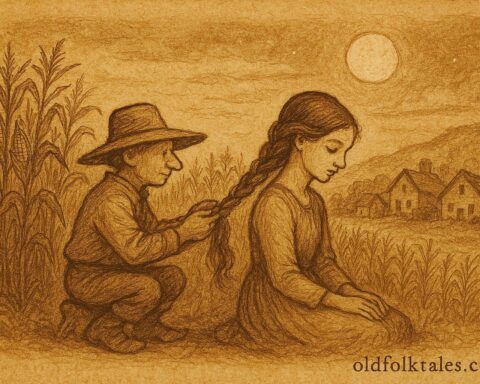
This is only the beginning of the enchantment. As the girl falls into a deeper, magic-induced sleep, El Sombrerón enters her room. His work is subtle and cruel. From the tail of his spectral horse, he takes coarse hairs and, with deft, supernatural fingers, braids them inextricably into the girl’s own lovely locks. By morning, she is left with tangled knots no comb can pass through, no shears can cut, a physical mark of his binding spell.
The victim’s waking life withers. She falls into a listless trance, encantada. She loses all appetite, refusing even her favorite foods, and can do little more than hum the haunting tune that now loops endlessly in her mind. Her eyes grow distant, her body frail, as she wastes away, obsessed with the memory of the spectral serenader. Her family watches in despair as she becomes a ghost of herself.
Salvation does not lie in simple means. The knots cannot be undone by mortal hands. Only a knowledgeable curandero, a traditional healer, or a determined priest can confront this dark magic. The breaking of the spell is a battle of faith and tradition, involving rituals with blessed scissors, protective salt, and fervent prayers to sever the supernatural tie and cleanse the girl of her dangerous obsession.
El Sombrerón is not a mindless predator; he is a supernatural consequence. He represents the perils of obsessive love, a force that can consume from the outside in. His legend serves as a timeless warning against vanity and careless flirtation, teaching that some attentions, no matter how beautifully presented, can lead to a binding from which there is no easy escape.
The Moral Lesson:
This folktale warns of the dangers of vanity and superficial attraction, illustrating how obsession, whether given or received, can be a consuming, destructive force. It emphasizes that some enchantments are traps, and that spiritual strength and traditional wisdom are often required to break the bonds of a harmful fixation.
Knowledge Check
Q1: Who is the primary target of El Sombrerón in the Guatemalan folktale?
A1: He targets young, beautiful women with very long dark hair, especially those who are vain or flirtatious.
Q2: How does El Sombrerón first enchant his victims?
A2: He appears under their window and serenades them with unbearably beautiful and melancholic guitar music that invades their dreams and thoughts.
Q3: What is the physical sign that a woman is under El Sombrerón’s spell?
A3: He braids hairs from his horse’s tail into her hair as she sleeps, creating impossible, unbreakable knots.
Q4: What happens to a victim who is enchanted by El Sombrerón?
A4: She becomes listless, stops eating, hums his tunes constantly, and wastes away in a state of obsessive longing.
Q5: How can the spell of El Sombrerón be broken according to the legend?
A5: Only a powerful curandero (healer) or priest can break it, using rituals involving items like scissors, salt, and prayers.
Q6: What does El Sombrerón primarily symbolize in this cultural legend?
A6: He symbolizes the dangers of obsessive love and the supernatural consequences of vanity and reckless flirtation.
Source: Adapted from widespread Guatemalan oral tradition and ethnographic accounts from the Antigua Guatemala region.
Cultural Origin: Guatemala (Ladino folklore, with parallels to Maya tradition).